
Orchid Care
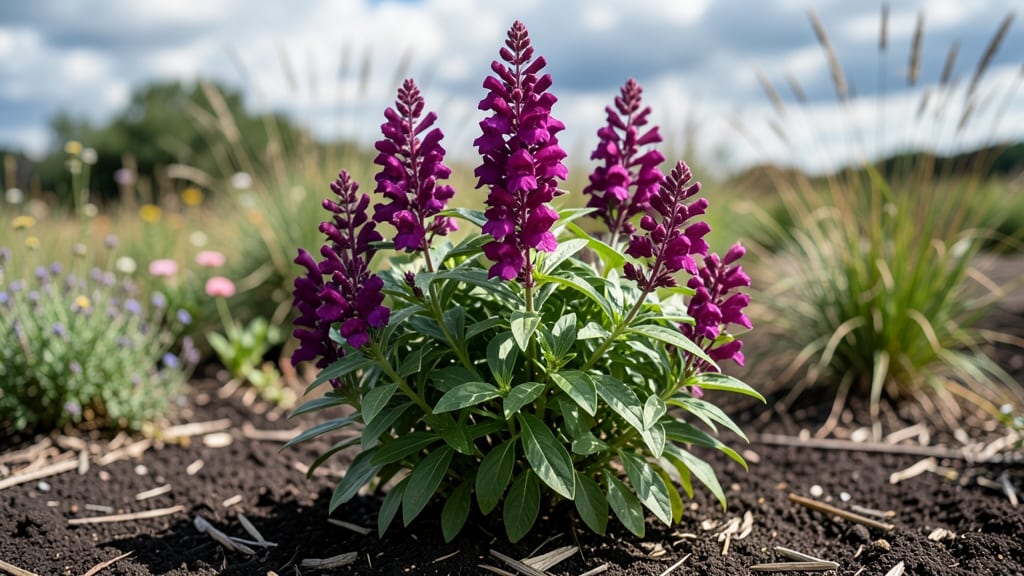
Deciding whether angelonia is annual or perennial depends on your climate: it thrives as an annual in colder regions because frost below 30°F (-1°C) kills it back to the ground. Only in USDA Zones 9-11 can it persist through winter as a tender perennial with proper winter care.
Angelonia's frost sensitivity comes from its tropical origins, where temperatures rarely dip below freezing. 🌱 The plant lacks the cold-resistant adaptations of hardy perennials, like thick bark or deep root systems, which means even light freezes can damage its delicate foliage.
In milder climates, gardeners can coax it to return year after year by protecting it from winter chill with mulch or container overwintering.
What sets angelonia apart is its adaptability when given the right conditions. While it may die back in cold snaps, many gardeners treat it as a short-lived perennial in Zones 8-9 by bringing potted plants indoors before the first frost.
The key is understanding your local frost dates and planning accordingly—this way, you can enjoy its vibrant blooms season after season without treating it purely as an annual.
💡 In This Article
- Angelonia’s Cold Sensitivity and Freeze Damage Thresholds
- Extending Angelonia’s Lifespan in Cold Climates
Angelonia’s cold sensitivity and freeze damage thresholds
Angelonia's frost intolerance stems from its native tropical habitat, where temperatures rarely fall below 50°F (10°C). When exposed to 30°F (-1°C) or colder, its thin, herbaceous stems and leaves become vulnerable to ice crystal formation within plant cells.
These crystals puncture cell membranes, disrupting nutrient flow and causing irreversible damage. Unlike hardy perennials with woody stems or deep root systems, angelonia's delicate structure lacks the protective adaptations needed to survive freezing conditions. 🌡️
Cell membrane damage occurs when water inside plant cells freezes and expands, creating sharp ice crystals that tear through the lipid bilayer. This process, called cryodamage, triggers a cascade of metabolic failures within minutes.
Angelonia's native range in South America's warm climates means it evolved without developing antifreeze proteins or cold-acclimation mechanisms found in temperate plants. Even a single night below 32°F (0°C) can blacken foliage and kill back growth to the ground.
What makes angelonia particularly sensitive is its lack of secondary growth—unlike shrubs or trees, it doesn't develop thick bark or lignified stems to insulate against cold. The plant's energy is focused on rapid flowering rather than structural reinforcement.
This biological trade-off explains why gardeners in colder regions must treat it as an annual, while those in frost-free zones can nurture it as a perennial with minimal winter protection. 🌿
Comparing angelonia to other frost-sensitive perennials like salvia or coleus highlights its extreme cold vulnerability. While these plants may survive brief dips to 25°F (-4°C) with protection, angelonia's threshold sits at a more fragile 30°F (-1°C).
The difference lies in their evolutionary adaptations: salvia develops woody bases, while angelonia remains entirely herbaceous throughout its life cycle.
In practice, this means gardeners in USDA Zones 8 and below face a critical decision point each fall: whether to treat angelonia as a seasonal plant or attempt overwintering strategies.
The plant's inability to endure frost without intervention creates a clear dividing line between annual and perennial behavior based solely on climate. Understanding these biological limitations allows for more realistic gardening expectations and targeted care strategies. ❄️
For those pushing angelonia's limits in marginal climates, the key insight is recognizing that any winter survival depends entirely on human intervention—whether through mulching, container protection, or indoor overwintering. Without these measures, the plant's tropical biology ensures it will always revert to annual behavior when faced with freezing temperatures.
This fundamental understanding shapes all subsequent growing strategies for colder regions. 🌍