
Plants
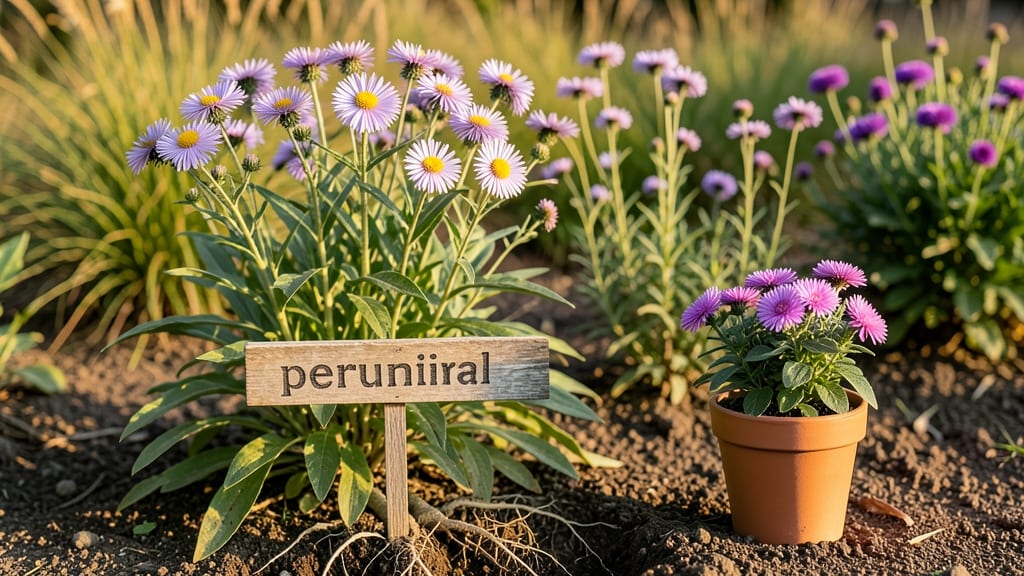
Not all asters are perennials—while many garden asters (Symphyotrichum spp.) thrive as hardy perennials, others like Callistephus chinensis (commonly called China aster) complete their life cycle in just one season. Always verify the specific variety before planting to avoid surprises about its longevity.
This distinction matters because perennials like New England aster or purple aster return year after year with proper care, while annuals like China aster offer vibrant summer blooms but vanish by frost. 🌸 The key difference lies in their root systems—perennials develop deep, persistent roots that survive winter dormancy, whereas annuals focus all energy on rapid above-ground growth before setting seed.
I’ve found that even experienced gardeners sometimes mix up these categories, leading to disappointment when annual asters don’t regrow.
For gardeners planning long-term color, perennial asters are the clear winners—they multiply over time and often spread naturally. However, annual varieties can be excellent for seasonal displays or container gardens where you don’t need year-round presence.
The botanical name is your best guide: if it’s Symphyotrichum, assume perennial unless labeled otherwise. Always check seed packets or plant tags for this crucial detail before making your selection.
💡 In This Article
- Perennial vs. Annual Asters: Key Botanical Differences
- How to Choose Perennial Asters for Long-Lasting Gardens
Perennial vs. annual asters: key botanical differences
The core difference between perennial and annual asters lies in their life cycles and root development. Perennial asters like New England aster (Symphyotrichum novae-angliae) develop deep, woody root systems that store energy through winter dormancy, allowing them to regrow each spring.
These roots can extend 2-3 feet underground, providing stability and access to moisture during dry periods. In contrast, annual asters such as China aster (Callistephus chinensis) focus all their energy on rapid above-ground growth, producing vibrant blooms in just 60-90 days before dying back completely after seeding.
Botanically, these differences stem from evolutionary adaptations. Perennial asters prioritize survival strategies, investing in root expansion and underground storage organs like rhizomes or tubers. This allows them to withstand harsh winters in zones 3-9, where temperatures can drop below -20°F.
Annual varieties, however, follow a "live fast, die young" strategy—growing quickly to produce seeds before their first winter, which is why they thrive in warmer climates or as temporary garden accents.
The foliage of perennials often remains evergreen or semi-evergreen in mild winters, while annuals typically turn brown and crispy as temperatures fall.
What most gardeners overlook is the role of vernalization—the process where some plants require cold exposure to trigger flowering. Many perennial asters need 30-60 days of winter chill to break dormancy, while annuals skip this step entirely.
This is why you might see perennial asters bloom later in the season (typically late summer to fall) compared to annual varieties that burst into color by mid-summer.
The timing difference is crucial for planning seasonal garden displays and understanding why some asters seem to "disappear" after their first year.
There's also a third category to consider: biennial asters, though they're rare in this genus. These plants take two years to complete their life cycle—spending the first year building roots and the second year flowering and seeding. While not common among asters, some wild varieties exhibit this pattern.
The key takeaway is that the botanical name provides critical clues: Symphyotrichum species are almost always perennials, while Callistephus varieties are annuals. Always verify this detail before purchasing, as mislabeling is common in seed catalogs.
Understanding these distinctions helps explain why some gardeners experience frustration when their asters don't return. Perennial asters may require 3-5 years to reach full maturity and spread, while annuals deliver immediate gratification with their rapid growth cycle. The trade-off?
Perennials reward patience with years of color, while annuals offer seasonal versatility without long-term commitment. For example, the purple aster (Symphyotrichum patens) can live for decades with proper care, while China aster completes its entire lifecycle in a single growing season.
One fascinating exception is the Italian aster (Callistephus chinensis 'Italian Market'), which some gardeners treat as a short-lived perennial in mild climates. While it technically behaves as an annual, its ability to self-seed prolifically can create the illusion of perennial behavior.
This demonstrates how environmental factors can blur the botanical lines—what's annual in zone 5 might persist for years in zone 8 or 9. Always consider your specific hardiness zone when evaluating whether an aster variety will return year after year.
For visual identification, perennial asters typically have sturdier stems (often 2-4 feet tall) and more robust foliage, while annual varieties tend to be 1-3 feet tall with finer stems that may flop without support.
The flower heads also differ slightly in structure, with perennial asters often featuring daisy-like blooms that last 2-4 weeks per stem, compared to annual varieties that produce smaller, more delicate flowers that last 1-2 weeks each.
These physical differences can help you quickly assess whether you're working with a perennial or annual variety in your garden.