
Vegetables
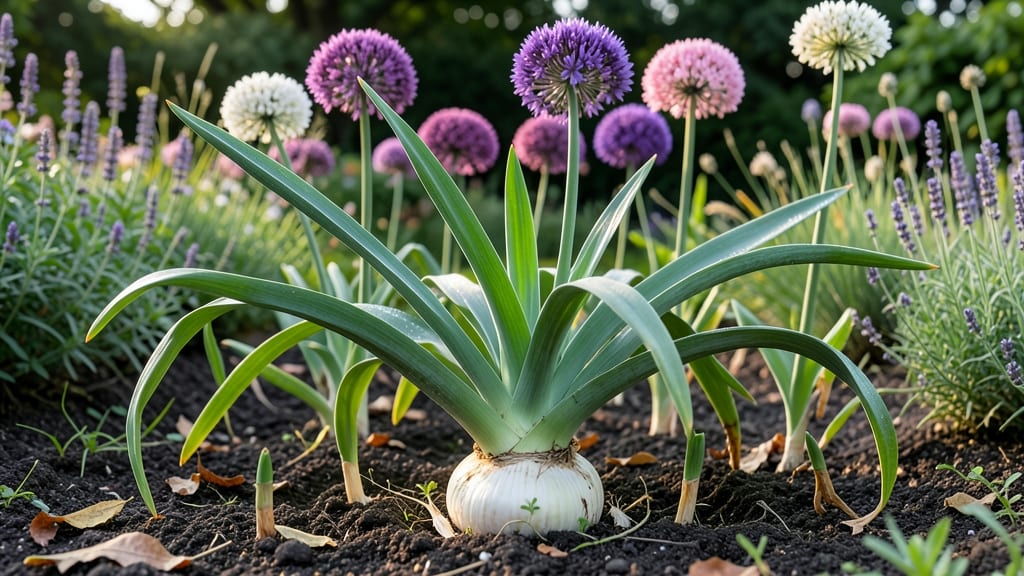
Alliums are perennial plants that die back annually, leaving behind dormant bulbs or basal rosettes that regrow each spring, though some varieties may behave as short-lived perennials or self-seed aggressively.
Most alliums—like onions, garlic, and chives—rely on underground storage organs to survive winter, a clever adaptation that lets them "reset" each year. 🌱 The key difference between true perennials and self-seeding varieties is their regrowth strategy: while chives regrow from basal rosettes, garlic often produces new shoots from bulb offsets.
This cycle explains why some alliums thrive for years while others fade after 2-3 seasons.
Understanding this pattern helps gardeners time pruning and mulching. For example, cutting back foliage too early can weaken next year's growth, while leaving dead stems too long may harbor pests.
The trade-off between perennial reliability and self-seeding behavior means some alliums spread aggressively—like wild garlic—while others need careful bulb division to maintain vigor.
💡 In This Article
- How Alliums Survive Through Dieback and Regrowth
- Caring for Alliums Through Their Annual Dieback Cycle
How alliums survive through dieback and regrowth
The survival strategy of alliums hinges on their ability to store nutrients in specialized underground structures. Unlike annuals that complete their life cycle in one season, alliums like garlic and onions develop dormant bulbs that act as biological batteries, storing carbohydrates, proteins, and growth regulators.
These bulbs can remain viable for years, with some varieties like welsh onions producing offsets that regrow annually from the same root system. 🌱
What sets alliums apart is their dual adaptation: many species combine true perennial behavior with self-seeding tendencies. For instance, garlic chives regrow from basal rosettes each spring, while wild onions may produce seeds that germinate as new plants.
This hybrid approach explains why some alliums spread aggressively—like crow garlic—while others like elephant garlic require bulb division every 2-3 years to prevent overcrowding. The trade-off lies in their growth patterns: perennials prioritize bulb storage, while self-seeders invest energy in both bulbs and seed production.
The science behind this involves a fascinating interplay of hormones and environmental cues. As temperatures drop below 50°F, alliums trigger dormancy by converting stored sugars into complex carbohydrates that protect cellular structures.
This process, called cold hardening, prevents freeze damage while maintaining metabolic activity at minimal levels. Spring's increasing daylight and warmth then stimulate the production of gibberellins—a plant hormone that signals regrowth. 🌿
Not all alliums follow this pattern identically. Some, like shallots, behave as short-lived perennials, producing smaller bulbs each year until they eventually decline after 3-4 seasons. Others, such as leeks, develop thickened stems rather than true bulbs, creating a different storage mechanism.
This diversity explains why gardeners must tailor their care approach—what works for hardneck garlic (which thrives in cold climates) may fail for softneck garlic (better suited to milder winters).
The regrowth phase begins when stored nutrients fuel the emergence of new shoots, typically within 2-4 weeks of spring's arrival. This timing varies by species: chives often sprout earliest, followed by onions and garlic.
The key difference between true perennials and self-seeders becomes apparent here—perennials rely entirely on their stored reserves, while seed-producing varieties may also generate new plants from scattered seeds. This dual strategy ensures survival even if bulbs are compromised by pests or disease.
Consider the case of wild garlic, which spreads through both bulb offsets and seed dispersal. Its aggressive growth makes it a garden nuisance but also demonstrates nature's redundancy in survival strategies.
By contrast, asparagus (another perennial vegetable) relies solely on crowns for regrowth, making it more vulnerable to complete failure if the crown is damaged. Alliums' ability to combine multiple survival mechanisms gives them an evolutionary advantage in diverse environments. ✨