
Plants
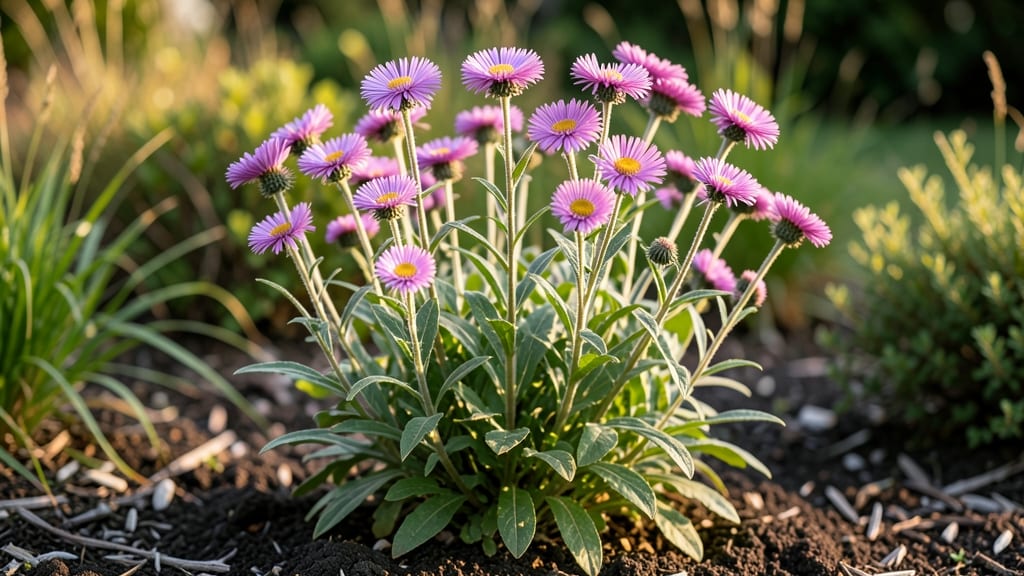
Asters are indeed perennials, meaning they survive multiple growing seasons by dying back to the ground each winter before regrowing from their root systems in spring.
Asters prove their perennial nature through a clever survival strategy: they enter dormancy when temperatures drop, storing energy in their root crowns. 🌱 This underground network acts like a biological battery, allowing them to burst back to life once spring arrives.
Unlike annuals that complete their life cycle in one season, asters develop deep root systems that persist year after year, provided they receive consistent moisture and well-draining soil during their active growing months.
What sets asters apart is their adaptability across USDA hardiness zones 3-9, making them suitable for most North American climates. Their ability to self-seed also contributes to their longevity, often creating natural colonies over time.
The key to maximizing their perennial performance lies in proper winter care—like applying mulch to insulate roots—and avoiding over-pruning, which can weaken their regenerative capacity.
💡 In This Article
- Why Asters Die Back and Return Stronger Each Year
- How to Care for Asters as Perennials Year-Round
Why asters die back and return stronger each year
Asters undergo a natural process called dormancy, where their above-ground foliage withers and dies as temperatures drop below 40°F in autumn. This isn't death—it's a survival mechanism where the plant redirects energy to its root crown, a dense, woody structure just below the soil surface.
This crown contains dormant buds that remain protected by insulating layers of leaves and soil, even during freezing conditions. The root system stores carbohydrates like starches, acting as a food reserve to fuel regrowth when temperatures rise again in spring. 🌿
The root crown's hardiness varies by species, but most asters thrive in USDA zones 3-9, meaning they can withstand winter lows of -30°F to -40°F with proper care.
For example, New England aster (Symphyotrichum novae-angliae) has a deeper root system that penetrates 12-18 inches into the soil, while smaller varieties like the Chinese aster (Callistephus chinensis) have shallower roots but still survive through dormancy.
The key difference lies in their cold acclimation process, where plants gradually adjust their cellular chemistry to prevent ice crystal formation in their tissues.
What makes this cycle so effective is the plant's ability to photosynthesize even in cooler temperatures during early spring or late fall. The leaves that emerge first are often smaller and more resilient, designed to capture sunlight while the root system rebuilds its energy reserves.
This two-phase growth—root development followed by foliage—ensures asters emerge stronger each year. In contrast, annuals like marigolds complete their entire life cycle in one season without this underground storage system, making them unable to persist beyond their first winter. 🌱
Soil health plays a critical role in this process. Well-draining soil prevents waterlogged roots, which can lead to rot during dormancy. Organic matter in the soil, like decomposed leaves or compost, provides additional nutrients that the root crown can access when it begins regrowth.
For instance, a soil pH between 6.0 and 7.5 is ideal for aster root systems, as it allows for optimal nutrient absorption during both dormancy and active growth phases. Without proper soil conditions, the root crown may weaken, leading to weaker regrowth or even failure to return the following spring.
Another fascinating aspect is how asters self-prune during dormancy. As temperatures drop, the plant naturally sheds dead foliage, reducing the risk of disease and pests that could harm the root system. This self-cleaning process is why asters often require minimal intervention from gardeners—nature handles much of the maintenance.
However, gardeners can support this process by removing only the oldest stems in early spring, leaving the new growth intact to fuel the plant's revival. This careful pruning mimics the plant's natural cycle while giving it a head start on the growing season. ✨
Consider the New York aster (Symphyotrichum novae-angliae) as a prime example. This hardy perennial can live for 10-15 years or more with proper care, producing vibrant purple blooms each autumn. Its ability to regenerate from the same root system year after year demonstrates the power of perennial dormancy.
By understanding this cycle, gardeners can create ideal conditions for asters to thrive, ensuring they return stronger and more vibrant with each passing season.