
Plants
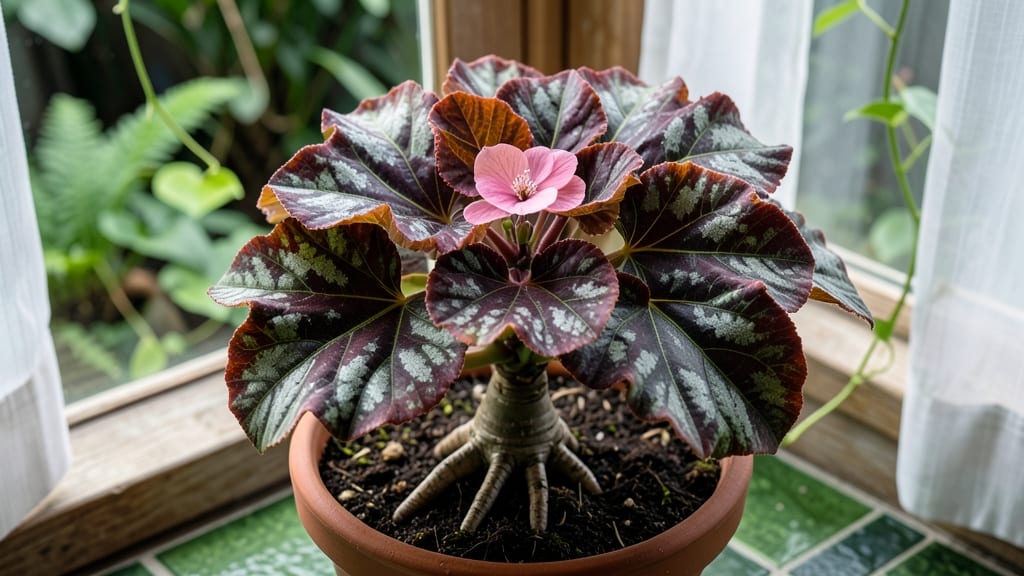
Begonia plants are not perennial in cold climates—they die back when temperatures drop below 40°F, but many varieties regrow from tubers or rhizomes in warmer seasons. In tropical zones (USDA 10+), they thrive year-round as true perennials.
Begonias aren't true perennials in most U.S. growing zones because their delicate foliage and stems can't survive freezing temperatures. 🌱 However, their hidden superpower lies underground—many varieties store energy in tubers or rhizomes, which can lie dormant through winter and sprout again when spring warmth returns.
This survival strategy explains why gardeners in zones 5-9 often treat them as annuals despite their persistent regrowth habits.
In warmer climates, begonias behave like perennials because they never experience frost damage.
The key difference comes down to temperature tolerance: while some hardier types (like Begonia grandis) might handle brief dips into the 30s°F, most common garden varieties will suffer leaf burn or dieback at 40°F or lower.
Understanding this cycle helps gardeners decide whether to dig up tubers for indoor storage or risk planting directly in marginal zones.
💡 In This Article
- Why Begonias Die in Cold Weather: Root Survival Secrets
- How to Overwinter Begonias: Step-by-Step Cold Protection Guide
Why begonias die in cold weather: root survival secrets
The secret to begonia survival in cold weather lies in their underground storage organs—tubers or rhizomes—which act like biological batteries. When temperatures drop below 40°F, the above-ground foliage freezes and dies, but these thickened roots remain dormant, conserving energy until warmth returns.
The dormancy process involves cellular changes where starches convert to sugars, protecting vital tissues from frost damage. This is why you might see brown, crispy leaves in fall while the roots stay alive underground.
Not all begonias have the same cold tolerance. Tender varieties like Begonia rex (with its striking foliage) or Begonia semperflorens (the wax begonia) will die back completely at 32°F, while hardier types like Begonia grandis or Begonia boliviensis might survive brief dips into the 30s°F range.
The difference comes down to cell membrane composition—hardier types have more unsaturated fats in their membranes, preventing ice crystal formation that ruptures tender cells.
USDA zone limitations explain why begonias behave differently in various climates. In zones 5-9, gardeners must treat them as annuals or take special overwintering measures, while zones 10+ allow true perennial growth. The critical threshold is 40°F: below this, even hardy begonias suffer leaf burn or stem dieback.
This is why many gardeners in marginal zones grow begonias in containers that can be moved indoors before frost.
What most people don't realize is that the dormancy cycle involves a precise balance of moisture and temperature. During winter storage, tubers need 50-60°F and minimal light to prevent premature sprouting. Too much moisture causes rot, while too little leads to desiccation—both kill the tuber's ability to regrow.
This explains why some gardeners store tubers in sphagnum moss or vermiculite rather than soil during dormancy.
The science behind cold sensitivity involves membrane permeability. When temperatures drop below 32°F, water inside begonia cells begins to freeze, forming sharp ice crystals that pierce cell walls. Hardy begonias produce antifreeze proteins that lower the freezing point of their cell sap, while tender varieties lack this protection.
This cellular damage is irreversible—once the ice crystals form, the plant tissue dies back completely, even if the roots survive.
Consider this comparison: A Begonia rex tuber left in frozen ground will shrivel and die, while one properly stored at 55°F with 50% humidity can regrow within 4-6 weeks of spring planting.
The key is understanding that the "perennial" label depends entirely on your climate zone and whether you protect the roots during winter.