
Plants
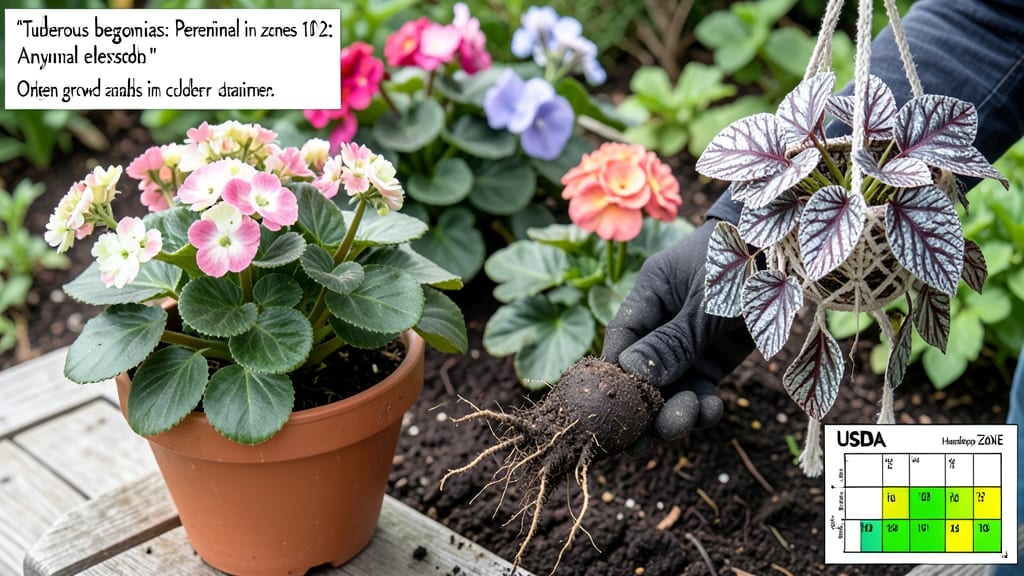
Begonias behave as perennials only in frost-free zones (USDA 10-12), where they grow continuously year-round. In colder climates (zones 3-9), they die back annually and require special care to survive winter.
Whether begonias live through multiple seasons depends entirely on your climate zone. 🌱 In warmer regions like Florida or Southern California, these plants naturally regrow each year from their roots or tubers, making them true perennials.
However, in most of the U.S., where temperatures drop below 40°F, begonias will succumb to frost and appear dead until spring.
The key difference lies in their growth habit—while some varieties form woody stems that can survive light freezes, most common types (like Rex or Angel Wing begonias) are tender perennials that need protection.
This zone-based behavior explains why gardeners in cooler areas often treat begonias as annuals—planting fresh ones each spring rather than trying to overwinter them. The good news? With proper storage techniques (like digging up tubers or cutting back foliage types), you can successfully revive them year after year.
Understanding this lifecycle helps you choose the right care approach for your location.
💡 In This Article
- Begonia Lifespan by USDA Hardiness Zones
- Overwintering Begonias in Cold Climates
Begonia lifespan by USDA hardiness Zones
The perennial nature of begonias hinges entirely on temperature thresholds—specifically, their inability to tolerate frost. In USDA Zones 10-12, where winter temperatures rarely dip below 30°F, begonias grow continuously as true perennials, regenerating from rhizomes or tubers each season.
The key mechanism is their tropical origin: these plants evolved in regions where soil temperatures stay above 50°F year-round, making them highly sensitive to cold snaps.
In Zones 7-9, the story changes dramatically. Here, begonias die back completely when temperatures fall below 40°F, but their underground structures (tubers or rhizomes) often survive if protected.
For example, Begonia tuberhybrida varieties form thick, fleshy tubers that can remain dormant in 40-50°F soil, while foliage types (like Rex begonias) rely on cuttings stored indoors. The critical threshold is 32°F—any colder, and even tubers risk fatal damage.
Zones 3-6 present the biggest challenge. Without intervention, begonias behave like annuals, as they cannot survive winter exposure. However, gardeners in these areas can still preserve their plants by digging up tubers before the first frost (35°F threshold) and storing them in 50-60°F conditions with 50-70% humidity.
The science here involves breaking dormancy through controlled moisture loss—tubers need to dry slightly before storage to prevent rot.
What most people overlook is the distinction between tuberous and fibrous-rooted begonias. Tuberous types (like Begonia x tuberhybrida) store energy in their swollen underground stems, while fibrous-rooted varieties rely on their entire root system.
The latter are far more sensitive to cold and require more careful overwintering techniques, often needing to be potted and brought indoors before temperatures drop below 55°F.
Consider this visual comparison: In Zone 11 (year-round growth), a begonia might reach 18-24 inches tall by late fall, while in Zone 5, the same plant would be cut back to soil level by November—appearing dead until spring warmth triggers regrowth.
This stark contrast explains why zone-specific care is essential for begonia longevity.
The real secret lies in understanding dormancy patterns. Most begonias enter a natural rest period when days shorten and temperatures fall. In warm zones, this happens gradually; in cold zones, it's forced by frost.
The difference is whether the plant can complete its dormancy cycle naturally (perennial behavior) or needs human intervention to survive (annual treatment).