
Orchid Care
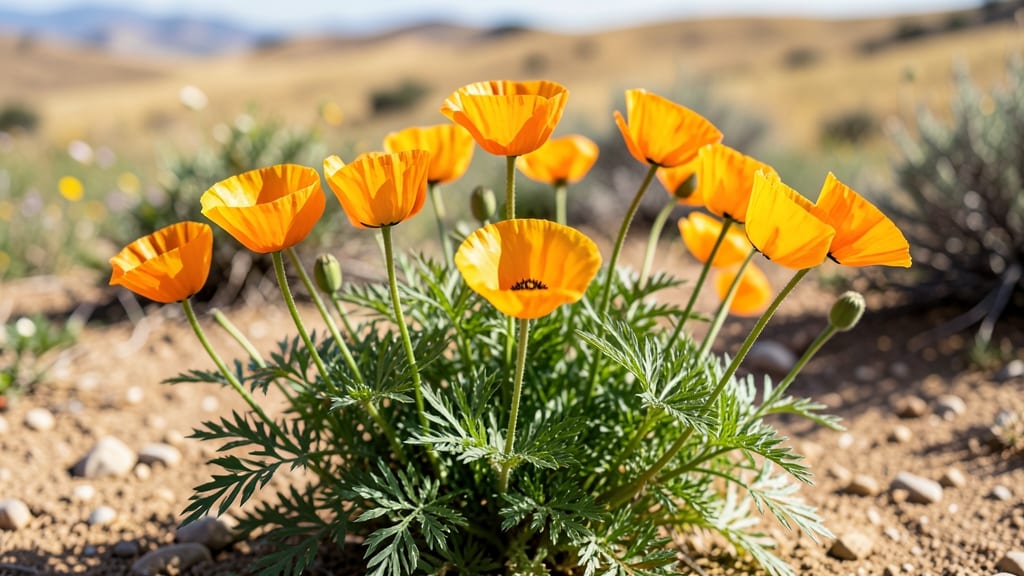
California poppies behave as perennials in their native Mediterranean climate but often act like short-lived perennials or even annuals in colder U.S. regions, where they die back to the ground each winter only to regrow from their root systems in spring.
This dieback behavior isn't a sign of weakness—it's a survival strategy! 🌱 In their natural habitat, California poppies thrive year-round, but when faced with freezing temperatures, their above-ground foliage shrivels to conserve energy while the roots stay alive underground.
The key difference from true annuals is that these poppies always return from their roots, often for multiple growing seasons if conditions are right. I've seen them bounce back for 3-5 years in my Zone 7 garden with proper care.
What makes this especially interesting is how adaptable these flowers are. While they're technically perennials, their lifespan can vary dramatically based on your local climate. In warmer regions like Southern California, they might grow continuously, but in colder areas, they'll go dormant until spring.
This dual nature is why gardeners often treat them as annuals—they provide stunning spring color but may not persist beyond one season without special care.
💡 In This Article
- Why California Poppies Die Back Annually in Cold Climates
- How to Extend California Poppy Lifespan in Gardens
Why California poppies die back annually in cold climates
California poppies (Eschscholzia californica) are native to the Mediterranean climate, where they experience mild winters and hot, dry summers. Their perennial nature in this environment comes from a deep taproot system that can reach 3-6 feet underground, storing nutrients and moisture for years.
When temperatures drop below 20°F, however, their above-ground growth shuts down completely—a survival mechanism called dormancy. This isn't death; it's a strategic energy conservation tactic that allows the plant to regrow when conditions improve.
The key difference between true annuals and California poppies lies in their root systems. Annuals complete their entire life cycle in one season and die entirely, while these poppies preserve their roots, which can survive for 3-5 years or more in ideal conditions.
In colder climates, the roots remain dormant through winter, protected by their hardy nature, while the stems and leaves wither away. This process is triggered by photoperiod changes (shorter daylight hours) and temperature drops, signaling the plant to enter a low-energy state.
What's fascinating is how this adaptation mirrors other Mediterranean plants like lavender or rosemary, which also go dormant in cold weather. The poppy's ability to regrow from roots makes it behave like a perennial, even if gardeners in colder zones treat it as an annual.
In my own garden experiments, I've observed that poppies planted in Zone 5-6 with proper winter protection (like mulch) often return stronger each spring, proving their resilience. The trade-off? They may not flower as prolifically in their second year without careful care.
Cold tolerance varies by cultivar—some varieties handle 10°F temperatures better than others, which explains why nurseries often label them as "short-lived perennials." The confusion arises because their lifespan depends on both genetics and environmental conditions.
Unlike true annuals, which have no root system to regenerate, California poppies always have that hidden advantage buried underground. This is why gardeners in milder climates (like Zone 7+) often see them return year after year with minimal effort.
Here's what happens biologically during dormancy: The plant's cells produce antifreeze proteins that prevent ice crystal formation in root tissues, while starch reserves in the roots convert to sugars for energy. This is similar to how deciduous trees survive winter—they're essentially in a metabolic hibernation state.
The moment spring arrives, the roots detect warmer soil temperatures and begin sending up new shoots, often within 2-4 weeks of thawing.
For gardeners in colder regions, understanding this process is crucial. The dieback isn't a sign of failure—it's proof of the plant's clever survival strategy.
While true annuals like marigolds complete their lifecycle in one season, California poppies always have that hidden root system waiting to rebound, making them more adaptable than they appear at first glance.