
Plants
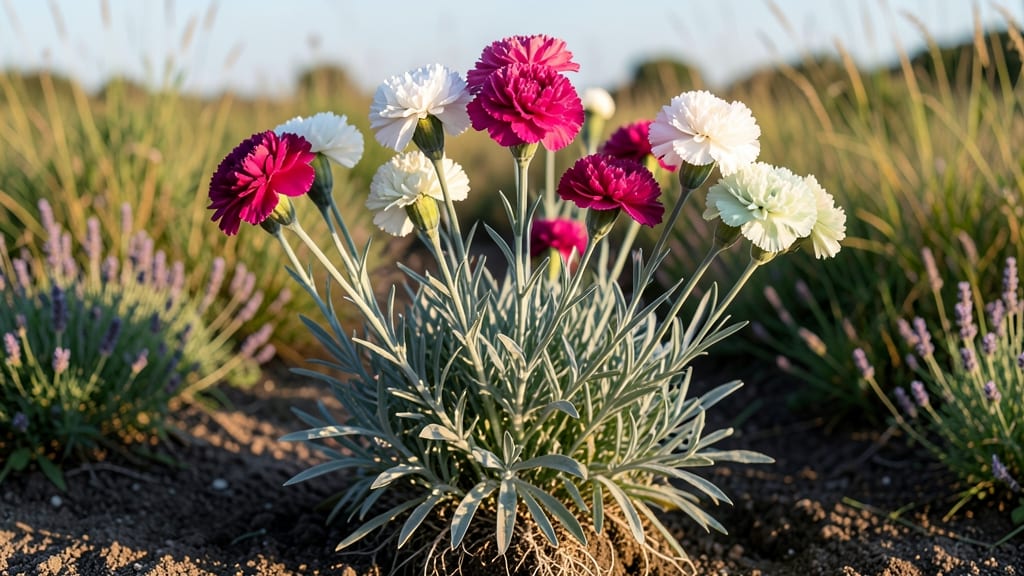
Carnations are perennials in most climates, meaning they return year after year, though they may die back to the ground in winter only to regrow from their roots when warmer temperatures arrive. Their ability to persist depends on winter chill tolerance and soil quality.
This dieback-and-regrowth cycle is what sets carnations apart from true annuals. 🌱 In milder climates (USDA zones 8-11), they often stay evergreen and bloom continuously, while in colder regions (zones 3-7), they enter dormancy to survive harsh winters.
The key to their perennial nature lies in those sturdy roots—even when the above-ground growth disappears, the root system remains alive beneath the soil, ready to sprout new foliage once temperatures rise.
What's fascinating is how their growth pattern adapts: in some areas, carnations may produce fewer blooms their first year but reward gardeners with spectacular displays in subsequent seasons. This makes them a smart choice for gardeners who want long-term color without annual replanting.
💡 In This Article
- Why Carnations Die Back and Regrow as Perennial Plants
- Carnation Winter Care Tips for Year-Round Blooms
Why carnations die back and regrow as perennial plants
Carnations enter dormancy through a process called cold acclimation, where they slow metabolic activity to conserve energy during winter. When temperatures drop below 40°F (4°C), their leaves and stems begin to yellow and die back, but the root system remains alive beneath the soil.
This survival mechanism is triggered by shorter daylight hours and cooler temperatures, similar to how deciduous trees shed leaves. The roots store carbohydrates produced during the growing season, which fuel regrowth when spring arrives.
The key difference between carnations and true annuals lies in their root systems. Annuals like marigolds complete their entire life cycle in one season, while carnations have woody root crowns that persist year-round. In USDA zones 8-11 (mild winters), these roots remain active, allowing continuous blooming.
However, in zones 3-7 (harsh winters), the roots enter a deeper dormancy, sometimes protected by 2-4 inches (5-10 cm) of organic mulch to insulate against freezing temperatures.
What's remarkable is how quickly carnations rebound. Once soil temperatures reach 50°F (10°C) in spring, new shoots emerge from the root crown in as little as 2-3 weeks. This rapid regrowth is fueled by stored nutrients and the plant's ability to photosynthesize almost immediately.
The visual transformation—from bare stems to lush foliage—demonstrates why carnations are classified as perennials despite their annual-like behavior in cold climates.
Another fascinating aspect is their vernalization requirement. Many carnations need exposure to 4-6 weeks of cold temperatures (35-45°F/2-7°C) to trigger flowering. This cold period breaks dormancy and signals the plant to produce blooms.
Without this chill period, carnations may remain vegetative, focusing energy on leaf growth rather than flower production—a phenomenon gardeners must account for when selecting varieties for their climate.
Consider the contrast with biennials like foxgloves, which require two growing seasons to complete their life cycle. Carnations, however, bypass this stage entirely. Their ability to regrow from the same root system year after year makes them more efficient than both annuals and biennials in terms of energy investment.
This efficiency is why carnations thrive in gardens across diverse climates, from Mediterranean regions to temperate zones.
For gardeners in colder regions, this dieback cycle presents an opportunity. When carnations appear "dead" in winter, it's not the end—the roots are alive and waiting. Proper winter care, such as mulching and protecting from extreme cold snaps, ensures these roots survive to produce vibrant blooms the following season.
The patience required to wait for regrowth is rewarded with years of colorful displays.