
Plants
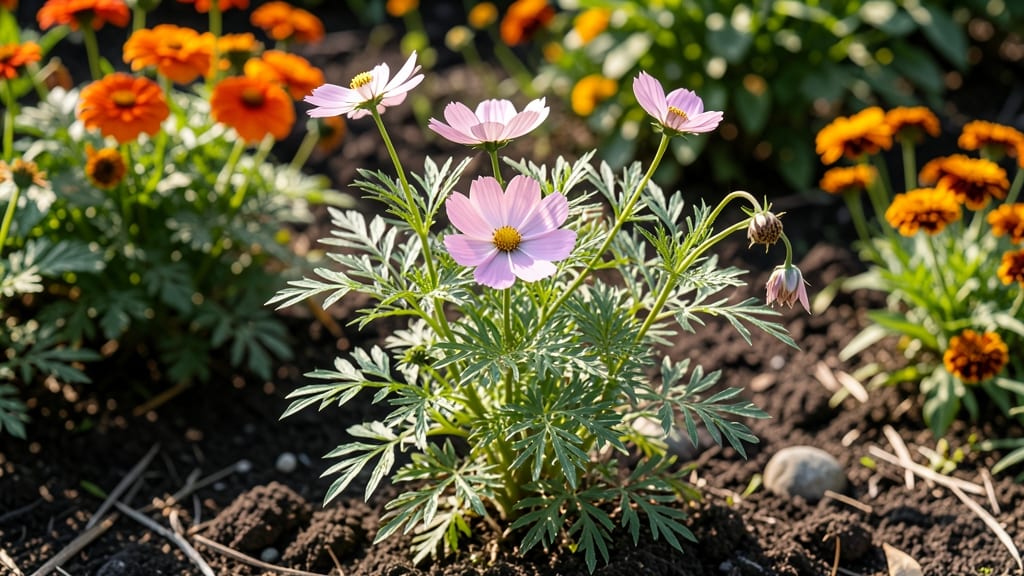
Cosmos plants are not true perennials in most climates—they die back to the ground after frost but regrow from seed the following spring, acting like self-seeding annuals in USDA zones 3-11. In warmer zones (9-11), they may persist as short-lived perennials with minimal care.
Cosmos plants behave like perennials because they rely on self-seeding rather than true root survival. 🌱 When frost hits, their above-ground stems and leaves die, but the seeds they've dropped remain dormant until spring.
This natural process explains why they return year after year without replanting. In milder climates, their roots may survive winter, but even then, they rarely live longer than 2-3 years.
The key difference between true perennials and cosmos lies in their resilience. While plants like lavender regrow from established roots, cosmos depend on seed germination. This makes them easier to propagate but less reliable in harsh winters.
I’ve found that selecting cold-hardy varieties like Cosmos bipinnatus and providing light mulch helps them bounce back faster each spring.
💡 In This Article
- Why Cosmos Act Like Perennials in Some Climates
- How to Extend Cosmos Growth Beyond One Season
Why cosmos act like perennials in some climates
Cosmos plants exhibit perennial-like behavior through a clever survival strategy: they rely on self-seeding rather than true root persistence. When temperatures drop below 32°F, their delicate stems and foliage freeze and blacken, but the seeds they've already released into the soil remain viable.
These seeds lie dormant through winter, waiting for spring warmth and moisture to trigger germination. This process mimics perennial regrowth without the plant needing to survive winter underground.
The key difference lies in their root system. Unlike true perennials with deep, woody roots that store energy for regrowth, cosmos have fibrous roots that don't store enough reserves to survive prolonged freezing.
However, in USDA zones 9-11, where winters rarely drop below 40°F for extended periods, their roots may persist slightly longer—sometimes up to 2-3 years—before eventually succumbing. The warmer the climate, the more likely they'll behave like short-lived perennials.
What makes this adaptation fascinating is the timing: cosmos plants produce thousands of seeds before frost hits. A single Cosmos bipinnatus plant can drop 500-1,000 seeds per season, ensuring dense regeneration.
This seed bank in the soil creates the illusion of perennial behavior, as new plants emerge each spring from last year's dropped seeds. The trade-off? Without this seed production, they'd behave like true annuals.
Frost acts as a natural trigger for this cycle. When temperatures fall below 35°F, the plant's growth hormones shift from vegetative to reproductive mode, accelerating seed production. This biological response ensures survival even in marginal climates.
In contrast, true perennials like peonies or hostas rely on underground storage organs (rhizomes, tubers) that can withstand -20°F temperatures without dying.
The soil temperature plays a critical role too. Cosmos seeds typically germinate when soil reaches 60-65°F, which usually aligns with spring's arrival in most regions. This synchronization explains why they appear to "come back" year after year without human intervention.
The plant's ability to time seed release with frost arrival is a masterclass in botanical adaptation—one that makes them appear more resilient than they truly are.
Here's what most gardeners miss: while cosmos may return annually, their genetic material changes slightly each generation through natural hybridization.
This means the plants you see each spring aren't identical to their predecessors—they're the result of a continuous evolution driven by environmental pressures and cross-pollination. 🌱 This genetic variability is why cosmos populations often develop more cold-resistant traits over time in northern gardens.