
Vegetables
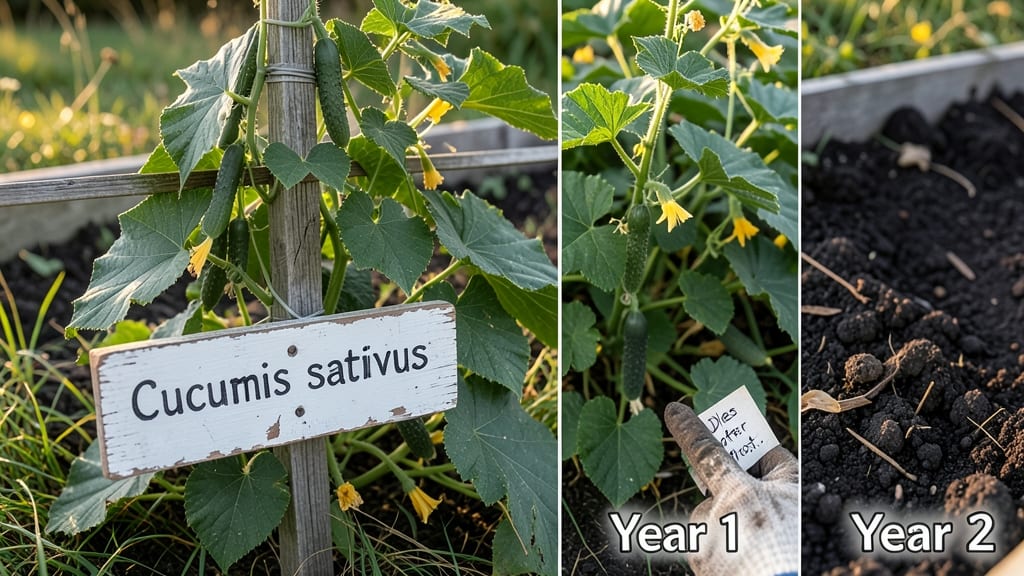
Cucumbers are not perennial plants—they're warm-season annuals that complete their life cycle in one growing season, though their roots may survive mild winters to regrow when conditions warm up again.
This behavior stems from cucumbers' natural growth patterns: they focus all their energy on producing fruit during the growing season, which exhausts the plant. 🌱 True perennials like asparagus or rhubarb store energy in their roots to regrow year after year, but cucumbers lack this built-in resilience.
What's fascinating is how some gardeners in warmer climates can coax cucumbers to regrow from the same roots, effectively creating a multi-year plant—though it's not the same as true perennial behavior.
In regions with mild winters (Zone 9 and above), you can extend cucumbers' lifespan by providing winter protection like thick mulch or moving potted plants to a sheltered location. The key is preventing hard freezes—once temperatures drop below 32°F, even the hardiest cucumber roots won't survive.
This makes them more like "semi-perennial" plants in ideal conditions rather than true perennials.
💡 In This Article
- Why Cucumber Plants Die Back After Harvest
- How to Overwinter Cucumber Vines for Next Year
Why cucumber plants die back after harvest
Cucumber plants exhaust themselves after fruiting because they're determinate or indeterminate annuals designed to focus energy on rapid growth and reproduction rather than long-term survival.
Unlike true perennials like asparagus, which store carbohydrates in their roots for years, cucumbers allocate nearly all their resources to producing fruit during the 60-70 day growing season. This physiological shift explains why vines yellow and die back after harvest - the plant has completed its primary mission.
The dieback process begins when day length shortens (photoperiodism), signaling the plant to shift from vegetative growth to reproductive mode. Cucumbers native to tropical regions lack the genetic adaptations for cold survival found in perennials.
Their roots contain minimal stored energy - typically just 5-10% starch reserves compared to 30-50% in true perennials - leaving them vulnerable once temperatures drop below 50°F. The vines' rapid growth rate also creates structural weaknesses that accelerate decomposition after fruiting.
What's fascinating is how this annual behavior differs from cucumbers' wild relatives. In their native habitats (India and Southeast Asia), cucumbers grow as vines in warm climates where they don't experience freezing temperatures.
This explains why they've never developed the cold-hardy root systems seen in perennials like rhubarb or strawberries. The trade-off is clear: cucumbers prioritize explosive growth and fruit production over long-term survival strategies.
Temperature sensitivity plays a crucial role too. Cucumber roots begin to die when soil temperatures drop below 45°F, while true perennials can survive root temperatures down to 20°F or lower. This explains why even in mild climates, cucumbers won't naturally overwinter without human intervention.
The plant's entire life cycle is tightly coupled to warm-season conditions, making it fundamentally different from perennial vegetables that can regenerate year after year.
Here's what happens at the cellular level: as temperatures drop, cucumber cells lose membrane integrity, leading to rapid tissue breakdown. Unlike perennial roots that develop protective suberin layers, cucumber roots lack these adaptations.
This biological reality explains why gardeners in Zone 9 can sometimes get regrowth from old roots - it's not true perennial behavior but rather a survival response to mild winter conditions that wouldn't occur in cucumbers' native tropical environments.
The key distinction lies in their reproductive strategy. Annuals like cucumbers produce seeds quickly to ensure genetic continuation, while perennials invest in long-term survival structures. This explains why cucumbers never develop the thick, fibrous root systems seen in perennials.
The trade-off is why cucumbers are such prolific producers during their growing season - they're built for maximum output in a short window rather than sustained growth.