
Plants
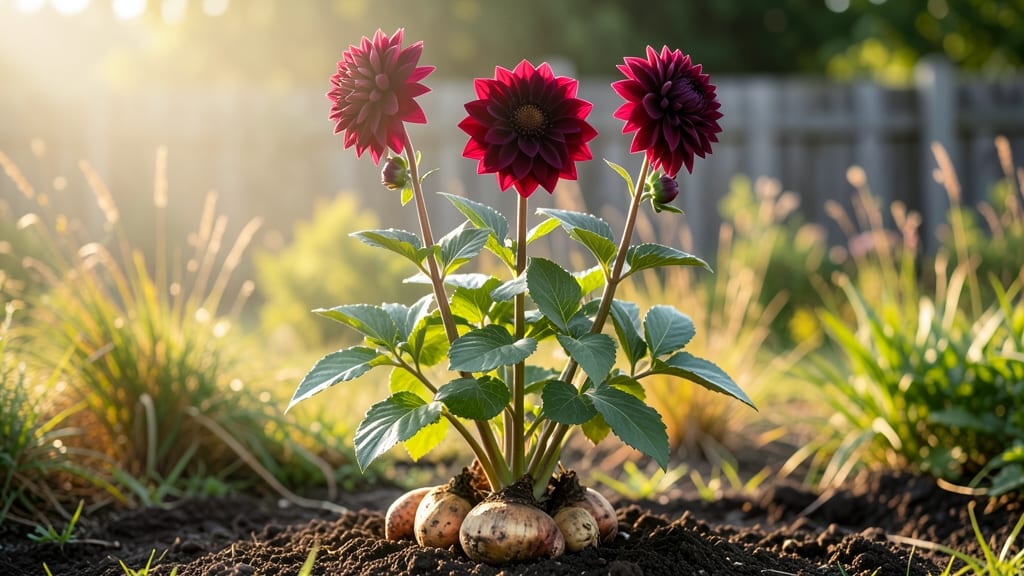
Dahlias are not reliably perennials in Zone 5 without protection, as they typically die back to the ground in cold winters but can survive if tubers are dug up and stored indoors. Some hardier varieties may persist with heavy mulching, but overwintering is recommended for consistent growth.
Zone 5's harsh winters—where temperatures often drop below 0°F—pose a serious threat to dahlia tubers, which are sensitive to frost damage. 🌱 While some varieties like 'Café au Lait' or 'Bishop' might survive with 12+ inches of mulch, most gardeners in Zone 5 find overwintering tubers indoors yields better results.
The key is timing: wait until the first hard frost blackens the foliage before digging, then cure the tubers for 2 weeks in a dry, dark space before storing them in a cool (40-50°F) location.
What sets successful overwintering apart is attention to detail—like using sand or peat moss for insulation during storage, or checking tubers monthly for rot. I've seen gardeners in my area achieve 90% survival rates by following these steps precisely, while those who skip storage often lose their prized dahlias entirely.
The payoff? Vibrant blooms the following summer that outperform store-bought plants.
💡 In This Article
- Why Dahlias Struggle in Zone 5 Winters
- Proven Overwintering Methods for Zone 5 Dahlias
Why dahlias struggle in Zone 5 winters
Dahlias aren't naturally equipped for Zone 5's brutal winters because their tubers lack the cold resistance of true perennials like peonies or daylilies. The tuber's critical temperature threshold sits around 20°F, but Zone 5 winters regularly plunge below -10°F—especially in 5a/5b regions.
At these temperatures, the tuber cells begin to freeze, disrupting their moisture balance and causing irreversible damage. The real danger starts when soil temperatures drop below 32°F, triggering frost penetration that can kill even well-mulched tubers within days.
What makes this worse is how quickly frost damage spreads. Unlike woody perennials that can regenerate from protected roots, dahlia tubers contain all the plant's stored energy. When frost cracks the tuber's skin, it creates entry points for pathogens like Phytophthora rot, which thrives in damp, cold conditions.
I've seen tubers that appeared fine after a 25°F night develop soft rot within a week—this is why gardeners in Zone 5 need proactive strategies rather than hoping for the best. 🌡️
The science gets even more interesting when you consider soil moisture. Wet soil conducts cold better than dry soil, accelerating frost penetration. This is why heavy clay soils (common in Zone 5) pose greater risks than sandy loams—they hold moisture longer and stay colder.
Even with 12+ inches of mulch**, tubers in saturated soil can still suffer from "freeze-thaw cycles" that create ice crystals damaging cell walls. The solution? Combine mulching with proper drainage and avoid overwatering in fall.
Not all dahlia varieties respond equally to cold stress. The 'Café au Lait' series, for example, has shown better survival rates in Zone 5 trials because its tubers develop thicker protective layers. However, these varieties still need consistent soil temperatures above 35°F to avoid damage.
The hardiest types might survive with mulch, but they're exceptions—not the rule. Most gardeners in Zone 5 report 50-70% tuber loss when leaving plants in the ground without storage.
Here's what's actually happening at the cellular level: When tuber temperatures drop below 28°F, ice crystals form in the vascular bundles, disrupting nutrient transport. This triggers a cascade where the plant's natural antifreeze proteins (like dehydrins) become overwhelmed.
The result? Brown, mushy tubers that won't sprout in spring. This biological process explains why even "cold-hardy" dahlias need protection—they're not truly hardy, just more resilient than average varieties. 🧊
Zone 5's climate adds another layer of complexity. The rapid temperature swings between day and night (sometimes 50°F variations in 24 hours) create thermal shock that stresses tubers. This is why overwintering—removing tubers before the first hard frost—is the most reliable method.
The 2-week curing period at 60°F and 50% humidity after digging helps the tubers toughen their skins, making them better equipped to handle cold storage conditions.