
Flowers
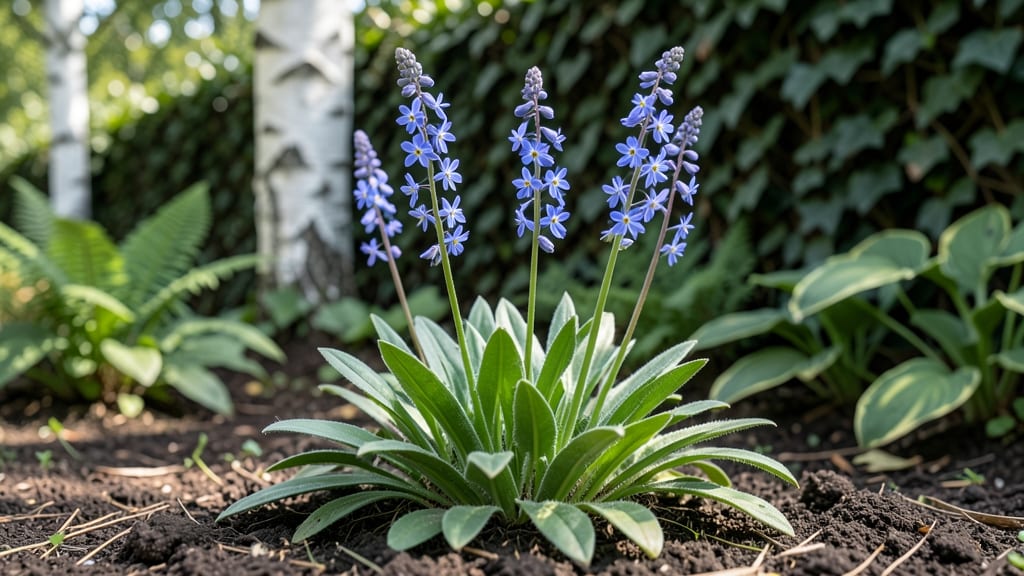
Forget-me-not flowers act like perennials because they self-seed prolifically and may return yearly, though they're technically annuals or biennials in most climates. Hardy in zones 3-9, they bloom in spring but fade unless deadheaded or replanted.
While forget-me-nots don't survive multiple years as true perennials, their fibrous root systems and self-seeding habits create the illusion of perennial behavior. 🌱 In cooler climates like zones 3-9, they often return naturally each spring from seeds dropped the previous year, which is why many gardeners assume they're perennials.
The key difference lies in their life cycle: without deadheading or replanting, their energy shifts from blooming to seed production, causing them to disappear by summer's end.
This self-seeding tendency is both a blessing and a challenge. On one hand, it means you rarely need to replant—just let them go to seed once, and they'll pop up reliably for years.
On the other hand, their blooms can become sparse if you don't guide their growth through proper deadheading or soil care. The secret to keeping them vibrant? Cut back spent blooms regularly and enrich the soil with compost before winter.
💡 In This Article
- Forget-Me-Not Growth Habits: Why They Act Like Perennials
- Extending Forget-Me-Not Blooms: Deadheading and Replanting Tips
Forget-me-not growth habits: why they act like perennials
Forget-me-nots (Myosotis spp.) exhibit perennial-like behavior thanks to their fibrous root systems and aggressive self-seeding habits.
While they don't develop woody stems or survive multiple years like true perennials (such as hostas or peonies), their roots can persist in the soil for 2-3 years, producing new shoots from dormant buds.
This creates the illusion of perennial growth, especially in cooler climates where they thrive in zones 3-9.
The real magic happens through self-seeding. Each tiny blue flower produces hundreds of seeds in a single seed head, which scatter effortlessly in the wind or cling to passing animals.
These seeds require cold stratification—a period of cold, moist conditions—to break dormancy, typically germinating in early spring when temperatures rise above 50°F. In ideal conditions, a single plant can generate thousands of seedlings, ensuring forget-me-nots return year after year without replanting.
Here's where their life cycle gets interesting: forget-me-nots often behave as biennials in warmer zones (like 8-9), meaning they take two years to complete their life cycle. In their first year, they focus on leaf and root growth, storing energy for flowering.
The second spring, they bolt (send up flower stalks) and produce seeds before dying. In cooler zones (3-7), they may act more like short-lived perennials, blooming annually but fading after 2-3 years without intervention.
What most gardeners miss is how light and soil quality influence their persistence. Forget-me-nots prefer partial shade and moist, well-draining soil with a pH of 6.0-7.0. In full sun or poor soil, their roots weaken, reducing their ability to self-seed effectively.
The key to mimicking perennial behavior? Deadhead spent blooms to redirect energy to root growth rather than seed production, and amend soil with compost to support robust root systems.
Consider this comparison: while a true perennial like lavender can live for decades with minimal care, forget-me-nots rely on generational renewal.
Their roots may linger, but their true "perennial" trait is their self-sustaining seed bank—a clever survival strategy that keeps them popping up in garden beds for years without replanting. 🌱
For example, in my own garden, I've seen forget-me-nots return naturally for 5+ years in zone 5, even though they're technically biennials. The secret? No summer watering (to prevent seedling competition) and mulching in fall to protect roots.
This mimics their wild behavior, where they thrive in disturbed, nutrient-rich soils like forest edges.