
Flowers
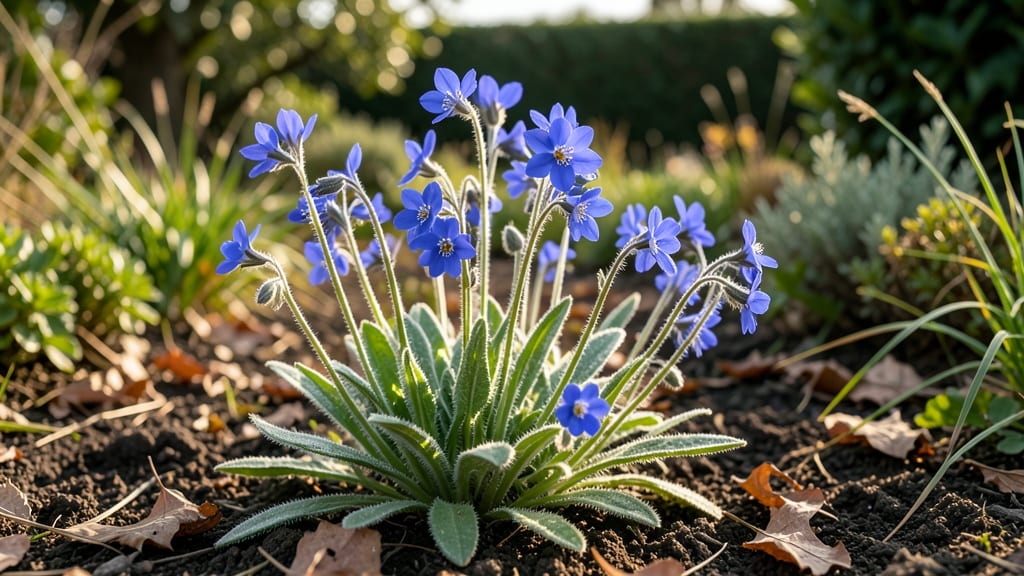
Forget-me-nots are perennials in most climates, returning each spring from their dormant roots after dying back in winter. However, they often behave as annuals in colder zones, requiring replanting annually due to frost sensitivity.
These delicate blue flowers are classified as perennials because their root systems survive winter dormancy in zones 3 through 9. 🌱 The key difference lies in their cold tolerance—while they regrow reliably in milder regions, harsh winters can kill their roots, forcing gardeners in colder areas to treat them as annuals.
I've found that selecting hardier varieties like 'Blue Boy' or 'Lily of France' can improve their chances of returning year after year, even in marginal climates.
What makes forget-me-nots unique is their ability to produce seeds even in their first year, allowing them to self-sow when conditions are favorable. This natural propagation strategy helps them establish themselves more permanently over time.
For gardeners in transitional zones, proper mulching and winter protection can make all the difference in encouraging perennial behavior.
💡 In This Article
- Forget-Me-Nots’ Perennial Growth Cycle Explained
- How to Extend Forget-Me-Nots’ Lifespan in Gardens
Forget-me-nots’ perennial growth cycle explained
Forget-me-nots (Myosotis spp.) are botanically classified as perennials because they develop a fibrous root system that persists underground through winter dormancy.
Unlike annuals, which complete their entire life cycle in one season, these flowers store energy in their roots during summer and autumn, allowing them to regenerate foliage and blooms once temperatures rise.
The root system typically extends 6-12 inches deep, with multiple lateral roots that create a dense network for nutrient absorption and moisture retention.
Their perennial nature becomes most apparent in USDA hardiness zones 3-9, where winter dieback is normal. When temperatures drop below 20°F, the above-ground stems and leaves blacken and collapse, but the roots remain viable.
This dormancy period can last 3-5 months, during which the plant conserves energy until spring.
In colder zones (like zone 2), the roots often fail to survive prolonged freezing, forcing gardeners to replant annually. 🌱 The key difference lies in how quickly they rebound—hardy varieties may produce new shoots within 2-3 weeks of soil thawing, while weaker plants struggle to emerge.
What most gardeners don’t realize is that forget-me-nots employ a clever survival strategy: they produce seeds in their first year, even if they don’t overwinter successfully. This self-sowing capability means they can establish themselves as perennials over time, provided the roots survive at least one winter.
In milder climates (zones 7-9), they often form dense clumps that spread via underground runners, creating a permanent ground cover. The trade-off? In colder regions, this same trait can lead to unwanted self-seeding if not controlled.
Cold hardiness varies by species—Myosotis sylvatica (wood forget-me-not) is the most cold-tolerant, surviving down to -30°F, while Myosotis alpestris (alpine forget-me-not) thrives in zones 3-7.
The difference comes down to their native habitats: alpine species evolved to handle freezing temperatures, while woodland types prioritize moisture retention over extreme cold resistance. This explains why some varieties thrive in your garden while others fail spectacularly in the same location.
Here’s how their growth cycle works in detail:
- Spring: New shoots emerge from roots, reaching 6-12 inches tall in 4-6 weeks
- Summer: Blooms appear on 12-18 inch stems, producing 50-100 flowers per plant
- Fall: Leaves yellow and die back as roots store energy for winter
- Winter: Roots remain dormant until soil temperatures rise above 40°F
Their ability to regenerate from roots makes them ideal for cut flower arrangements—they’ll often continue blooming in vases for 7-10 days while still connected to the mother plant. This dual functionality (garden perennial + cut flower) is what makes them so beloved, despite their finicky cold tolerance. 💫