
Flowers
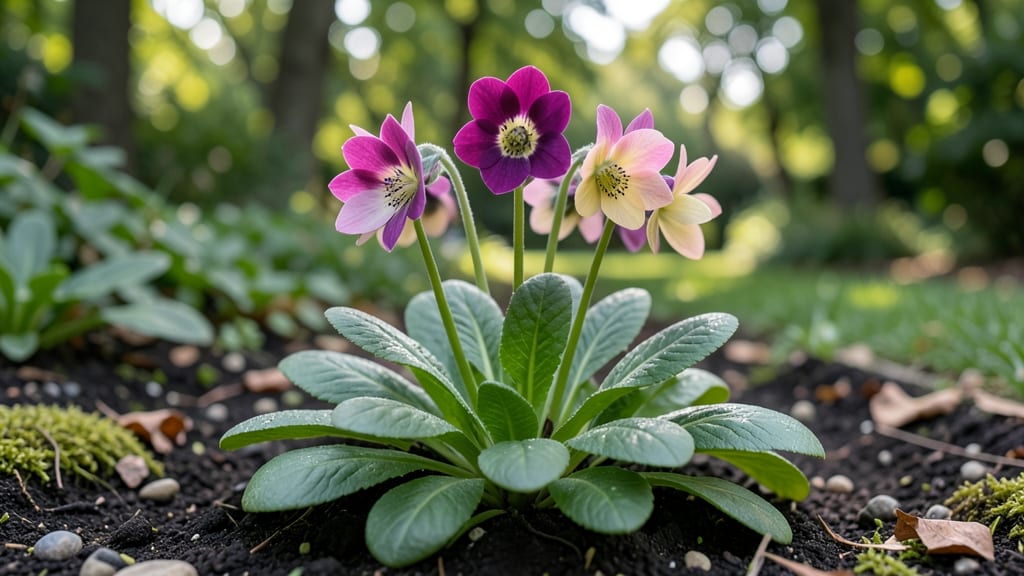
Primroses are perennials in most climates, though they may die back to the ground in winter before regrowing from roots or basal leaves each spring. Their hardiness depends on species and zone, with some thriving as annuals in hotter regions.
Most primroses survive winter by entering dormancy, storing energy in underground stems like rhizomes or corms.
This cycle—where foliage fades but roots persist—is how they prove their perennial nature. 🌱 For example, English primroses (Primula vulgaris) reliably return each spring in zones 4-8, while species like Primula denticulata may behave as annuals in warmer zones (9+). The key difference?
True perennials regrow from living tissue, while annuals rely on seeds.
Understanding this helps gardeners choose varieties that match their climate. Mulching with straw or leaves in fall can protect tender roots, while avoiding spring pruning lets plants focus energy on reblooming. Cold stratification in winter actually signals primroses to wake up—nature's way of timing their comeback perfectly.
💡 In This Article
- How Primrose Dieback Cycle Works as a Perennial Survival Strategy
- Choosing Primrose Varieties for Your Climate Zone
How primrose dieback cycle works as a perennial survival strategy
Primroses employ a clever survival tactic called dormancy, where above-ground growth shrivels in winter while underground structures remain alive. This isn't death—it's a metabolic slowdown triggered by short daylight hours and cool temperatures.
The plant's energy reserves, stored in rhizomes (horizontal stems) or corms (thickened underground stems), can last months without sunlight. For example, English primroses (Primula vulgaris) store enough starch in their rhizomes to fuel regrowth even after 100+ days of dormancy. 🌱
The magic happens through a process called cold stratification, where exposure to 32-40°F temperatures for 4-8 weeks breaks dormancy. This mimics nature's timing—primroses won't wake until winter's chill signals spring's approach. Unlike true annuals (like sweet peas), which die completely after seeding, perennials like primroses regenerate from living tissue.
Their basal leaves at the soil line contain meristem cells that can sprout new growth when conditions improve. This explains why you might see primrose foliage reappear in late winter before other perennials.
What sets primroses apart is their adaptive flexibility. Some species, like Primula denticulata, have evolved to store even more energy in their corms, allowing them to survive harsher winters (down to -15°F) in zones 3-7.
This underground storage system is why primroses can return year after year—even if their stems look completely dead. The key difference from annuals is that perennials maintain viable root systems, while annuals rely entirely on seed germination each season.
Gardeners often confuse primroses' winter dieback with death, but this is actually their conservation strategy. The plant's energy reserves act like a biological battery, recharging through photosynthesis during spring and summer to fuel another dormancy cycle.
For instance, a well-established primrose patch can produce 20-30% more flowers each year because the roots grow larger with age, storing more starch. This is why mature primroses often outperform younger plants in the same garden spot. 💫
Consider how primroses compare to true annuals like pansies, which complete their entire life cycle in one season. Annuals invest all their energy into seed production, while primroses divide their resources between flowering and root storage.
This dual strategy explains why primroses can thrive for decades in ideal conditions—some garden records show primroses living 15+ years with proper care. The trade-off? Their slower growth rate compared to annuals that focus solely on rapid reproduction.
Here's what happens step-by-step during the dieback cycle:
- Fall: Leaves yellow as chlorophyll breaks down, but roots remain active storing nutrients
- Winter: Underground structures enter dormancy at 40°F or below, metabolism slows to 1-5% of normal
- Late Winter: Cold stratification completes, triggering hormone changes that wake meristem cells
- Spring: New shoots emerge from basal leaves or corm buds, using stored energy to break through soil