
Plants
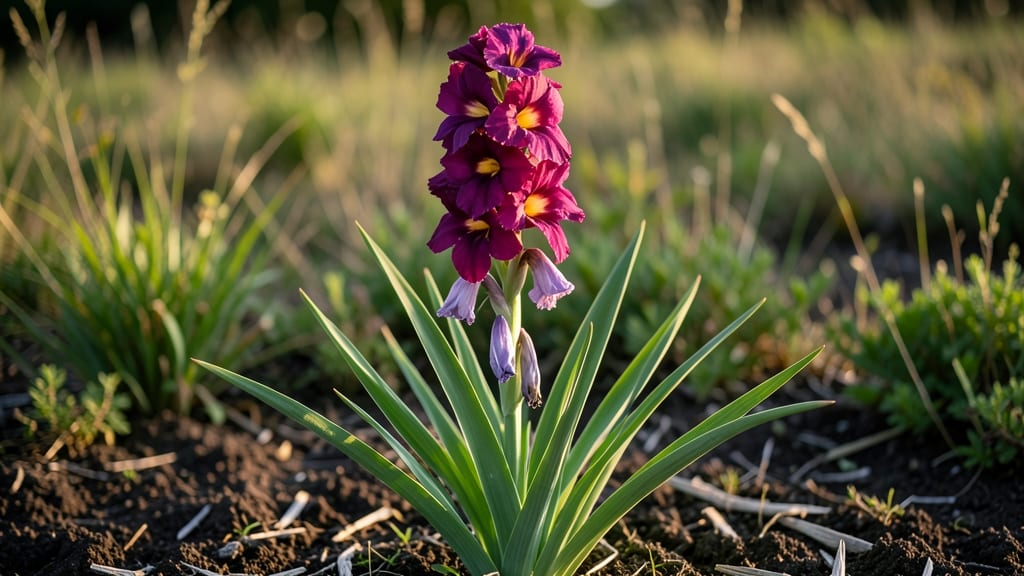
Gladiolus aren't true perennials—they die back each year but regrow from underground tubers, thriving in mild climates for 2-3 years before needing division or replanting in colder areas.
Gladiolus behave like perennials because their underground corms (thickened stems) store energy to regrow each spring. 🌱 Unlike true perennials, which keep foliage year-round, gladiolus go dormant when temperatures drop, making them more accurately classified as geophytes.
In warmer zones, they may rebloom annually, but even then, their vigor fades without proper care—like dividing overcrowded clumps every 2-3 years. This explains why gardeners often mistake them for hardy perennials when they're actually more like seasonal bulbs with a shorter natural lifespan.
What sets gladiolus apart is their corm-based growth cycle: each year, the old corm produces a new one while shrinking itself. This is why you'll see fewer, smaller blooms over time—a clear sign it's time to dig up and separate the corms.
In colder climates, gardeners must lift and store corms indoors or replant fresh ones each spring, as winter kills the dormant tubers. The key to keeping them thriving longer lies in understanding this renewal process rather than treating them as perennial workhorses.
💡 In This Article
- Why Gladiolus Act Like Perennials Despite Being Bulbous Plants
- How to Extend Gladiolus Lifespan as a Gardener
Why gladiolus act like perennials despite being bulbous plants
The confusion about gladiolus stems from their underground storage system. These plants are classified as geophytes, meaning they store nutrients in specialized underground structures—specifically corms (not bulbs).
Unlike true perennials, which maintain living stems and leaves year-round, gladiolus corms enter dormancy when temperatures drop below 50°F, causing the above-ground foliage to die back completely. This annual cycle tricks gardeners into thinking they're perennials, but the key difference lies in their non-woody, non-persistent growth habit.
The corm itself is a modified stem that swells with starches during the growing season, providing energy for next year's regrowth. When you plant a gladiolus corm in spring, it sprouts leaves and flowers, then produces a new corm while the old one shrinks and dies.
This process explains why gladiolus often produce fewer, smaller blooms over time—the energy is being diverted to creating new corms rather than maintaining the parent plant. In mild climates (USDA zones 8-10), this cycle repeats annually, while colder regions require corm storage or annual replanting to survive winter.
Climate plays a critical role in their behavior. In regions with mild winters (like coastal California), gladiolus may rebloom repeatedly without intervention, creating the illusion of perennial behavior. However, even in these zones, their vigor declines after 2-3 years without division, as the corms become overcrowded and compete for nutrients.
The annual dieback isn't a sign of weakness—it's a survival strategy that allows them to conserve energy during unfavorable conditions, much like true bulbs (like tulips) but with a more aggressive growth cycle.
Here's what happens botanically: The corm's outer layers contain meristematic cells that can regenerate new shoots when conditions are favorable. This is why you'll often see gladiolus resprouting from the same spot year after year, even after the foliage has browned and died.
However, without proper care—like dividing corms every 2-3 years—the plant's energy becomes divided among too many competing growth points, leading to smaller blooms and weaker stems. This decline isn't inevitable but signals it's time for gardeners to intervene.
Consider this comparison: A true perennial like hosta maintains its crown year-round, growing new leaves from the same root system. A gladiolus, however, replaces its entire corm annually, with the old corm serving as a nutrient source for the new one.
This replacement process is why gardeners must lift and divide gladiolus corms periodically—otherwise, the plant's energy becomes exhausted maintaining too many corms in one clump. The result? Diminished blooms and eventual decline, even in ideal growing conditions.
What most gardeners overlook is how temperature triggers dormancy. When nighttime temperatures consistently drop below 50°F, the corm's growth hormones shift from promoting above-ground growth to conserving energy.
This physiological response explains why gladiolus in colder climates require special overwintering care—without it, the corms simply won't survive the freeze. The annual dieback isn't a flaw in the plant's design but a sophisticated adaptation that allows it to thrive in seasonal environments where other plants might struggle.
Understanding this growth cycle helps explain why gladiolus behave more like seasonal bulbs than true perennials. While they may return year after year, their lifespan is determined by how well gardeners manage this corm replacement process.
The key takeaway? Gladiolus aren't failing as perennials—they're following their natural biological program, which just happens to include an annual reset that requires human intervention to maintain optimal performance. 🌱