
Plants
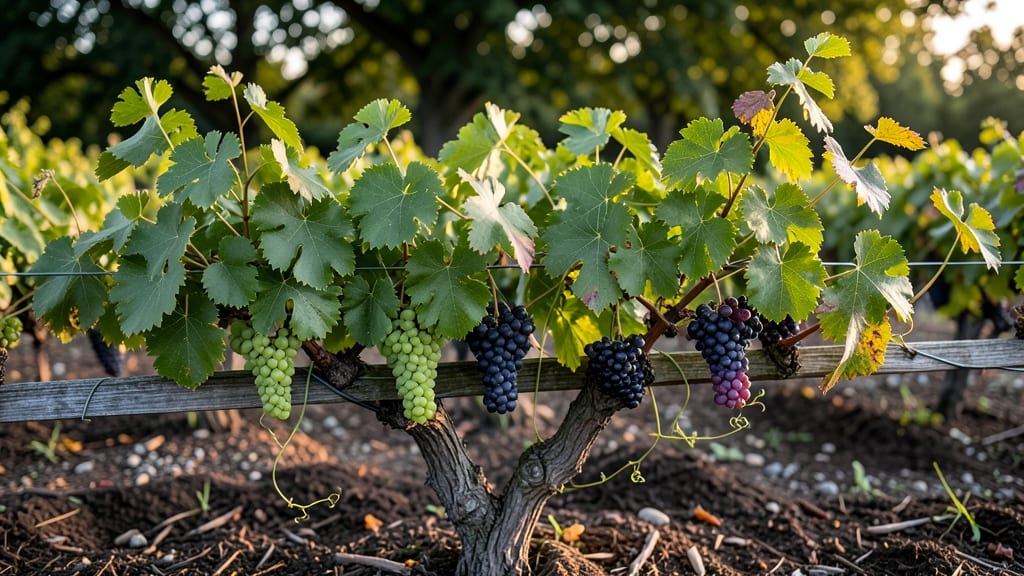
Grapes are perennial plants that regrow each year from their woody vines, with lifespans ranging from 20-50 years for commercial varieties to centuries for undisturbed wild vines. Their ability to survive winter freeze relies on dormant buds and robust root systems.
This perennial nature means grapevines aren't just seasonal—they're built for endurance. 🌱 The key lies in their winter dormancy cycle, where above-ground growth dies back but roots and protected buds remain alive beneath the soil.
What's fascinating is how modern viticulture uses phylloxera-resistant rootstocks to extend commercial vines' productive years, even in challenging climates. Proper pruning and winter protection can push a vine's lifespan well beyond the typical 50-year mark.
For home growers, understanding this cycle transforms grape care from annual replanting to long-term stewardship. The same principles apply whether you're growing wine grapes or table varieties—patience and proper technique pay off in decades of harvests.
💡 In This Article
- How Grapevine Perennialism Works Through Dormancy and Regrowth
- Maximizing Grapevine Lifespan: Pruning, Climate, and Care Tips
How grapevine perennialism works through dormancy and regrowth
The grapevine's perennial nature begins with its woody structure, where the main trunk and branches contain specialized tissues that store nutrients and water. During winter, grapevines enter a state called endodormancy, triggered by shorter daylight and cooler temperatures.
This phase causes the vine to shut down all non-essential growth, with leaves falling and canes dying back to the ground. However, the real secret lies in the buds—each bud contains embryonic shoots, leaves, and flowers encased in protective scales that prevent water loss and freezing damage.
These buds are remarkably resilient, capable of surviving temperatures as low as -20°F (-29°C) for some cold-hardy varieties like Concord or Marquette. The buds contain high concentrations of sugars and antioxidants that act as natural antifreeze, while their location near the trunk or rootstock provides additional insulation.
The root system, which can extend 10-15 feet deep, remains active underground, absorbing moisture and storing carbohydrates to fuel spring regrowth. This underground network is why vines can recover even after severe winter dieback above ground.
Modern viticulture has refined this natural process through phylloxera-resistant rootstocks, which are grafted onto desirable grapevine varieties. These rootstocks, often from species like Vitis riparia or Vitis rupestris, provide enhanced cold tolerance and disease resistance while maintaining the scion's fruiting characteristics.
The graft union creates a biological bridge where the rootstock's hardiness meets the scion's productivity, extending commercial vineyards' productive lifespan from 15-20 years to 50+ years with proper care. 🌱
Spring regrowth begins when buds sense increasing temperatures and daylight, typically between 50-60°F (10-15°C). Within days, new shoots emerge from the buds, drawing on stored nutrients from the roots. This rapid growth phase lasts until summer when the vine enters ecodormancy, a temporary pause before the next cycle.
The entire process demonstrates how grapevines have evolved to thrive in seasonal climates, making them one of the most adaptable perennial crops in the world.
What's particularly fascinating is how grapevine buds remain viable for decades. Studies show that buds can remain dormant and viable for 5-10 years even if not pruned, though proper pruning helps direct energy toward fruit production.
This longevity explains why wild grapevines can persist for centuries—they're not just surviving each winter, but actively preparing for the next growing season through a sophisticated biological cycle of dormancy and renewal.
For home growers, understanding this cycle means recognizing that grapevines aren't just plants—they're living archives of their own history. Each year's growth builds on the previous year's foundation, with the vine's age often reflected in its productivity and resilience.
This is why properly cared-for vines can outlive their gardeners, becoming living legacies in the landscape.