
Plants
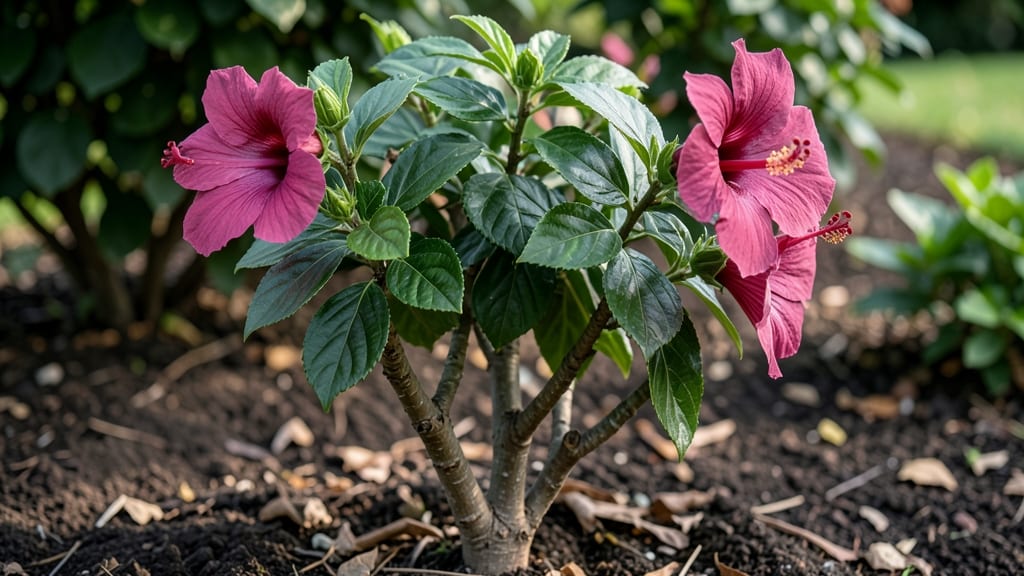
Hibiscus plants aren't true perennials in most regions, since they usually die back completely in winter but can regrow from their root systems in warmer climates (USDA zones 9-11). Some tropical varieties may persist through mild winters with proper protection.
Most hibiscus varieties behave like perennials only in frost-free zones because their above-ground growth is highly sensitive to cold temperatures. 🌱 When nighttime temps dip below 30°F, the stems and leaves will blacken and collapse, but the roots often survive underground.
This dormancy cycle explains why hibiscus can regrow each spring in warm climates—it's not true perennial hardiness, but rather seasonal regrowth from protected root systems.
In cooler climates, gardeners often treat hibiscus as annuals or use overwintering techniques like heavy mulching or container protection. The key difference lies in their tropical origins: hibiscus evolved in warm regions where freezing temperatures never occur naturally.
With proper winter care, you can extend their lifespan beyond a single season, but they'll never achieve the same hardiness as native perennials.
💡 In This Article
- Hibiscus Perennial Lifespan and Cold Hardiness Limits
- How to Overwinter Hibiscus as Perennial-Like Plants
Hibiscus perennial lifespan and cold hardiness limits
The hibiscus plant's survival strategy revolves around its root system, which stores nutrients and energy to fuel regrowth when conditions improve. In frost-free zones (USDA 9-11), hibiscus naturally behave like perennials because their roots remain alive year-round, protected by the warm soil.
The above-ground growth, however, is ephemeral—when temperatures drop below 30°F, the stems and leaves freeze and blacken, but the roots often survive underground. This dormancy mechanism is similar to how some bulbs (like tulips) survive winter, but hibiscus lack true cold-hardy structures like bulbs or rhizomes.
What sets hibiscus apart is their frost sensitivity threshold: even a light frost (28°F) can damage leaves, while prolonged exposure to 20°F or lower will kill the roots in most varieties.
Tropical hibiscus, like Hibiscus rosa-sinensis, are particularly vulnerable, while hardier varieties (like Hibiscus moscheutos) may tolerate brief dips to 20°F if the ground isn't frozen.
The key difference is that true perennials (like hostas) have specialized tissues to withstand freezing, while hibiscus rely on rapid regrowth from stored energy.
In warmer climates, hibiscus regrow from their roots each spring, producing new stems and leaves within 4-6 weeks of warm soil temperatures (60°F). This regrowth isn't true perennial hardiness—it's more like a tropical plant's survival adaptation.
The roots act as a living reservoir, but without protection, they can't survive prolonged cold. That's why hibiscus in cooler zones (USDA 5-8) often die back completely unless gardeners intervene with overwintering techniques.
Consider this comparison: a true perennial like peonies can survive -20°F winters with no protection, while hibiscus roots typically succumb to 15°F or lower. The difference lies in their evolutionary origins—hibiscus evolved in frost-free tropical regions where cold never occurred naturally.
Their survival strategy is all about rapid regrowth from protected roots, not enduring harsh winters like native perennials.
Here's what happens during winter dieback: when temperatures drop, the plant's cells lose water and freeze, causing the stems to collapse. The roots, however, remain dormant but alive, waiting for warmer soil temperatures to trigger new growth.
This process is why hibiscus can "come back" in spring—it's not resurrection, but rather a continuation of life from the root system. Without this mechanism, hibiscus would behave like annuals, dying completely each winter.
The USDA zone breakdown for hibiscus hardiness is critical: in zones 9-11, hibiscus thrive as perennials with minimal care, while in zones 7-8, they require protection (like mulch or containers) to survive winter.
In zones 5-6, they're typically grown as annuals or overwintered indoors. This geographic limitation explains why hibiscus are often treated as seasonal plants in cooler regions.