
Plants
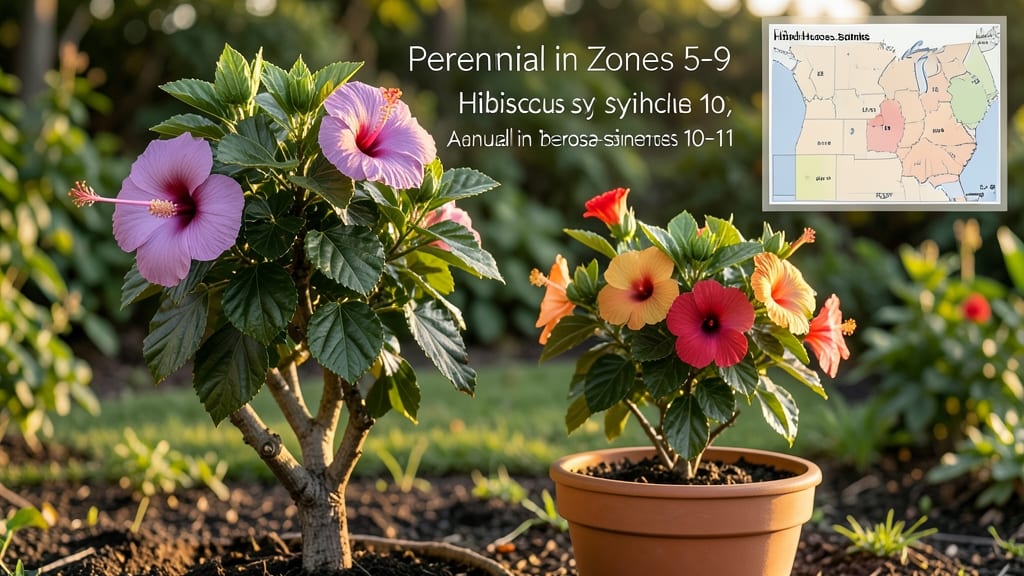
Whether hibiscus plants are perennials or annuals depends on climate: they thrive as perennials in USDA Zones 5-11 but die back to the ground in frost-prone areas, forcing gardeners to treat them as annuals.
Hibiscus plants naturally behave like perennials in frost-free regions, where they regrow each spring from their roots. 🌱 However, when temperatures drop below 25°F, even the hardiest varieties succumb to frost damage, which is why gardeners in colder zones often replant from cuttings each year.
The key difference lies in species—Hardy Hibiscus (like Hibiscus moscheutos) can survive Zone 5 winters, while tropical varieties (Hibiscus rosa-sinensis) need protection or indoor overwintering. This climate dependency explains why hibiscus is treated as both perennial and annual depending on location.
For gardeners in marginal zones (like Zone 5), the solution often involves strategic overwintering techniques.
These include digging up tubers before frost, storing them in dry containers, or using thick mulch to insulate roots. 💛 Even in these cases, hibiscus can technically live multiple years with proper care—it's just not as low-maintenance as true perennials in warmer climates.
💡 In This Article
- Hibiscus Plant Hardiness Zones Explained
- How to Overwinter Hibiscus in Cold Climates
Hibiscus plant hardiness zones explained
The USDA Plant Hardiness Zone Map divides North America into 11 zones based on average annual minimum temperatures, and hibiscus plants respond dramatically to these boundaries. Tropical hibiscus varieties (like Hibiscus rosa-sinensis) flourish as perennials only in Zones 9-11, where winter temperatures rarely dip below 25°F.
In these frost-free regions, their woody stems and roots remain active year-round, producing vibrant blooms continuously. 🌺 The hardiest hibiscus species, such as Hibiscus moscheutos (swamp hibiscus), extend this perennial range down to Zone 5, thanks to their ability to withstand brief cold snaps down to −20°F.
Cold tolerance varies significantly between species due to differences in cellular structure and water content. Hardy hibiscus develop thicker stems and deeper root systems that store more starches, acting like natural antifreeze.
Tropical varieties, however, have thinner stems filled with moisture that freezes and ruptures cell walls at temperatures below 32°F.
This is why you'll see tropical hibiscus grown as annuals in Zones 6-8—they simply can't survive winter's chill without protection. 🥶 Even a single night below 28°F can kill back tropical hibiscus to the ground, forcing gardeners to replant from cuttings each spring.
The transition from perennial to annual behavior occurs at Zone 7, where winter temperatures hover around 0°F to 10°F. In these marginal zones, hibiscus plants may survive mild winters but often suffer dieback or stunted growth.
This creates a gray area where hibiscus can technically live multiple years with careful overwintering, but they don't exhibit the same reliable perennial behavior as native plants like hostas or peonies.
The key difference is that true perennials have evolved to handle winter dormancy, while hibiscus are tropical plants that have been domesticated for ornamental use.
What most gardeners don't realize is that hibiscus plants actually enter a form of dormancy when exposed to cold, but this process is incomplete compared to native perennials. Their roots may survive in the ground with heavy mulch, but the above-ground growth will still die back.
This partial dormancy explains why hibiscus can sometimes regrow from the same root system in spring—it's not true perennial behavior, but rather a survival mechanism triggered by temperature shifts. 🌱 The science behind this involves the plant's ability to convert stored sugars into antifreeze proteins, but these protections only go so far before cellular damage occurs.
Consider these key factors when assessing hibiscus hardiness in your region:
- Microclimate matters: Hibiscus planted in sheltered spots (near south-facing walls) may survive 2-3°F colder than exposed areas
- Soil insulation: Sandy soils drain cold air faster than clay, creating 5°F temperature differences at root level
- Species selection: Hibiscus syriacus (Rose of Sharon) tolerates Zone 5, while Hibiscus mutabilis (Confederate Rose) thrives in Zone 6
- Wind exposure: Wind chill can drop effective temperatures by 10°F or more, accelerating frost damage
The most critical temperature threshold for hibiscus is 25°F—below this point, even hardy varieties begin experiencing cellular damage. This explains why hibiscus grown as annuals in colder climates often produce more vigorous growth in their first year, as they're not stressed by winter survival.
The trade-off is that without proper overwintering, these plants won't establish the deep root systems that make true perennials so resilient. 💫