
Plants
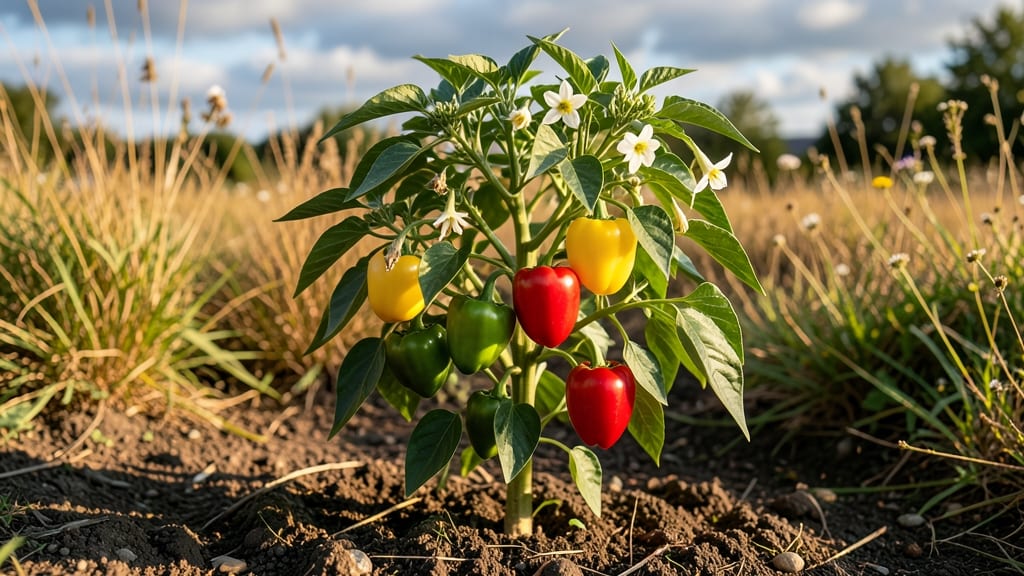
Hot pepper plants are not perennial in most climates, dying back after harvest but often regrowing from the roots in warmer zones (USDA 9-11) if protected from frost. In colder regions, they must be replanted annually or overwintered indoors with care.
Hot pepper plants act more like annuals in most gardens because they can't survive freezing temperatures. 🌱 The moment nighttime dips below 40°F, their tender foliage and stems become vulnerable to frost damage, often killing the entire plant.
However, in warmer climates like USDA zones 9-11, many gardeners find their peppers regrow from the roots each spring if given some winter protection. This makes them technically semi-perennial in those areas, though they still need careful attention during cold snaps.
What's interesting is how their growth habits differ from true perennials like asparagus or rhubarb. Peppers focus all their energy on producing fruit during the growing season, leaving little reserve for surviving winter dormancy.
That's why gardeners in colder zones often treat them as annuals—starting fresh each spring—while those in milder climates can experiment with overwintering techniques to extend their plants' lifespan.
💡 In This Article
- Why Hot Pepper Plants Die in Cold Climates
- How to Overwinter Hot Peppers for Next Year’s Harvest
Why hot pepper plants die in cold climates
Hot pepper plants belong to the Capsicum genus, which evolved in tropical and subtropical regions where temperatures rarely drop below 50°F. Their tender leaves and stems lack the protective mechanisms—like thick bark or deep root systems—found in true perennials.
When nighttime temperatures fall below 40°F, ice crystals form in the plant's cells, rupturing their membranes and causing irreversible damage. This is why even a light frost can turn a thriving pepper plant into a crispy, brown husk within hours. 🌡️
The root system plays a surprising role in their survival. While pepper roots can extend up to 2-3 feet deep, they're not cold-hardy like those of perennials such as asparagus. In colder climates, the roots often die back completely, leaving no living tissue to regenerate the plant.
Even in milder zones (USDA 8-9), roots may survive but produce weak regrowth unless protected. The plant's entire energy is directed toward fruit production during the growing season, leaving minimal reserves for winter survival.
What makes peppers different from true perennials is their growth strategy. Most perennials store energy in roots or underground stems (rhizomes) to fuel regrowth. Peppers, however, prioritize above-ground growth and fruit production, which is why they struggle to survive winter.
For example, a jalapeño plant might produce 10-20 pounds of peppers in a season—energy that could have been stored for winter survival instead. 🌶️
Another critical factor is their sensitivity to chilling injury, which occurs between 32°F and 50°F. Even without frost, prolonged exposure to these temperatures disrupts cell metabolism, leading to yellowing leaves, stunted growth, and eventual death.
This is why gardeners in colder zones often treat peppers as annuals, replanting each spring rather than risking overwintering. The plant's tropical origins mean it lacks the genetic adaptations to handle prolonged cold exposure.
In warmer climates (USDA zones 9-11), peppers can sometimes regrow from the roots because the ground rarely freezes solid. However, even here, they need protection from light frosts (below 32°F) and may require mulching or row covers to survive.
The key difference is that in these zones, the roots often remain viable, allowing new shoots to emerge in spring. In colder areas, the entire root system typically dies back, making true overwintering nearly impossible without human intervention. 🌱
Understanding this biology helps explain why peppers thrive as annuals in most gardens. Their tropical nature means they're adapted for rapid growth and high fruit production during warm seasons, not for enduring cold winters.
This is why gardeners in colder climates often focus on preserving seeds or saving peppers for cooking rather than trying to keep the plants alive year-round. 🌡️