
Trees
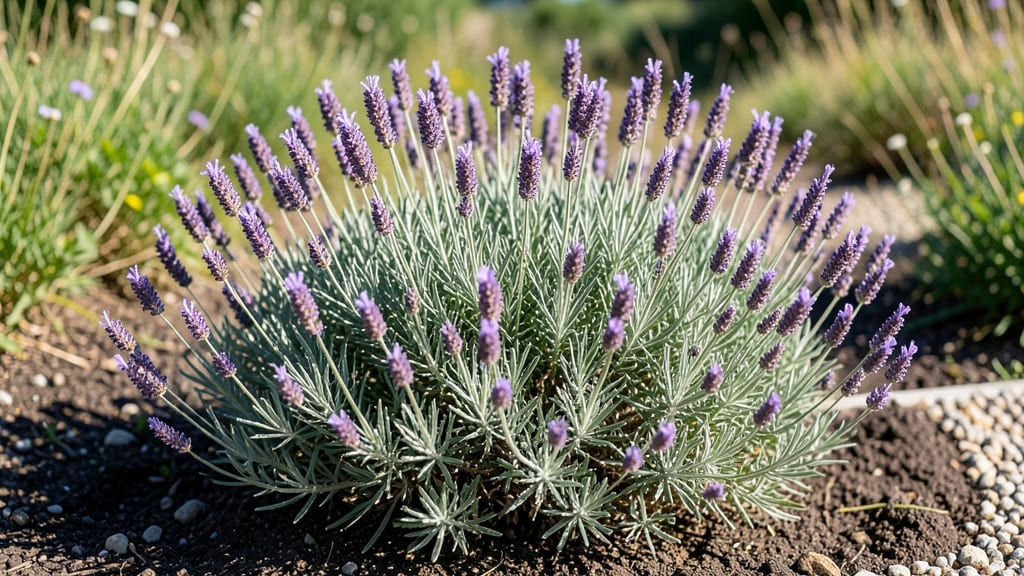
Lavender trees are perennials in warm climates but often treated as semi-perennials or annuals in colder regions, as frost and freezing temperatures can damage or kill them without proper protection or winter care. Hardy varieties like Lavandula angustifolia survive mild winters, while others require seasonal adjustments or indoor overwintering.
Lavender's perennial nature actually depends heavily on where you live. In USDA zones 7-9, these plants thrive year-round, returning stronger each spring. 🌿 However, in colder zones (5-6), they often die back to the ground in winter, which is why gardeners treat them as semi-perennials or even annuals.
The key difference lies in their root systems—some varieties like English lavender (Lavandula angustifolia) can handle light frosts down to 15°F, while others like Spanish lavender (Lavandula stoechas) need protection below 20°F.
This is why proper winter care—like mulching or container overwintering—can mean the difference between a plant that comes back and one that doesn't.
What's fascinating is how lavender adapts to cold. Many varieties enter a natural dormancy state, conserving energy until warmer temperatures return. This biological response explains why some gardeners successfully grow lavender in colder climates with the right techniques—like using thick mulch or moving potted plants to sheltered locations.
The trade-off? These plants may take longer to establish and require more maintenance than their warm-climate counterparts.
💡 In This Article
- Lavender Hardiness Zones and Cold-Resistant Varieties
- Winterizing Lavender for Cold Climates: Step-by-Step Guide
Lavender hardiness zones and cold-resistant varieties
The perennial nature of lavender hinges on its cold tolerance, which varies dramatically between species. English lavender (Lavandula angustifolia) thrives in USDA zones 5-9, surviving temperatures as low as 15°F thanks to its deep root system that insulates the crown.
In contrast, Spanish lavender (Lavandula stoechas) tops out at zone 8, often dying back below 20°F unless protected. This difference stems from their evolutionary origins—English lavender evolved in Mediterranean climates with cooler winters, while Spanish lavender adapted to milder coastal regions.
What happens at the cellular level?
Cold hardiness in lavender involves a process called cold acclimation, where plants produce protective proteins and sugars that prevent ice crystal formation in their tissues. 🌱 For example, when nighttime temperatures drop below 32°F, lavender's leaves begin to harden by increasing their waxy cuticle thickness—a natural defense mechanism.
However, prolonged exposure to -10°F or lower can still cause irreversible damage, especially to tender new growth. This explains why gardeners in zone 5 must take extra precautions, like heavy mulching or container overwintering.
Hardiness also depends on the plant's age and establishment. Young lavender plants (under 2 years old) are far more vulnerable to cold damage because their root systems aren't fully developed to store energy reserves.
Mature plants, however, can survive winter dieback and regrow from their roots in spring—a trait that makes them semi-perennial in colder climates. This resilience is why some gardeners in zone 6 successfully grow lavender by planting it in south-facing locations where winter sun provides additional warmth.
Consider these key varieties for cold climates:
- Grosso Lavender (Lavandula x intermedia 'Grosso'): Hybrid with zone 5-9 tolerance, reaching 3-4 feet tall—ideal for hedges
- Hidcote Giant (Lavandula angustifolia 'Hidcote'): Compact but hardy to 10°F, perfect for containers
- Provence Lavender (*Lavandula stoechas 'Provence'): Zone 7-9 only, but prized for its fragrant purple bracts
The science behind lavender's dormancy is fascinating. During winter, the plant's metabolic rate slows dramatically, conserving carbohydrates stored in its roots. This dormancy isn't true hibernation—it's more like a metabolic pause that allows the plant to survive without active growth.
When spring arrives, the roots signal the shoots to regrow, provided they weren't frozen solid. This biological adaptation explains why lavender can bounce back from winter dieback, even in marginal climates.
For gardeners pushing the limits, microclimates make all the difference. A south-facing wall or a protected corner can raise temperatures by 5-10°F compared to open areas, creating a pocket where lavender might survive a degree colder than the official zone rating.
This is why many urban gardeners in zone 5 succeed with lavender where rural gardeners fail—city heat islands and reflective surfaces create unintentional greenhouses. 🌿