
Flowers
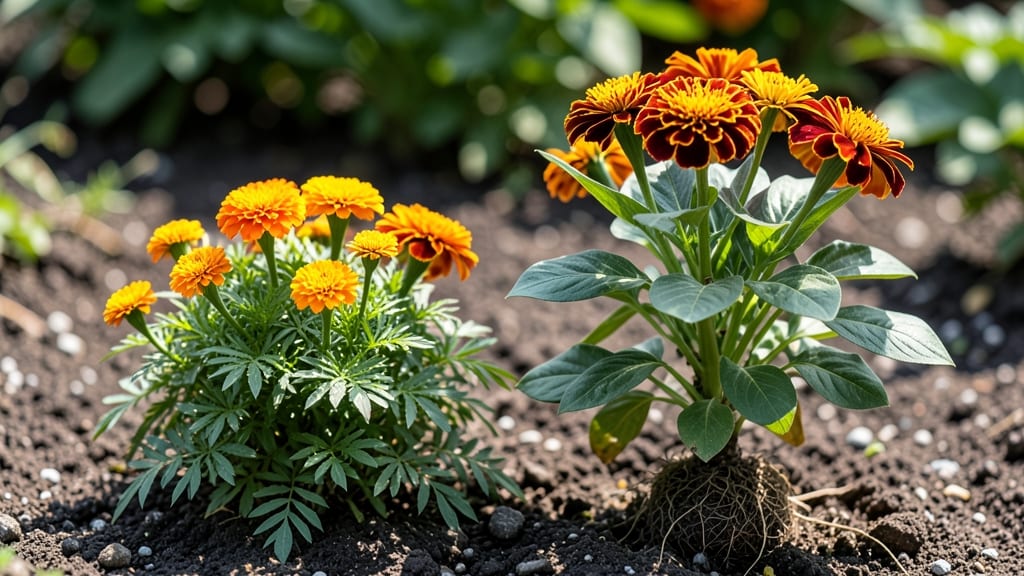
Marigolds aren't perennial flowers in most climates—they die back when frost arrives but can survive as hardy annuals or be coaxed back to life with proper winter care. Their ability to regrow depends entirely on your growing zone and how well you protect their root systems.
Marigolds behave like perennials in warmer climates (USDA zones 9-11) because their roots naturally withstand mild winters. 🌱 However, in colder regions, they typically return as annuals unless you take steps to shield them—like heavy mulching or moving potted plants indoors.
The key difference lies in how frost affects their root systems: in frost-free zones, marigolds can regenerate year after year without intervention, while in colder areas, they need your help to survive the winter months.
This explains why gardeners in zone 5 might see marigolds as annuals while those in zone 10 treat them as perennials—the same plant behaves differently based on climate.
The good news is that with the right techniques, you can extend their lifespan almost anywhere by protecting their roots from freezing temperatures.
💡 In This Article
- How Cold Zones Affect Marigold Lifespan
- Extending Marigold Growth Beyond One Season
How cold zones affect marigold lifespan
The true perennial nature of marigolds hinges on their root system's ability to survive winter dormancy. In USDA zones 9-11, where winter temperatures rarely drop below 25°F, marigolds naturally regrow each spring from their protected underground roots.
The plant's taproot system stores carbohydrates during growth, which fuels regrowth when conditions warm again. This is why marigolds act like perennials in frost-free climates—they're not dying back completely, just entering a dormant state.
In colder zones (3-8), frost becomes the critical factor. When temperatures fall below 32°F, the plant's above-ground foliage dies, but the real damage occurs to the roots.
Marigolds have a moderate cold tolerance—their roots can survive brief exposures to 20°F if dry, but prolonged freezing or wet soil conditions cause root death.
The difference between zones 8 and 9 is just 5°F in average winter lows, yet this 5°F can mean the difference between perennial behavior and annual death in marigolds.
What most gardeners don't realize is how soil moisture interacts with cold tolerance. Wet soil conducts cold more efficiently than dry soil, which is why mulching becomes crucial.
A 4-6 inch layer of straw or leaves can raise soil temperatures by 5-10°F during cold snaps, making the difference between root survival and death. This insulation works by trapping heat radiated from the earth and preventing rapid temperature fluctuations that stress plant tissues.
The science behind marigold survival involves their growth habit too. Unlike true perennials that develop woody stems, marigolds are herbaceous plants with soft stems that die back completely in frost. Their survival strategy relies entirely on the root system's ability to regenerate shoots when temperatures rise.
In zone 7, for example, marigolds might survive winters with 3-4 inches of mulch, while zone 5 gardeners need 6+ inches plus additional protection like row covers.
Consider this comparison: In Miami (zone 10), marigolds grow continuously year-round with minimal care, while in Chicago (zone 5), they behave like annuals unless you take active measures.
The transition zone between these extremes—like Atlanta (zone 7b)—shows the most variability, where some marigold varieties might survive winters while others don't. This variability explains why gardeners in marginal zones often experiment with different varieties and protection methods.
The most critical threshold is 15°F—below this temperature for more than a few hours, even protected roots struggle. This is why gardeners in zone 6 and colder typically treat marigolds as annuals unless they're willing to invest in serious overwintering techniques.
The plant's ability to regrow depends on whether its root crown (the area where roots meet stems) remains viable through winter.