
Plants
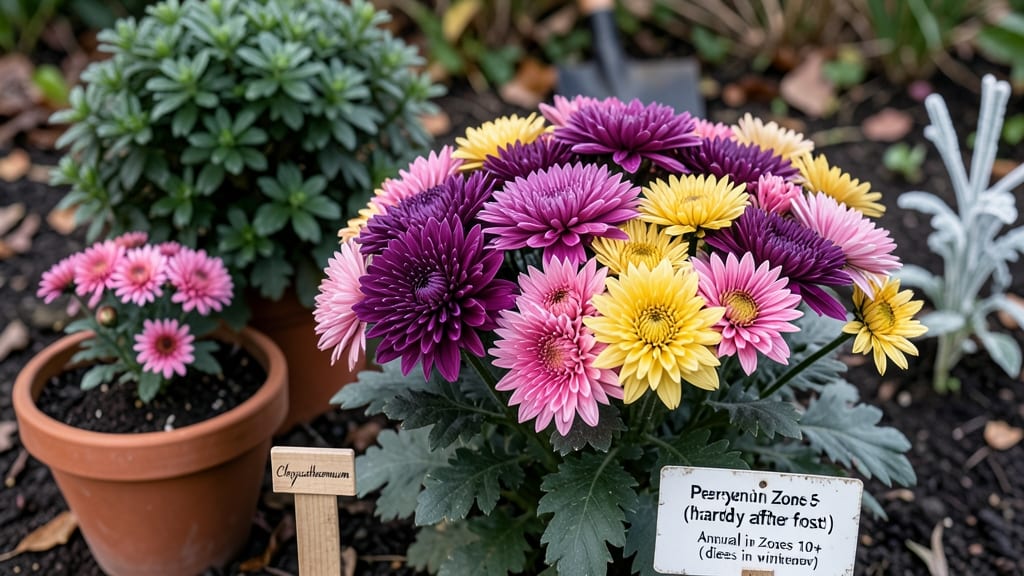
Mums are perennial plants in USDA Zones 5-9, thriving year-round with proper care, though they’re often sold as annuals in colder climates where they won’t survive winter without protection. Hardy varieties like 'Autumn Joy' or 'Snowball' return stronger each season.
Mums are perennial plants in their native hardiness zones, meaning they can regrow each spring from their roots if given the right conditions. 🌱 The confusion comes from nurseries treating them as annuals in colder regions—many gardeners don't realize these plants can live for years with proper winter care.
In warmer climates (Zones 5-9), they naturally return annually, while colder areas require extra protection like mulching or container growing to survive frost.
What sets true perennials apart is their root system, which stays dormant underground during winter. This means even if the foliage dies back, the plant's energy reserves allow it to bounce back in spring.
I've seen 'Autumn Joy' mums thrive for over a decade in my Zone 6 garden with just a thick layer of mulch—proof that with the right approach, they can outlast many "annual" flowers.
💡 In This Article
- How Mum Plant Hardiness Varies by Climate Zone
- Tips to Overwinter Mums in Cold Climates
How mum plant hardiness varies by climate Zone
The key to understanding why mums are perennial in some regions but treated as annuals in others lies in their root systems and cold tolerance. These plants store energy underground in thick, fibrous roots that can withstand temperatures down to -15°F to -20°F (USDA Zones 5-9).
This hardiness explains why varieties like 'Autumn Joy' naturally return each spring in milder climates. 🌟 The confusion arises because nurseries often sell mums as annuals since they won't survive freezing winters without protection in colder zones.
Science shows that mums enter dormancy when temperatures drop below 40°F, halting growth and redirecting energy to their roots. This adaptation allows them to survive winter's chill, unlike true annuals that complete their life cycle in a single season.
In Zones 5-9, the ground rarely freezes deeply enough to damage these roots, so the plants simply wait out winter and regrow in spring. The difference between perennial and annual behavior comes down to whether the root system can endure winter's extremes.
What most gardeners don't realize is that mums have two critical growth phases: the above-ground flowering stage (spring to fall) and the below-ground survival stage (winter). In colder climates (Zones 3-4), the ground freezes too deeply, killing the roots unless you take protective measures.
This is why gardeners in these areas typically replant new mums each year—without intervention, the plants can't complete their perennial cycle. The root zone's ability to regenerate is what truly defines a perennial.
Consider this comparison: A mum in Zone 7 might grow 2-3 feet tall in summer but shrink to just its roots in winter, only to emerge stronger the next spring. In contrast, a Zone 4 mum without protection would freeze completely, requiring a fresh planting.
The plant's ability to regenerate from its root crown is what makes it perennial in its native range. 💫 This biological adaptation explains why some gardeners are surprised when their mums return year after year—it's not magic, it's science.
Temperature thresholds matter more than you might think. While most mums handle 20°F temperatures, prolonged exposure to 10°F can damage even the hardiest varieties. This is why gardeners in marginal zones (like Zone 5) need to take extra precautions.
The plant's survival depends on whether the ground freezes deeply enough to penetrate its root zone. In warmer zones, the soil acts as a natural insulator, protecting the roots during winter.
Here's what happens when you push mums beyond their limits: In Zone 4 winters, where temperatures can drop to -30°F, even mulched mums may fail to survive without additional protection like row covers or container growing.
The root system simply can't endure such extreme cold for extended periods. This is why nurseries in colder regions often label mums as annuals—they're acknowledging the practical limitations of growing them as perennials without special care.
The bottom line is that mums are naturally perennials in their ideal growing zones, but their ability to thrive long-term depends entirely on winter conditions.
With proper care, they can outlive many true annuals by decades, making them one of the most rewarding perennial flowers for patient gardeners. 🌱 The secret lies in understanding their root system's resilience and matching it to your local climate.