
Orchid Care
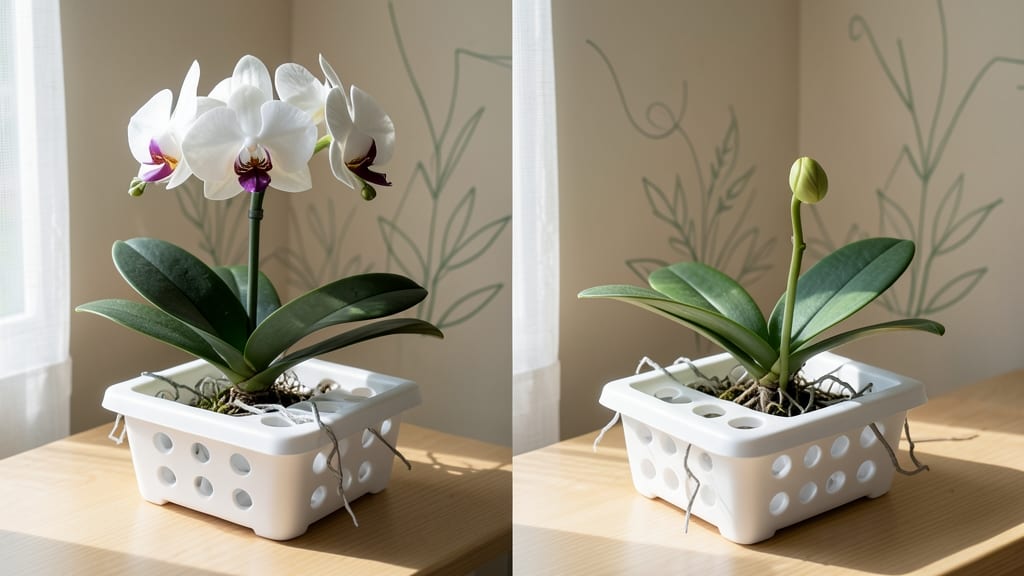
Orchids are perennials that regrow each season, even when they appear to die back after flowering. Their natural dormant phase preserves roots and rhizomes underground until conditions improve.
Many gardeners assume orchids die annually after their blooms fade, but their life cycle is far more resilient. 🌱 These plants store energy in thickened stems called pseudobulbs, which act like nature's water and nutrient banks.
When light levels drop in fall or winter, orchids enter dormancy—reducing growth but never losing their core structure. Unlike true annuals that complete their entire life cycle in one season, orchids simply pause, ready to burst back into growth when spring warmth returns.
This biological strategy explains why you often see orchids thriving for years with proper care. The key difference lies in their underground systems: while annuals have no persistent structures, orchids maintain living roots and rhizomes throughout their "rest" period.
Understanding this cycle transforms panic about dieback into anticipation for next season's rebirth.
💡 In This Article
- How Orchids Survive Through Dormancy Cycles
- Caring for Orchids During Dieback Season
How orchids survive through dormancy cycles
Orchids have evolved a remarkable survival strategy that sets them apart from true annual plants. Their secret lies in specialized structures called pseudobulbs—thickened, swollen stems that act as living water and nutrient reservoirs.
These pseudobulbs can store up to 90% of their weight in water during active growth, allowing orchids to withstand months of reduced moisture during dormancy. 🌿 Unlike annuals that complete their entire life cycle in one season, orchids maintain living roots and rhizomes underground, ready to revive when conditions improve.
The dormancy cycle begins when daylight hours shorten and temperatures drop. Orchids detect these environmental cues through specialized cells in their leaves that monitor light intensity. Once triggered, the plant reduces photosynthesis and shifts energy storage into the pseudobulbs.
Interestingly, some orchid species even produce a protective layer of dead cells on their leaves to minimize water loss—a clever adaptation that resembles the strategy used by desert succulents. The roots remain alive but enter a semi-dormant state, conserving energy while still absorbing minimal moisture from the air.
What makes this system so efficient is the balance between water storage and energy conservation. A mature orchid's pseudobulbs can maintain viability for 6-12 months without active growth, depending on species and environmental conditions.
For example, Phalaenopsis orchids (common moth orchids) typically store enough energy to sustain them through winter, while Cattleya orchids may require slightly longer dormancy periods.
This biological mechanism explains why orchids can thrive for decades with proper care—each pseudobulb represents a season's worth of stored resources waiting to fuel new growth.
Temperature plays a crucial role in breaking dormancy. Most orchids require a period of cooler temperatures (50-60°F) to signal the end of dormancy, which triggers hormonal changes that restart cell division.
This is why many orchid growers provide a 4-6 week cooling period in late winter—mimicking natural seasonal changes. The roots respond first, developing new root hairs that begin absorbing moisture before any visible above-ground growth appears. This staged awakening ensures the plant has sufficient resources before resuming active growth.
Comparing orchids to true annuals highlights their superior survival strategy. Annuals complete their entire life cycle—germination, growth, flowering, and seed production—in just one season, then die completely. Orchids, however, maintain their root systems and rhizomes throughout dormancy, allowing them to "remember" their optimal growing conditions.
This persistence explains why you might find orchids thriving in containers for years with minimal intervention—each dormant season simply recharges their biological batteries for another round of growth and flowering.
One fascinating aspect of orchid dormancy is how it varies by species and environment. Tropical orchids, which naturally grow in regions without true winter seasons, may enter a lighter dormancy characterized by reduced growth rather than complete rest.
In contrast, terrestrial orchids from temperate climates often undergo more pronounced dormancy cycles. This adaptability demonstrates how orchids have evolved to exploit diverse ecological niches while maintaining their perennial nature. Understanding these variations helps growers provide species-appropriate care during the dieback phase.