
Vegetables
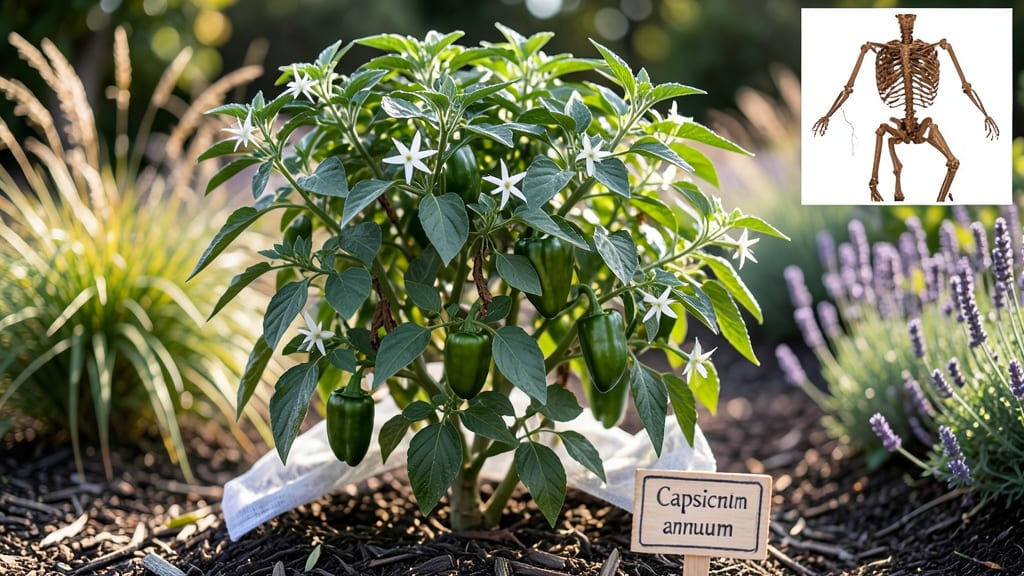
Peppers are not true perennials in most climates, though they grow as tender perennials in frost-free zones (USDA 10-12+) with proper care. In colder regions, they die back annually but can regrow from roots if protected or replanted each season.
Peppers behave like perennials only in warm climates where frost never occurs. 🌱 In zones 10-12, they can thrive for multiple years if given consistent moisture and nutrients, producing fruit season after season. However, in colder regions, their above-ground growth dies back each winter, though the roots often survive underground.
This explains why gardeners in cooler areas must replant each spring—peppers aren't naturally cold-hardy, but their root systems can persist if protected properly.
What's fascinating is how this dieback cycle works: peppers store energy in their roots during their growing season, which allows them to regenerate new growth when conditions warm up again.
This is why you'll sometimes see peppers sprouting from old plant debris in spring—those roots were just waiting for the right temperature. For gardeners in cold zones, this means overwintering strategies like mulching or container growing can extend a pepper's productive life beyond just one season.
💡 In This Article
- Why Peppers Act Like Perennials in Warm Climates
- Extending Pepper Plant Lifespan in Cold Zones
Why peppers act like perennials in warm climates
Peppers belong to the Capsicum genus, which botanically classifies them as tender perennials—plants that can live multiple years in ideal conditions but die when exposed to frost. In USDA zones 10-12, where winter temperatures never drop below 30°F, peppers naturally behave like perennials.
Their woody stems and robust root systems allow them to regenerate foliage and produce fruit year after year, much like tropical plants. 🌿 The key difference from true perennials (like asparagus) is their extreme frost sensitivity: even a light freeze at 28°F will kill above-ground growth, which is why they're often treated as annuals in colder regions.
In frost-free zones, peppers store carbohydrates in their roots during the growing season, creating a reserve energy bank that fuels regrowth when conditions are right. This process is similar to how sweet potatoes or dahlias overwinter underground.
For example, a jalapeño plant in Hawaii might live for 5-7 years if well-maintained, producing fruit continuously.
The plant's ability to regenerate depends on maintaining consistent soil moisture (peppers hate drought) and balanced nutrients, particularly phosphorus and potassium, which strengthen root systems. 🌱 Without these conditions, even in warm climates, peppers may struggle to persist beyond 2-3 years.
What most gardeners miss is how temperature thresholds trigger this perennial behavior. Peppers enter a dormant-like state when nights dip below 55°F, but they don't die—they simply pause growth.
This is why you'll see peppers in zone 9 (like Florida) produce sporadically year-round: they're not truly dormant but conserving energy. The confusion arises because peppers are not cold-hardy like true perennials; their "perennial" status is climate-dependent.
In zone 8, for instance, peppers might survive winters if heavily mulched, but they won't thrive like they do in zone 11.
Here's the science: Peppers are short-day plants, meaning their flowering and fruiting cycles are triggered by daylight length rather than temperature alone. In warm climates, this cycle repeats continuously, while in cooler zones, the plant focuses energy on root survival during winter.
This explains why peppers in zone 10 produce longer harvest seasons—they're not just growing faster, but their entire lifecycle is optimized for perennial behavior. 🌡️ The trade-off? Their fruit quality often declines after 3-4 years as the plant invests more energy in maintaining its structure than producing high-yield peppers.
Consider this comparison: A bell pepper plant in California's coastal zone (10a) might produce 10-12 pounds of peppers annually over multiple years, while the same variety in Ohio (zone 5) would need replanting each spring. The difference isn't just about frost—it's about how the plant allocates its energy resources.
In warm zones, peppers prioritize reproductive growth (fruit production), while in cold zones, they shift to vegetative growth (root and stem development) for survival. This energy reallocation is why overwintering techniques in cooler climates focus on protecting roots rather than the entire plant.
The misconception that peppers are "true perennials" stems from observing their ability to regrow in warm climates. However, their botanical classification as annuals in most gardening contexts reflects their practical limitations.
Even in ideal conditions, peppers rarely live beyond 5-7 years due to pathogen buildup in the soil and declining vigor.
The perennial-like behavior is more about physiological adaptation to warm climates than inherent hardiness. 🌶️ For gardeners in zone 9, this means peppers can be treated as semi-perennials with proper care, but in zone 7, they're effectively annuals requiring annual replanting.