
Orchid Care
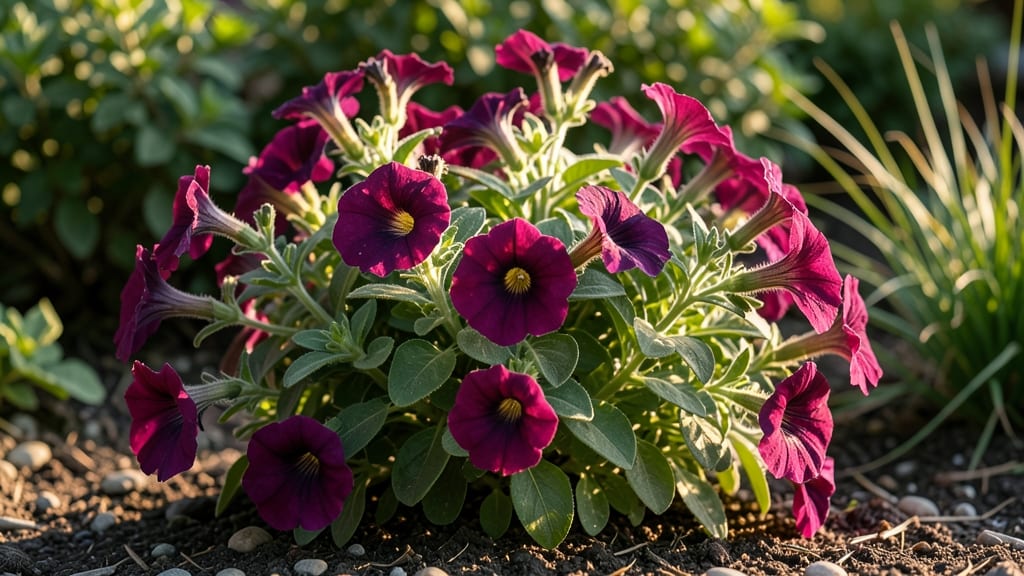
Petunias behave as annuals in most climates but thrive as perennials in USDA Zones 10-12, where they naturally survive winter and regrow each season. Their cold sensitivity causes dieback in frost, though they can be preserved indoors in cooler areas.
Whether petunias return year after year depends entirely on your climate zone. 🌱 In warmer regions like Florida or Southern California, these vibrant bloomers establish deep root systems that withstand mild winters, allowing them to push through the soil come spring.
However, outside these zones, petunias typically treat each season as a new beginning because their tender stems can't tolerate frost. The key difference lies in their root survival—while the tops may blacken and die back, the roots often remain viable, ready to sprout again when conditions improve.
For gardeners in colder regions, overwintering petunias indoors is a game-changer. Simply dig up the plants before the first frost, trim them back, and pot them in well-draining soil. Place them in a bright, cool spot (around 50°F) and water sparingly until spring.
This method lets you enjoy your favorite varieties year after year without starting from scratch each season.
💡 In This Article
- Petunia Life Cycle: Why They Die in Cold Climates
- How to Grow Petunias as Perennials in Cooler Regions
Petunia life cycle: why they die in cold climates
Petunias behave as annuals in most regions because their tender stems and leaves can't withstand temperatures below 32°F. When frost hits, the plant's cell walls rupture due to ice crystal formation, causing irreversible damage to the above-ground growth.
This is why you'll often see petunias blacken and collapse after the first freeze—it's not just wilting, but actual cellular destruction. The roots, however, often remain alive in the soil, tucked beneath the frost line where temperatures stay above freezing.
What's fascinating is how petunias handle temperature changes differently based on their growth stage. Young plants are more vulnerable because their stems are softer and less lignified. Mature plants with woody stems (like some hybrid varieties) can tolerate slightly cooler temperatures, but they still won't survive prolonged freezing.
In USDA Zones 10-12, where winters rarely drop below 30°F, petunias experience what botanists call "top-kill"—the stems die back but the roots survive to regrow in spring. 🌱 This natural process is why they act as perennials in these warm climates.
The key biological mechanism here is called "cold acclimation." Many perennials harden their cells with sugars and proteins to prevent ice damage, but petunias lack this adaptation. Their tropical origins mean they've evolved to thrive in consistent warmth rather than seasonal cold.
Even in mild winters, petunias may produce new growth from the base, but this is usually insufficient to sustain the plant through multiple freeze-thaw cycles common in northern climates.
Consider this comparison: In Zone 5 (where winters average -10°F), petunias would need 10-12 inches of mulch to protect their roots, but even then, the stems would likely freeze. In Zone 10, where winters average 40-50°F, petunias can maintain continuous growth year-round with proper watering.
The difference comes down to how long the plants can endure temperatures below their 32°F threshold—minutes in cold zones vs. weeks in warm zones.
What most gardeners don't realize is that petunias often produce underground tubers or thickened roots that store energy for regrowth. These structures can remain dormant for months, waiting for warm soil temperatures (60°F+) to trigger new shoots.
This is why you might spot volunteer petunias popping up in spring—even in areas where they're typically grown as annuals. The confusion arises because these regrowth attempts often fail in cold snaps, making petunias appear annual despite their perennial tendencies.
For a real-world example, imagine planting petunias in Zone 7 (average winter lows of 0°F). While the roots might survive a single light frost, a prolonged freeze would kill them too.
However, in Zone 11, where winters rarely drop below 40°F, petunias can flower continuously with minimal care. The 10°F difference in winter lows between these zones explains why petunias behave so differently in gardens just a few hundred miles apart. 🌡️