
Flowers
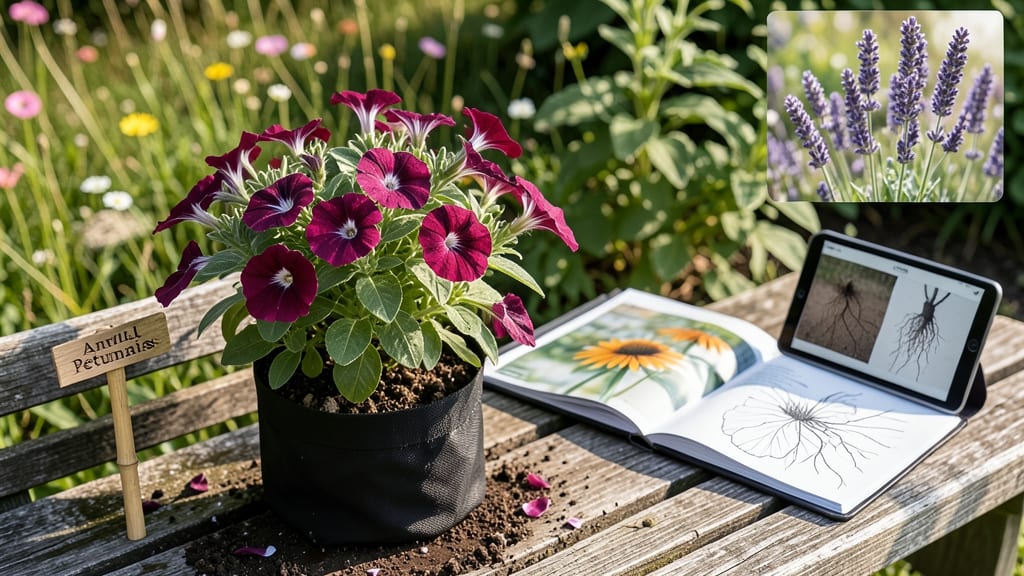
Petunias are not perennial flowers in most climates, dying back to the ground after frost or heat stress, though they self-seed prolifically in warm regions. In colder zones, gardeners treat them as annuals, replanting yearly for vibrant summer blooms.
Petunias actually thrive as annuals in most gardens because they originated in South America's tropical climates, where they naturally grow year-round. 🌱 When temperatures drop below 40°F, their tender stems and leaves blacken and collapse—this isn't dormancy like true perennials, but complete dieback.
The good news? Their seeds often survive in mild winters, sprouting fresh plants the following spring without any gardener intervention. This explains why petunias seem to "come back" magically in warmer areas, while northern gardeners must replant each season.
What sets petunias apart from true perennials (like coneflowers or lavender) is their inability to regrow from the same root system after frost. Instead, they rely on seed production for continuity—a trait that makes them perfect for container gardens or short-season climates where annuals are preferred.
The key to maximizing their lifespan in your garden comes down to understanding your specific hardiness zone and choosing varieties bred for your region's conditions.
💡 In This Article
- Why Petunias Die Back: Climate and Growth Cycle Factors
- How to Extend Petunia Blooms Year-Round in Different Climates
Why petunias die back: climate and growth cycle factors
Petunias originated in South America's tropical regions, where they evolved to thrive in warm, frost-free environments with consistent moisture. Their delicate stems and leaves contain minimal cold tolerance—when temperatures drop below 40°F, cellular damage occurs within hours, causing the foliage to blacken and collapse.
This isn't dormancy like true perennials experience but complete metabolic shutdown. 🌡️ Unlike hardy perennials such as coneflowers (which survive -30°F winters) or lavender (down to 10°F), petunias lack the protective mechanisms like thick woody stems or deep root systems to endure freezing temperatures.
The USDA hardiness zones play a crucial role in determining petunia survival. In zones 3-7, where winter lows can reach -40°F to 0°F, petunias will always die back completely.
Even in zone 8-10 (mild winters), extended periods below 32°F will kill the plants, though their seeds may persist in the soil.
What makes this particularly interesting is how petunias respond to heat stress too—their tropical origins mean they struggle in regions with prolonged temperatures above 90°F, where they may wilt and fail to rebloom without proper care.
The key difference between petunias and true perennials lies in their growth strategy. Perennials like hostas or peonies store energy in underground rhizomes or tubers, allowing them to regrow from the same root system each spring.
Petunias, however, are monocarpic annuals—they focus all their energy on producing flowers and seeds during their first growing season, with no energy reserves for regrowth. 🌱 This explains why you'll often see petunias "volunteer" in warm climates—their seeds germinate naturally when conditions are favorable, creating the illusion of perennial behavior when in fact it's a seed-based continuity rather than true perennialism.
What most gardeners don't realize is how petunia varieties differ in their cold tolerance. Some modern hybrids like 'Wave' or 'Supertunia' series have been bred for slightly improved heat tolerance (up to 95°F), but none have developed true frost resistance.
The Petunia axillaris species, however, shows more resilience in zones 9-11, where it can sometimes overwinter with heavy mulching. This species naturally grows in higher elevations of the Andes, where it experiences cooler nights—a clue to why some gardeners in warm climates have limited success with overwintering petunias.
Another fascinating aspect is how petunias handle day length. As short-day plants, they naturally enter flowering mode when daylight hours decrease—typically in late spring to early summer. This biological trigger explains why petunias bloom so prolifically in summer but struggle to survive the winter months in most climates.
True perennials, by contrast, have more flexible growth patterns that allow them to pause growth during winter while maintaining their root systems. 🌿 For petunias, each growing season represents a new opportunity to produce flowers and seeds, with no biological mechanism to "remember" their previous year's growth.