
Flowers
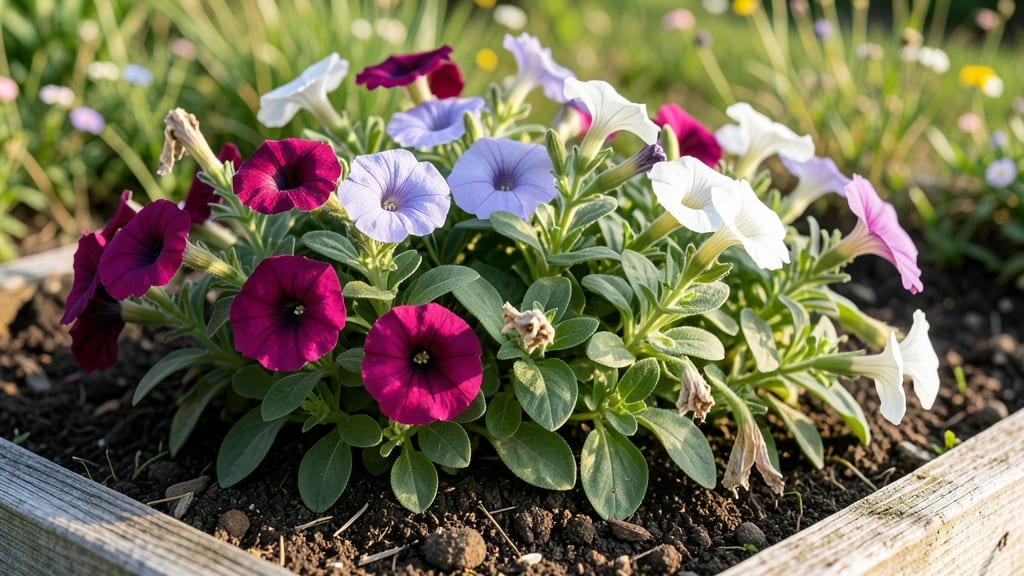
Petunias are not true perennials in most climates but behave as annuals, dying back in frost and often requiring replanting each spring. In warm zones (USDA 9-11), they may return with proper care and mulching, though they rarely survive harsh winters.
Petunias originate from South America, where they thrive in warm conditions, which explains their sensitivity to cold. 🌱 When temperatures drop below 32°F, their tender stems and leaves freeze, causing them to look dead even though the roots may survive.
In milder climates, they can sometimes regrow from the base if protected by thick mulch or a frost cloth. Gardeners in cooler zones often treat them as annuals, replanting fresh seeds or seedlings each spring for vibrant summer blooms.
What makes petunias interesting is their ability to adapt with care. While they won't survive freezing winters in most regions, some hybrid varieties show better resilience. In frost-free areas, proper pruning and fertilization can encourage them to bloom continuously for months, almost acting like perennials.
The key difference lies in their life cycle—annuals complete their growth in one season, while perennials regrow year after year.
💡 In This Article
- Why Petunias Die Back in Cold Climates
- Extending Petunia Lifespan in Different Climates
Why petunias die back in cold climates
Petunias trace their origins to the tropical and subtropical regions of South America, where temperatures rarely dip below 50°F. Their delicate stems and leaves contain high moisture content, making them highly susceptible to frost damage.
When temperatures fall below 32°F, the cellular structure of petunia tissues ruptures due to ice crystal formation, causing the plant to appear wilted and lifeless. This biological response isn't unique—it's similar to how tropical houseplants like hibiscus or bougainvillea react when exposed to sudden cold snaps.
The roots of petunias, while slightly hardier, can only survive brief exposures to freezing temperatures. Most varieties have root systems that tolerate 28-30°F for short periods, but prolonged cold causes root death. What's fascinating is how petunias enter a state of dormancy when stressed by cold.
Their metabolic processes slow dramatically, conserving energy until conditions improve. In milder winters (like those in USDA Zone 8), the roots may survive beneath 4-6 inches of mulch, allowing regrowth once temperatures rise again.
Mulch plays a critical role in protecting petunias during cold snaps. A thick layer of 4-6 inches of organic mulch (like straw or shredded leaves) insulates the soil, maintaining temperatures 5-10°F warmer than ambient air.
This insulation prevents the ground from freezing solid, which is when petunia roots suffer irreversible damage. Without this protection, even a light frost can kill the plant entirely, explaining why gardeners in colder regions treat them as annuals.
Another key factor is petunias' inability to produce protective compounds like antifreeze proteins, which cold-hardy perennials (such as peonies or hostas) naturally synthesize. These proteins prevent ice formation in plant cells, allowing them to survive sub-freezing temperatures.
Petunias lack this adaptation, making them vulnerable to even light frosts. Their tropical heritage means they've never evolved to handle seasonal temperature drops, unlike native perennials that thrive in temperate climates.
Interestingly, some hybrid petunias (particularly those bred for cooler climates) show slightly better cold tolerance, often surviving brief exposures to 28°F with protection. However, these hybrids still can't compete with true perennials.
The difference lies in their genetic makeup—annuals like petunias prioritize rapid growth and reproduction in a single season, while perennials allocate energy to surviving harsh winters through specialized adaptations.
For gardeners in transitional zones (like USDA Zone 7), the key to extending petunia lifespan lies in understanding this biological limit. While they won't survive winter outdoors, their roots may persist in protected microclimates, allowing them to regrow if temperatures remain above 30°F for extended periods.
This explains why some gardeners report "perennial" behavior in petunias—it's not true perennialism, but rather a temporary survival strategy when conditions are borderline.