
Plants
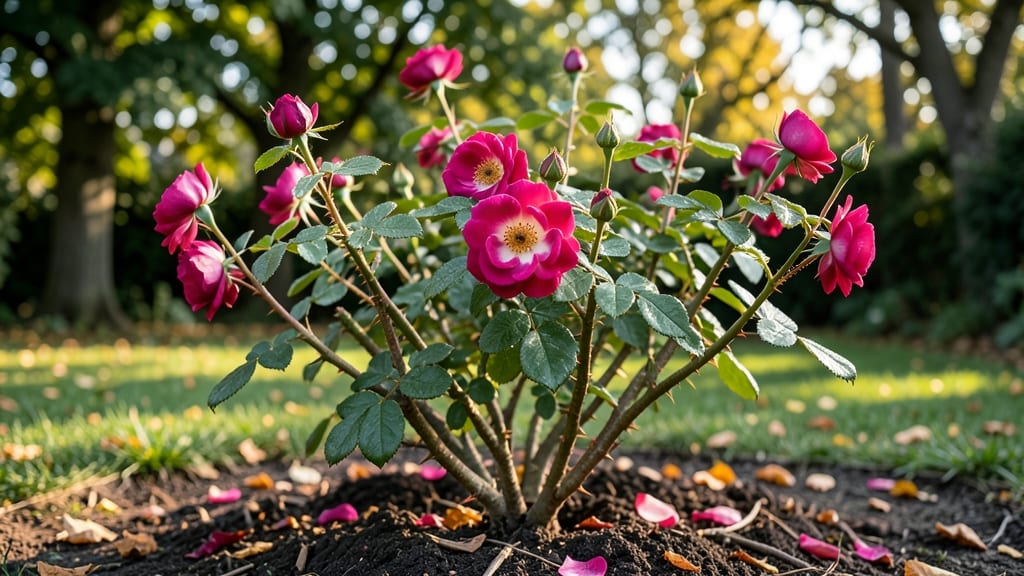
Roses are perennials in warm climates but often die back in freezing temperatures, requiring winter protection or replanting each year in colder zones. Their hardiness varies by species and cultivar, with some surviving down to -30°F while others need seasonal care.
Roses thrive as perennials in regions where winter temperatures rarely drop below 10°F, but their ability to return year after year depends heavily on your climate zone. 🌹 In colder areas, many gardeners treat them as seasonal plants—they'll regrow from the roots each spring if properly protected.
The key difference lies in their root systems: hardy varieties like Rugosa roses can withstand harsh winters, while delicate hybrids may need insulation or even indoor overwintering. Understanding your local hardiness zone helps determine whether you're dealing with a true perennial or a plant that needs seasonal care.
What's fascinating is how roses adapt to cold—some varieties enter a deep dormancy, while others rely on protective layers of mulch or snow to insulate their roots. This natural resilience explains why roses have been cultivated for centuries in diverse climates, from Mediterranean gardens to northern European landscapes.
The trade-off? In zones with extreme cold, even the hardiest roses may need extra care to survive, making them more like semi-perennials than true perennials.
💡 In This Article
- Rose Hardiness Zones and Cold-Weather Survival
- Winterizing Roses for Year-Round Growth
Rose hardiness zones and cold-weather survival
The USDA Plant Hardiness Zone Map divides North America into 13 zones based on average annual minimum temperatures, and this system is your best tool for predicting rose survival. Roses thrive as true perennials in zones 7-10, where winter lows rarely drop below 10°F.
In these areas, most rose varieties—including hybrid teas and floribundas—will naturally enter dormancy and regrow each spring without intervention. The magic number for root survival is -10°F to -15°F, below which even hardy varieties may suffer damage.
Here's where it gets interesting: different rose types have vastly different cold tolerances. Rugosa roses (like 'Hansa' or 'Blanc Double de Coubert') can survive down to -30°F thanks to their thick canes and disease-resistant roots, while hybrid teas (such as 'Double Delight') typically max out at -15°F without protection.
Climbing roses often fall in the middle, with varieties like 'New Dawn' enduring -25°F but needing shelter in windy zones. The root system is the weak link—cold penetrates soil more slowly than air, so roots can survive colder temperatures than the above-ground canes.
When temperatures drop, roses trigger a biochemical process called dormancy, where growth stops and cells produce protective sugars and proteins. This is why pruning in late winter works—you're cutting back dead growth while the plant conserves energy.
However, sudden freezes (-20°F or colder) can cause cellular dehydration, turning canes brittle and black. In these cases, even the hardiest roses may need mulch blankets or row covers to insulate roots. The key is maintaining a 5-7°F buffer between ambient air and soil temperatures.
Consider this comparison: a Zone 5 garden (average lows of -15°F) might grow Rugosa roses without protection, while a Zone 6 garden (average lows of -5°F) could safely plant Knock Out® roses (hardy to -25°F). The difference?
Zone 5's occasional -30°F dips push even Rugosas to their limit, whereas Zone 6's milder winters let roots stay active longer. This explains why gardeners in colder zones often choose multi-stemmed shrub roses—their clustered canes create natural insulation.
What most gardeners overlook is how wind chill accelerates cold damage. A -10°F night with 20 mph winds feels like -28°F to plant tissue, potentially killing tender varieties. This is why windbreaks (like evergreen hedges) are a game-changer in exposed gardens.
Even in mild zones, late spring frosts (below 28°F) can damage new growth, making timing everything. The science here is about thermal inertia—soil retains heat longer than air, so deeper-rooted varieties (like David Austin English roses) often survive better than shallow-rooted ones.
For a real-world example, imagine planting a 'Mr. Lincoln' hybrid tea rose (hardy to -15°F) in Zone 4. Without winter protection, its canes would likely die back to the ground, but the roots might survive.
By late spring, new shoots would emerge from the base—a classic case of a rose acting as a semi-perennial.
This resilience is why roses have thrived for centuries in regions like England (Zone 5-6) and New York (Zone 5-7), where gardeners rely on seasonal care rather than climate alone.