
Flowers
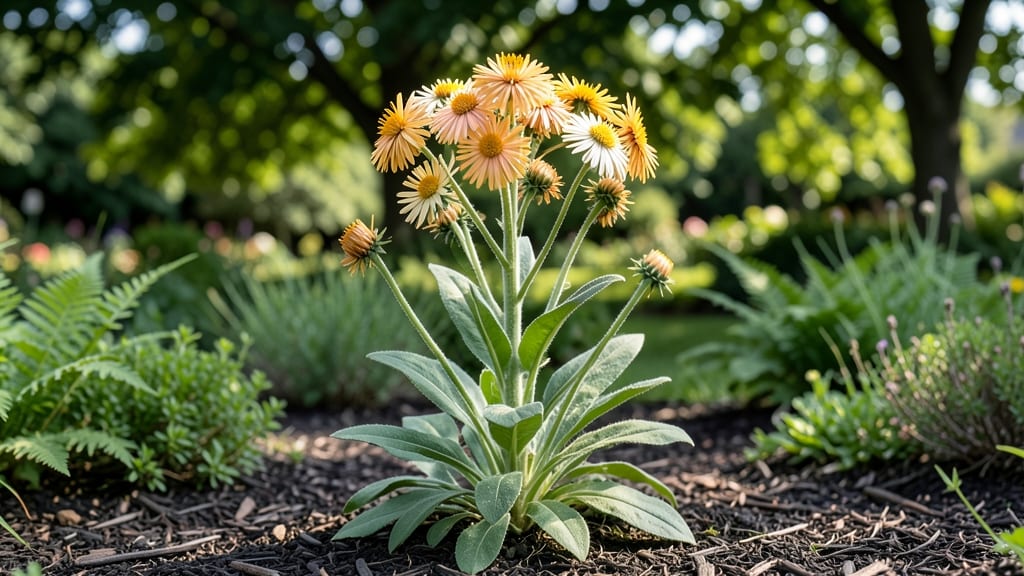
Straw flowers (Helichrysum) aren't true perennials in most regions—they act like annuals or short-lived perennials, losing their foliage in winter but often regrowing from their base in spring when conditions are mild enough.
This behavior comes down to their natural survival instincts. 🌱 Straw flowers go dormant during cold months, conserving energy until temperatures rise again.
The key difference from true perennials is their sensitivity to frost—even a light freeze can kill them back to the ground, making them appear dead when they're actually just waiting for warmer weather.
In milder climates like USDA zones 8-10, they'll reliably return each year, while colder regions may need extra protection to encourage regrowth.
What's interesting is how gardeners often mistake their winter dieback for death. The woody stems at the base remain alive underground, storing energy for spring's comeback. This is why many people assume straw flowers are perennials—they keep coming back, even if they don't survive harsh winters consistently.
The trick is creating the right conditions to help them through those dormant periods.
💡 In This Article
- Why Straw Flowers Die Back and Regrow
- How to Extend Straw Flower Longevity in Gardens
Why straw flowers die back and regrow
Straw flowers (Helichrysum) trigger their winter dormancy through a process called vernalization—a biological response to cold temperatures. When nighttime temperatures drop below 40°F (4°C) for extended periods, the plant's growth hormones shift from active growth to survival mode.
This causes the leaves to yellow and drop, while the plant redirects energy to its woody stems at the base, which remain alive beneath the soil. 🌱 The stems contain meristematic tissue—undifferentiated cells capable of regenerating new growth when conditions improve.
The regrowth mechanism relies on stored carbohydrates in these stems, which act like a natural battery. Studies show that well-established straw flowers can store enough energy to regenerate even after losing all foliage. In milder climates (USDA zones 8-10), this process repeats annually, while colder regions may experience partial dieback.
The key difference from true perennials is that straw flowers lack robust underground rhizomes or tubers—their survival depends entirely on stem reserves and environmental conditions.
What makes this fascinating is how straw flowers balance their energy budget. During active growth, they allocate resources to both foliage and stem storage. When temperatures drop, the plant prioritizes stem preservation over leaf maintenance, which is why the leaves die first.
This strategy ensures the plant can rebound quickly in spring, often within 2-4 weeks of consistent warmth above 50°F (10°C). The woody stems can remain viable for 1-2 years if protected from freezing.
Cold sensitivity varies by species—some Helichrysum varieties handle light frosts (28°F/-2°C) better than others. For example, Helichrysum italicum (curry plant) is hardier than Helichrysum bracteatum (strawflower), which may need winter protection in zones below 8.
The confusion arises because gardeners often see regrowth without realizing it's coming from dormant stems, not true perennial roots. This "false annual" behavior explains why many assume straw flowers are perennials—they keep returning, but their survival isn't guaranteed year after year.
Light plays a crucial role too. Straw flowers are short-day plants, meaning they respond to decreasing daylight in autumn by entering dormancy. This photoperiodic response ensures they "know" winter is coming before temperatures drop.
The combination of cold exposure and reduced light triggers the hormonal shift that causes leaf abscission (dropping). In spring, increasing daylight and warmth signal the plant to resume growth, with new shoots emerging from the stem nodes.
Here's what's happening at the cellular level: Cold temperatures cause the plant to produce abscisic acid, a stress hormone that closes stomata (pores) to prevent water loss and signals leaf senescence (aging). Meanwhile, the meristematic cells in the stems remain protected by a layer of insulating tissue.
When spring arrives, rising temperatures and longer days trigger gibberellins—growth hormones that stimulate cell division in these dormant meristems, producing new leaves and stems. 🌿