
Plants
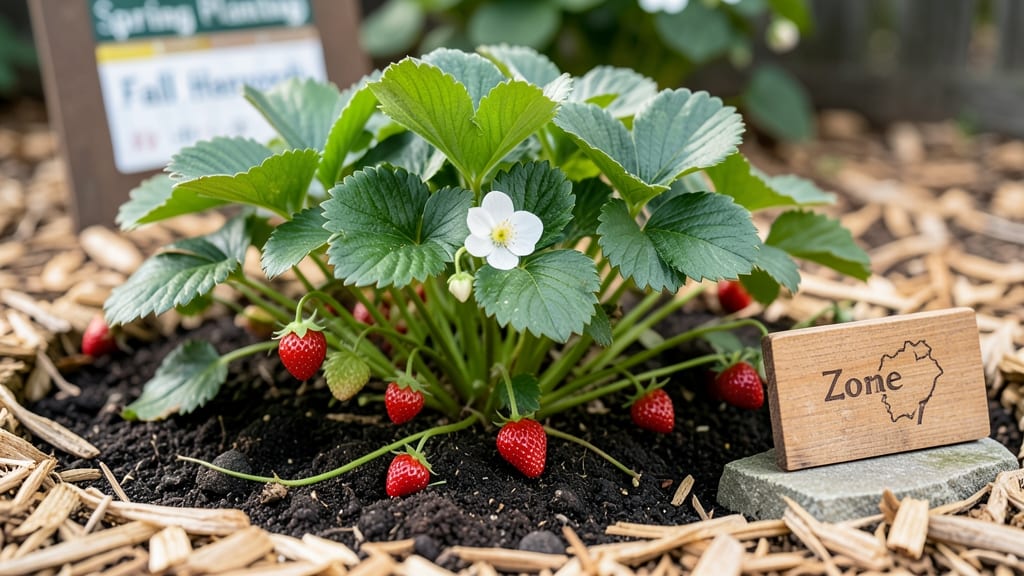
Strawberries in Zone 7 are perennial plants, but they experience a natural decline after 3–4 years, requiring renewal to maintain strong fruit production. The harsh winters and summer heat accelerate their aging process, while strategic pruning and replanting help sustain their growth.
While strawberries are classified as perennials, their lifespan in Zone 7 is limited by environmental stress.
The cold winters force them into dormancy, while summer heat accelerates wear on their roots and crowns. 🌱 What many gardeners don't realize is that June-bearing varieties often decline faster than everbearing types, which produce smaller harvests but recover better between seasons.
Proper winter mulching and spring pruning can delay this cycle by 1–2 years.
This dieback isn't just about age—it's also tied to how the plants allocate energy. When strawberries focus on surviving winter, they divert resources from fruit production, which is why older plants yield smaller berries.
The key to extending their life is understanding when to intervene: prune dead foliage in early spring, replace plants every 3–4 years, and choose disease-resistant varieties suited to Zone 7's climate.
💡 In This Article
- How Strawberry Plants Survive Zone 7 Winters
- Renewing Strawberry Beds in Zone 7: Pruning & Replanting Guide
How strawberry plants survive Zone 7 winters
Strawberries in Zone 7 endure winter through a biological process called dormancy, where their growth slows dramatically to conserve energy. The crown—the thickened stem base—contains specialized cells that harden in response to temperatures between 20°F and 30°F, producing protective sugars and proteins that prevent cellular damage.
This adaptation allows the crown to survive even when above-ground foliage dies back completely. Everbearing varieties, like 'Albion' or 'Seascape', handle cold better than June-bearing types because their crowns develop more robust hardiness layers during fall.
The roots play a critical role too—they remain active below the frost line, absorbing moisture and storing nutrients for spring regrowth. In Zone 7, where winters average 25-35°F but can drop to 10°F during cold snaps, strawberries rely on this underground network.
What's fascinating is how the roots actually prefer cold dormancy: studies show they enter a state of "cold acclimation" where cell membranes become more fluid, protecting them from freeze-thaw cycles.
This is why mulching with 4-6 inches of straw or leaves creates an insulating blanket that mimics natural soil temperature fluctuations.
June-bearing varieties, like 'Chandler' or 'Jewel', face greater challenges because their energy is focused on producing one massive harvest in spring. After fruiting, their crowns weaken faster, making them more susceptible to winter dieback.
Everbearing types, however, spread their energy across multiple harvests, which strengthens their crowns over time. 🌱 The trade-off? June-bearers yield larger berries, but everbearers provide a longer harvest window—critical for Zone 7 gardeners who experience 90+°F summers that stress plants year-round.
What most gardeners overlook is how timing of cold exposure matters. Strawberries need a period of 4-6 weeks below 40°F to fully trigger dormancy. In Zone 7, where winters are mild but unpredictable, this can be tricky—too little cold and the plants stay semi-active, depleting stored energy.
Too much fluctuation (like sudden freezes followed by thaws) can cause crown rot. This is why choosing varieties bred for Zone 7—like 'Fort Laramie'—gives you a built-in advantage: their genetics are optimized for this exact range of winter conditions.
Here’s what happens when dormancy fails: without proper cold exposure, strawberries may produce weak shoots in spring that lack the energy for robust growth. The roots, deprived of their winter recharge, become less efficient at nutrient uptake, leading to smaller berries and increased disease susceptibility.
This is why gardeners in Zone 7 often see their strawberry beds decline after just 2-3 years if not properly managed during winter.
Consider this comparison: a well-mulched June-bearing bed in Zone 7 might produce 10-15 lbs of berries its first year, but drop to 5-8 lbs by year three without renewal. Everbearing types, however, can maintain 5-10 lbs annually with proper care because their smaller harvests don’t drain their systems as severely.
The lesson? Variety choice and winter prep are just as important as spring planting.