
Plants
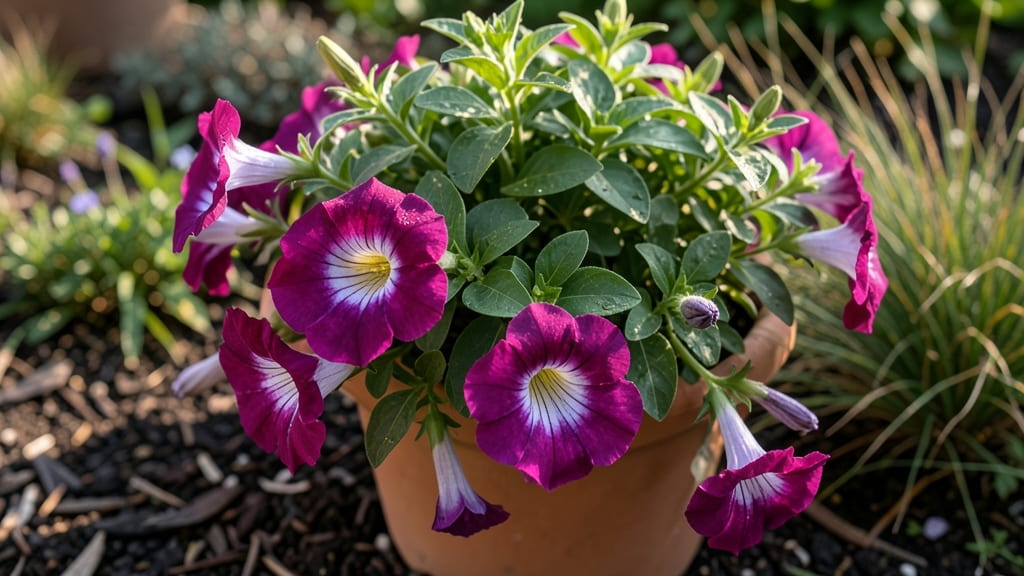
Supertunias aren't true perennials but function like repeat-blooming annuals in most regions, though many varieties can persist through mild winters with the right protection. Their ability to regrow from roots depends on cultivar hardiness and winter conditions.
These vibrant flowers actually originated in tropical climates, which explains why they struggle in freezing temperatures. 🌱 While they won't survive harsh winters like true perennials, their deep root systems often allow regrowth when spring arrives—especially if you provide winter protection like mulch or containers.
The key difference lies in their growth habit: they'll bloom continuously all season but may need replanting in colder zones where they won't naturally overwinter.
What sets supertunias apart is their ability to produce flowers throughout the growing season, not just once like many annuals. This repeat-blooming characteristic makes them popular for gardeners who want continuous color, even if they treat them as annuals in colder climates.
The trade-off is their sensitivity to frost, which is why understanding your specific zone and cultivar becomes crucial for successful growing.
💡 In This Article
- Supertunia Cold-Hardiness Zones and Winter Survival Strategies
- Year-Round Supertunia Care: Pruning, Mulching, and Overwintering Tips
Supertunia cold-hardiness zones and winter survival strategies
Supertunias trace their origins to tropical regions of South America, where temperatures rarely drop below 50°F. This genetic heritage explains their sensitivity to frost—cell membranes in their leaves and stems begin to rupture at 32°F, causing irreversible damage.
The plant's metabolic processes slow dramatically below 45°F, leading to brown, mushy foliage that signals the start of winter dieback. 🌡️ Unlike true perennials that have evolved cold-resistant adaptations like antifreeze proteins in their cells, supertunias lack these protective mechanisms.
The USDA Plant Hardiness Zone Map becomes your best tool for predicting survival. Most commercial supertunia cultivars thrive in zones 10-11, where winter temperatures rarely dip below 30°F. In zone 9, they may survive light frosts (28°F) but typically die back completely.
The secret lies in their fibrous root systems, which can extend 12-18 inches deep and store carbohydrates—these stored reserves fuel regrowth when temperatures rise again in spring, even if the above-ground growth is lost.
What most gardeners overlook is how soil temperature affects root survival. The roots themselves can tolerate slightly cooler conditions than the foliage—down to 25°F for brief periods—because the ground acts as an insulator.
This is why mulching with 3-4 inches of organic material (like straw or shredded leaves) creates a 5-10°F warmer microclimate around the roots during cold snaps.
In zones 8 and below, container growing becomes essential, as pots can be moved to protected locations or wrapped in bubble wrap for added insulation.
The regrowth process begins when soil temperatures reach 55°F consistently, typically in late winter or early spring. New shoots emerge from the root crown, often within 2-3 weeks, demonstrating why these plants behave more like "self-seeding perennials" than true annuals.
Some advanced cultivars, like the 'Supertunia Vista Bubblegum' series, show slightly improved hardiness (zone 9a tolerance), but even these require winter protection in marginal zones. The key difference from true perennials is that supertunias won't develop woody stems or persistent buds at the base—just fibrous roots capable of rapid regrowth.
Consider this comparison: While a daylily (true perennial) might survive -20°F winters by entering dormancy, a supertunia in zone 9 will lose all foliage but may still regrow from roots if protected.
This explains why gardeners in zone 9b often treat them as annuals for convenience, while those in zone 10 can enjoy multi-year performance with minimal winter care. The distinction lies in your climate's specific frost patterns—even a single 25°F night can be fatal in unprotected conditions.
For those pushing the limits in zone 8, strategic overwintering becomes an art. I've seen success with the "chill-and-grow" method: after first frost, cut plants back to 6 inches, pot them, and move to an unheated garage where temperatures stay between 35-45°F.
This mimics their natural tropical rhythm of reduced growth during cool periods while preserving root viability. The trade-off? You'll sacrifice some spring regrowth vigor compared to plants that overwintered in the ground, but it's often the difference between losing them completely and having a second season of blooms. 🌱