
Plants
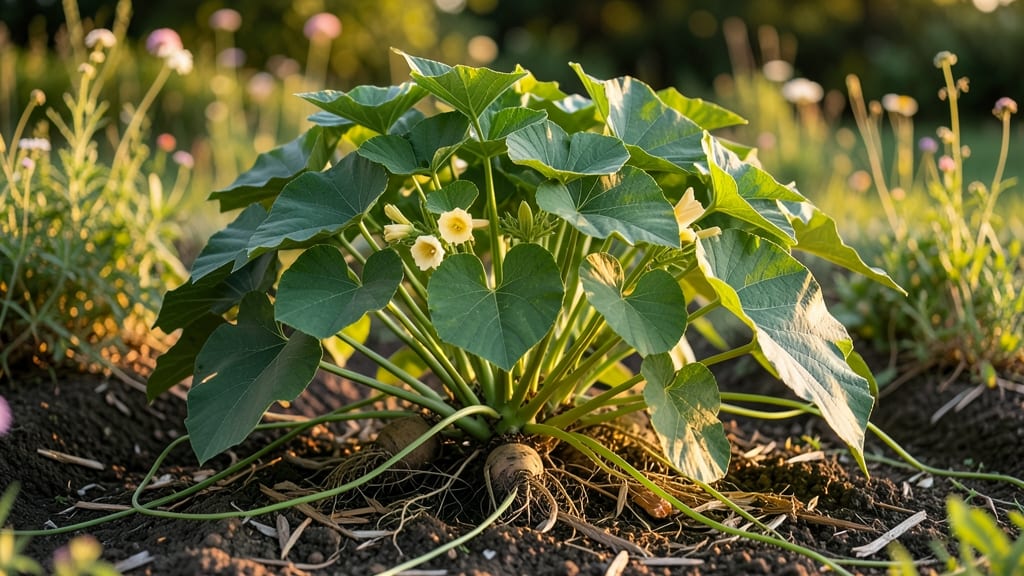
Sweet potato plants are not true perennials in most climates, though their roots can survive mild winters in zones 9-11. Annual dieback occurs above ground each fall, but tubers regrow from stored energy if conditions permit, making them behave like semi-perennials in frost-free regions.
Sweet potato plants belong to the Ipomoea batatas species, which naturally produces underground tubers that store nutrients.
Unlike true perennials, their above-ground vines freeze and die back each winter in colder regions. 🌱 The tubers themselves act as living storage units, allowing regrowth when temperatures rise—this is why they’re called "semi-perennials" in warmer climates.
In areas with harsh winters, gardeners must treat them as annuals or take special steps to protect the tubers.
What sets sweet potatoes apart is their ability to regenerate from just a small piece of tuber left in the ground. This makes them more resilient than many other crops, though they still require consistent care.
For example, varieties like 'Beauregard' handle cooler temperatures better than 'Georgia Jet', which thrives in heat. Understanding this lifecycle helps gardeners plan harvests and storage strategies effectively.
💡 In This Article
- Why Sweet Potatoes Die Back Annually (And How Climate Affects Survival)
- Tips to Extend Sweet Potato Lifespan in Cold Climates
Why sweet potatoes die back annually (and how climate affects survival)
Sweet potatoes (Ipomoea batatas) are classified as herbaceous perennials in their native tropical regions, but their growth habits shift dramatically in temperate climates.
The key difference lies in their tuber storage mechanism: unlike true perennials that regrow from crowns or roots, sweet potatoes rely entirely on their underground tubers for survival. When temperatures drop below 40°F, the above-ground vines freeze and die back completely, entering a state called "dormancy."
This is why they appear to "reset" annually in colder zones.
The USDA hardiness zones 9-11 create the perfect conditions for sweet potatoes to behave like semi-perennials. In these frost-free areas, tubers can remain dormant in the soil through winter, then regenerate new vines when spring temperatures reach 60°F or higher.
The tuber itself acts as a living battery, storing starches and sugars that fuel regrowth. For comparison, a true perennial like asparagus survives winter with its crown intact, while sweet potatoes depend entirely on their stored energy reserves in the tuber.
Frost sensitivity is the critical factor determining whether sweet potatoes act as annuals or semi-perennials. Even a light frost (32°F) can damage tubers left in the ground, especially in zones 7 and colder.
The tuber's skin provides some protection, but prolonged exposure to freezing temperatures causes cell damage and rot. This is why gardeners in colder climates must harvest tubers before the first frost or take protective measures—otherwise, the entire plant system collapses, and the cycle starts anew each spring.
Here's what happens botanically during dieback: the plant's meristematic cells (growth centers) in the vines freeze and die, but the tuber's apical meristem remains viable if protected. In warmer zones, this meristem activates when temperatures rise, sending out new shoots.
In colder zones, the tuber's energy reserves deplete over winter without the plant's ability to replenish them through photosynthesis. This creates a fundamental difference in how sweet potatoes behave across climates.
Consider this example: In Florida (zone 9), a sweet potato patch might produce new vines from the same tubers for multiple years without intervention. Meanwhile, in Ohio (zone 6), those same tubers would freeze and die if left in the ground, forcing gardeners to replant annually.
The distinction comes down to whether the tuber's dormancy period aligns with frost-free conditions—a balance that only exists in warmer climates.
What most gardeners don't realize is that even in semi-perennial conditions, sweet potatoes require consistent care to maintain their tuber reserves. Without proper soil nutrition and water management, the tubers weaken over successive years, reducing their ability to regenerate.
This is why many commercial growers treat sweet potatoes as annuals regardless of climate—they prioritize yield over long-term tuber viability.