
Orchid Care
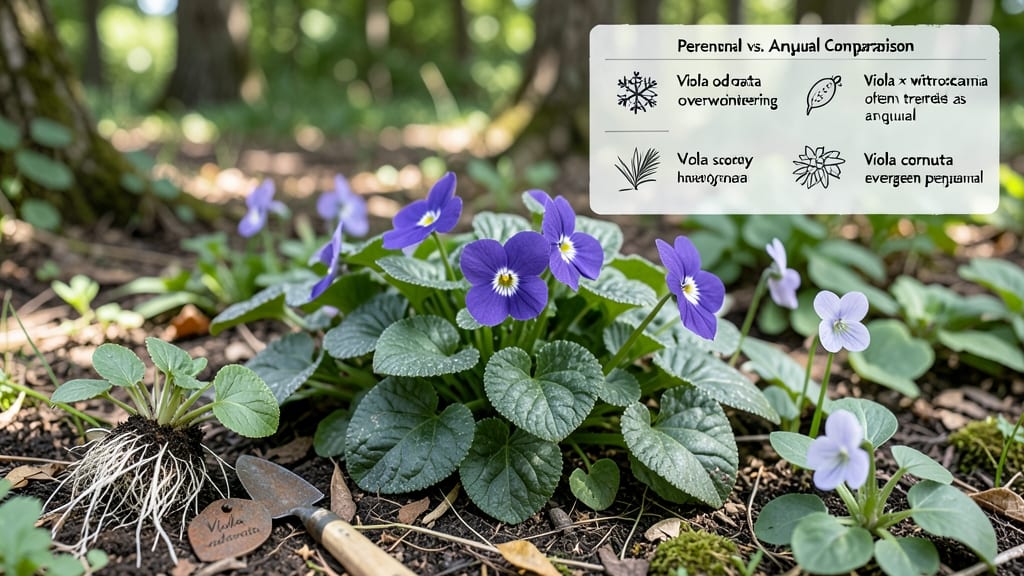
Whether violets are annuals or perennials depends on your climate—most thrive as perennials in moderate zones but die back annually in extreme heat or cold. Their survival hinges on USDA hardiness zones, seasonal conditions, and proper care, with some varieties regrowing reliably if protected.
Violets' behavior as perennials or annuals comes down to temperature resilience.
In USDA zones 3-9, they naturally return year after year, but in hotter regions like zone 10 or colder extremes like zone 2, they often freeze or wilt out. 🌱 The key difference lies in root hardiness—some varieties like Viola sororia handle frost better than tropical types.
Even in marginal zones, mulching with straw or evergreen boughs can protect roots through winter, turning what might be an annual into a perennial.
For gardeners in tricky climates, seasonal pruning makes a big difference. Cutting back faded blooms in late summer encourages new growth before winter, while dividing mature plants every 2-3 years prevents overcrowding.
This simple maintenance can mean the difference between violets that fade out and those that bounce back year after year.
💡 In This Article
- How Climate Zones Affect Violet Plant Longevity
- Tips for Extending Violet Blooms Year-Round
How climate zones affect violet plant longevity
Violets' perennial or annual behavior hinges on their ability to survive temperature extremes. Most varieties thrive as perennials in USDA zones 3-9, where winter temperatures dip to -40°F to 30°F but don't linger below freezing for long periods.
The magic number is 0°FViola sororia can tolerate brief exposure, while tropical types (Viola hederacea) wilt at 32°F. This is why violets in zone 10 (like Southern California) often behave as annuals—their roots simply can't handle prolonged heat stress above 90°F.
The real science lies in their growth habit: violets store energy in their roots and crowns, not just leaves. In cold climates, roots enter dormancy when soil temps drop below 40°F, conserving moisture and nutrients until spring.
However, in hot zones, the ground stays too warm, causing roots to metabolize too quickly and exhaust their reserves. 🌡️ Even a 5°F difference can mean survival or death for marginal varieties.
Soil moisture plays a critical role too—dry conditions accelerate heat damage, while consistently moist soil helps roots regulate temperature.
What most gardeners miss is that violets aren't all created equal when it comes to hardiness. Wild violets (Viola papilionacea) from mountain regions handle -20°F easily, while African violets (Saintpaulia) (a different genus entirely) die at 50°F.
This explains why your neighbor's violets might return every spring while yours don't—it's often about the specific variety's origin. Even within the same zone, microclimates matter: violets in a sheltered garden bed may survive where those in exposed areas fail.
Another critical factor is the length of the growing season. Violets need 120-150 frost-free days to complete their life cycle. In short-season zones (like zone 4), they might only bloom briefly before winter sets in.
In longer seasons (zones 7-9), they have time to establish strong root systems that carry them through multiple winters. This is why some gardeners in marginal zones swear by late-summer planting—giving plants a head start before cold arrives.
For those in tricky zones, understanding your violet's chilling requirements is key. Most varieties need 300-600 hours below 40°F annually to trigger blooming. Without this, they'll produce lush foliage but few flowers.
In warm climates, you might need to simulate winter conditions with cooling treatments or choose varieties bred for minimal chilling needs, like Viola cornuta.
Finally, don't overlook the role of soil temperature. Violets prefer soil that stays between 55°F and 75°F—too cold slows growth, while too hot stresses roots.
In hot climates, shade cloth can help maintain ideal soil temps, while in cold zones, dark mulch absorbs heat during the day and releases it slowly at night. These small adjustments can transform annual violets into reliable perennials.