
Plants
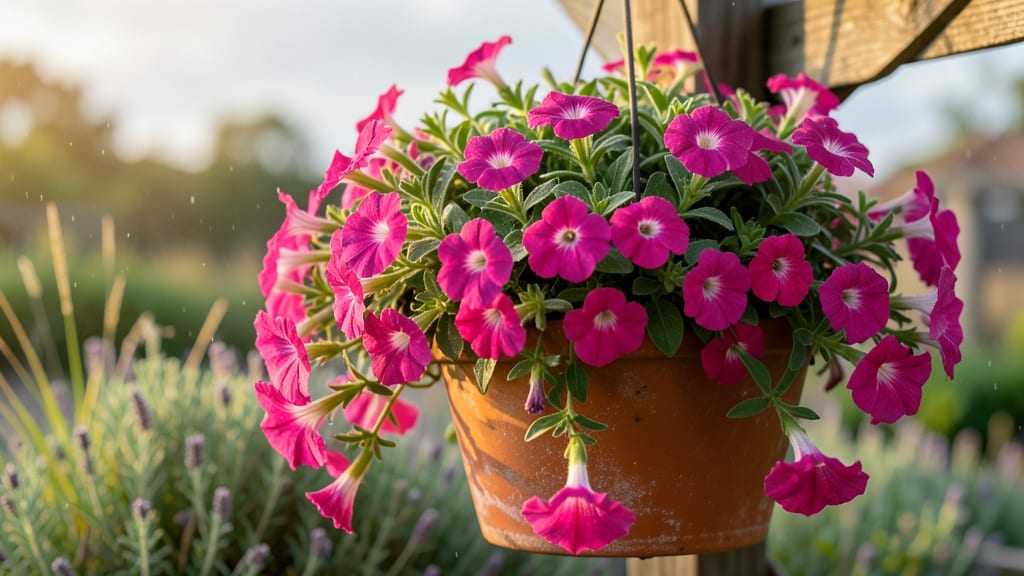
Wave petunias are not perennials in most regions because they cannot survive freezing temperatures, typically dying back when winter arrives in zones colder than 10. However, their ability to self-seed aggressively in milder climates creates perennial-like displays year after year.
Are wave petunias perennials? They thrive as summer favorites but struggle with cold—even a light frost can kill them back to the ground. 🌱 Unlike true perennials, their roots don't endure winter dormancy, which is why gardeners in colder zones replant them each spring. The good news? In warmer areas (zones 10+), they often reseed themselves so prolifically that they mimic perennial behavior without needing winter care.
What sets them apart from other petunias is their vigor and continuous blooming, making them a top choice for containers and hanging baskets.
Their cold sensitivity isn't a flaw—it's what forces gardeners to treat them as annuals, but with the right care (like deadheading spent blooms), you can coax them into producing flowers until the first frost.
💡 In This Article
- Why Wave Petunias Die in Cold Climates
- How to Extend Wave Petunia Blooms Like a Perennial
Why Wave petunias die in cold climates
Wave petunias (Petunia × hybrida 'Wave') are bred for their compact growth and nonstop blooming, but their Achilles' heel lies in their tropical origins. These plants evolved in South America's temperate regions where winters rarely drop below 40°F, making them highly sensitive to frost.
When temperatures fall below 32°F, their cell membranes rupture due to ice crystal formation—a process called cryoinjury—which kills the plant tissues instantly. 🌡️ This sensitivity contrasts sharply with true perennial petunias like Petunia × atkinsiana, which can tolerate brief cold snaps down to 20°F thanks to deeper root systems and thicker stems.
The root system of Wave petunias is another limiting factor. Unlike perennials that develop extensive, woody roots capable of storing nutrients and moisture for winter, Wave petunias have shallow, fibrous roots designed for rapid nutrient uptake during their short growing season.
When winter arrives, these roots can't sustain the plant through dormancy, causing the entire plant to wither. In USDA zones 10 and above, where winter temperatures rarely drop below 40°F, Wave petunias can sometimes persist through mild winters, but they still lack the hardiness of true perennials.
What makes this even more interesting is how Wave petunias handle cold differently depending on their growth stage. Seedlings can tolerate slightly cooler temperatures (50°F), but once they begin flowering, their sensitivity increases dramatically.
The energy required to produce blooms diverts resources away from cold resistance mechanisms, leaving them vulnerable.
This is why you'll often see Wave petunias thriving in summer but disappearing overnight when the first frost arrives—it's not just the cold, but the combination of cold and their reproductive state that seals their fate. 🌬️
For comparison, consider how a true perennial like Petunia × atkinsiana survives winter: its roots remain active underground, producing new shoots from protected buds when temperatures rise. Wave petunias, however, lack this survival strategy entirely.
Their entire life cycle is geared toward rapid growth and flowering during the warm season, with no adaptations for winter dormancy. This biological trade-off explains why they're classified as annuals despite their prolific blooming habits.
Even in warmer climates where Wave petunias might survive winter, their performance the following year is often poor. The reason? Their energy reserves are depleted after a long growing season, and they lack the robust root systems needed to recover quickly.
This is why gardeners in zones 10+ typically treat them as annuals too—replanting fresh starts each spring yields far better results than relying on overwintered plants. 🌱
One final detail worth noting is how Wave petunias respond to temperature fluctuations. Unlike perennials that can handle gradual cooling, Wave petunias struggle with sudden drops. A warm day followed by a 30°F night can cause severe stress, leading to blackened leaves and stem collapse within hours.
This sensitivity is why they're rarely found in garden centers after early fall—nurseries know their season is over when temperatures dip consistently below 50°F. 🌡️