
Orchid Care
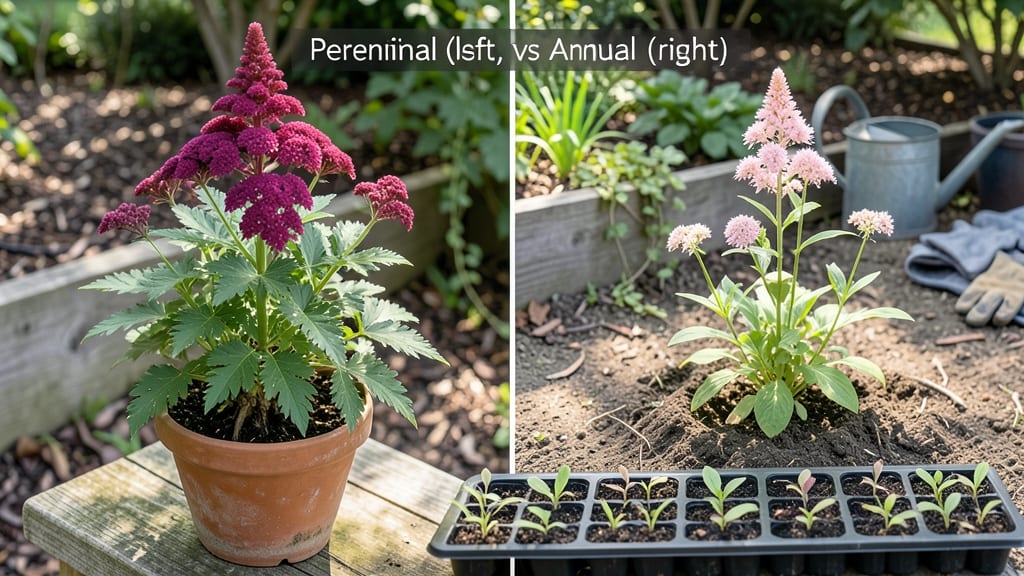
Astilbe is an annual or perennial plant that dies back to the ground each winter but regrows from its root system in spring, making it a hardy choice for gardeners in suitable climates. Its lifespan spans multiple years with proper care and seasonal dormancy.
Astilbe's seasonal dieback might trick you into thinking it's annual, but its underground root crown stores energy all winter long. 🌱 This hardy plant thrives in zones 3-8, where cold temperatures trigger dormancy—its leaves brown and collapse, but the roots stay alive.
Many gardeners assume it's a short-lived plant because of this yearly "death," but with consistent moisture and mulch, astilbe can live for decades, returning stronger each spring. The key is understanding that its life cycle isn't annual—it's just hiding beneath the soil until conditions improve.
What sets astilbe apart is how it rejuvenates annually from the same root system, unlike true annuals that complete their entire life cycle in one season. This perennial behavior means you'll enjoy those feathery plumes year after year, as long as you protect its roots during winter.
I've seen astilbe clumps in my garden that are now over 15 years old—they just keep coming back bigger and bushier with each passing season.
💡 In This Article
- Understanding Astilbe’s Perennial Dieback Cycle
- Caring for Astilbe Through Seasons: Pruning and Winter Prep
Understanding astilbe’s perennial dieback cycle
Astilbe's dramatic seasonal change isn't a sign of annual death—it's a survival strategy called dormancy. When temperatures drop below 40°F, the plant's above-ground foliage browns and collapses, but the rhizomatous root crown (a thickened underground stem) remains alive.
This root system stores carbohydrates like starch and sugars, which act as energy reserves during winter. 🌱 The process is similar to how peonies or hostas survive winter, but astilbe's roots are particularly sensitive to drying out, which is why consistent moisture is critical.
The key to astilbe's perennial nature lies in cold stratification, a natural process where the roots undergo a period of cold exposure that breaks seed-like dormancy in spring. When winter temperatures hover between 32-45°F for several weeks, the root crown undergoes biochemical changes that prepare it for regrowth.
This is why astilbe often struggles in warmer climates (zones 9+)—they lack sufficient cold stratification to trigger proper dormancy. The root crown's diameter typically ranges from 1-3 inches, with larger roots supporting more vigorous regrowth each season.
What makes astilbe appear annual to inexperienced gardeners is the complete collapse of its foliage. Unlike true perennials that retain some winter interest (like ornamental grasses), astilbe's leaves turn crispy and fall away entirely.
However, the root system remains active beneath the soil, continuing to absorb moisture and maintain cellular integrity.
This hidden persistence is why astilbe can live for 10-15 years or more with proper care—each year's dieback is simply a reset button that allows the plant to allocate resources to next year's growth rather than maintaining winter foliage.
The science behind this involves abscission layers—specialized plant tissues that form at the base of stems to cleanly sever the foliage while preserving the root system. These layers contain high concentrations of abscisic acid, a plant hormone that signals dormancy.
The root crown's meristematic cells (growth centers) remain protected within the rhizome, shielded by layers of protective tissue that prevent freezing damage. This biological adaptation explains why astilbe can survive winters in zones 3-8 with proper protection, while its foliage might look completely dead above ground.
Consider this comparison: While true annuals like marigolds complete their entire life cycle in one season (seed → flower → seed), astilbe's cycle is seed → root establishment → dormancy → regrowth → repeat.
The root system acts like a biological battery, recharging each winter to power another season of feathery plumes. This multi-year lifespan is what makes astilbe such a rewarding plant for patient gardeners—it's not just surviving winter, it's strategically preparing for a stronger comeback each spring.
One fascinating detail is how astilbe's root crowns can actually increase in size each year, especially when grown in ideal conditions (partial shade and moist, well-draining soil). The larger the root crown, the more energy it can store and the more vigorously it will regrow in spring.
This growth pattern is why established astilbe clumps often produce more abundant blooms than younger plants—each year's dormancy cycle contributes to building a more robust root system.