
Advice
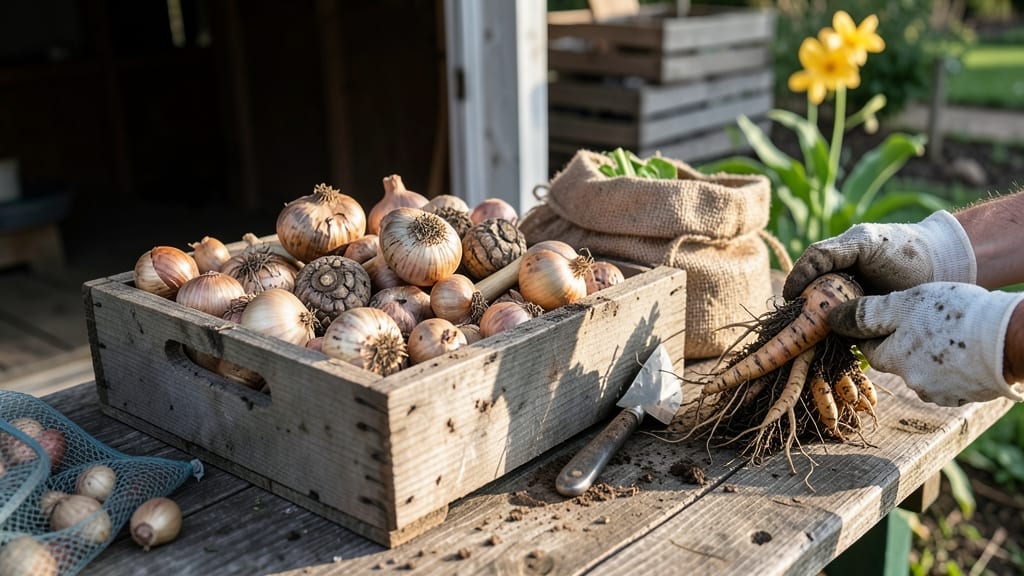
Purchasing bulk perennial bulbs is a smart way to cut costs and diversify your garden, but success depends on proper planting techniques, soil preparation, and seasonal timing. Proper storage in cool, dry conditions lets you reuse bulbs for multiple seasons without losing their vitality.
Bulk perennial bulbs let you fill your garden with hardy plants like daffodils, tulips, or alliums at a fraction of the cost of individual purchases. 🌱 The key to making them thrive lies in planting them at the right depth—typically twice the bulb's height—and ensuring well-draining soil with plenty of organic matter.
For example, daffodils need slightly shallower planting than tulips, and adding compost before planting boosts root development. When you store unused bulbs, aim for 40–50°F and 50–70% humidity in mesh bags or cardboard boxes, checking annually for signs of rot or pests.
This approach lets you reuse bulbs for 3–5 years while keeping your garden vibrant year after year.
What sets perennial bulbs apart is their ability to return season after season, unlike annuals that need replanting. This makes them a cost-effective investment for gardeners who want long-term beauty with minimal effort.
I’ve found that grouping bulbs by type—like clustering alliums together—creates natural drifts that look stunning while making maintenance easier. The trade-off? Bulbs need careful handling during storage to avoid moisture loss or mold, so proper curing after digging is just as important as planting depth.
💡 In This Article
- Optimal Planting Depth and Soil Conditions for Perennial Bulbs
- Long-Term Storage Solutions for Bulk Perennial Bulbs
Optimal planting depth and soil conditions for perennial bulbs
Perennial bulbs thrive when planted at the right depth because their roots need both stability and access to moisture without sitting in soggy soil. The general rule is to bury them at twice the bulb's height, but this varies by type.
For example, daffodils (which have tougher skins) can handle slightly shallower planting (4–6 inches deep), while tulips (more delicate) need 6–8 inches to prevent rot.
This depth ensures the bulb's "neck"—the area where roots and shoots emerge—stays just below the soil surface, where it can push through in spring without struggling.
The soil itself acts like a sponge, balancing water retention and drainage. A mix of 60% organic matter (compost, leaf mold) and 40% mineral soil creates ideal conditions. Test your soil's pH—most bulbs prefer 6.0–7.0—using a simple kit or by sending a sample to a local extension office.
Sandy soil drains too quickly, while clay holds too much moisture; amending with perlite or coconut coir solves these issues. I’ve seen bulbs planted in unamended clay soil fail to sprout because their roots suffocate, while those in well-aerated soil return year after year.
Seasonal timing matters just as much as depth. Plant in fall (6–8 weeks before frost) so bulbs establish roots before winter dormancy. The soil should be cool (50–60°F) but workable—not frozen or muddy. In warmer climates, plant in winter to mimic natural conditions.
The bulb’s natural dormancy period (like a built-in timer) ensures it won’t sprout prematurely. Think of it as giving the bulb a head start on spring, like tucking a seedling under a blanket to harden off.
One common mistake is planting too deeply, which can rot the bulb’s base or prevent sprouting. The top of the bulb should sit 2–3 inches below the soil line, with the pointed end facing up (this is where the shoot emerges).
For bulbs like alliums, which have papery skins, a slightly looser soil mix helps prevent moisture buildup. In my garden, I’ve noticed that bulbs planted in raised beds with added compost bloom 2–3 weeks earlier than those in heavy garden soil, thanks to better drainage and nutrient availability.
Consider the bulb’s natural habitat for clues. Many perennials, like crocuses, grow in meadows with loose, well-drained soil. Mimic this by adding coarse sand or grit to heavy soils. The goal is to replicate the bulb’s native conditions—whether that’s the rocky slopes of tulips or the damp woodlands of snowdrops.
A quick soil test for texture (squeeze a handful: if it crumbles easily, it’s ideal) saves guesswork. For bulk planting, use a soil probe to check depth consistently across large areas.
Finally, mulch lightly (1–2 inches) after planting to insulate the soil and retain moisture without smothering the bulbs. Organic mulch like straw breaks down slowly, adding nutrients over time. Avoid thick layers, which can trap moisture and encourage rot.
In my experience, a well-prepared planting site reduces the need for fertilizers later—those bulbs just keep coming back stronger each year. 🌱