
Blooming
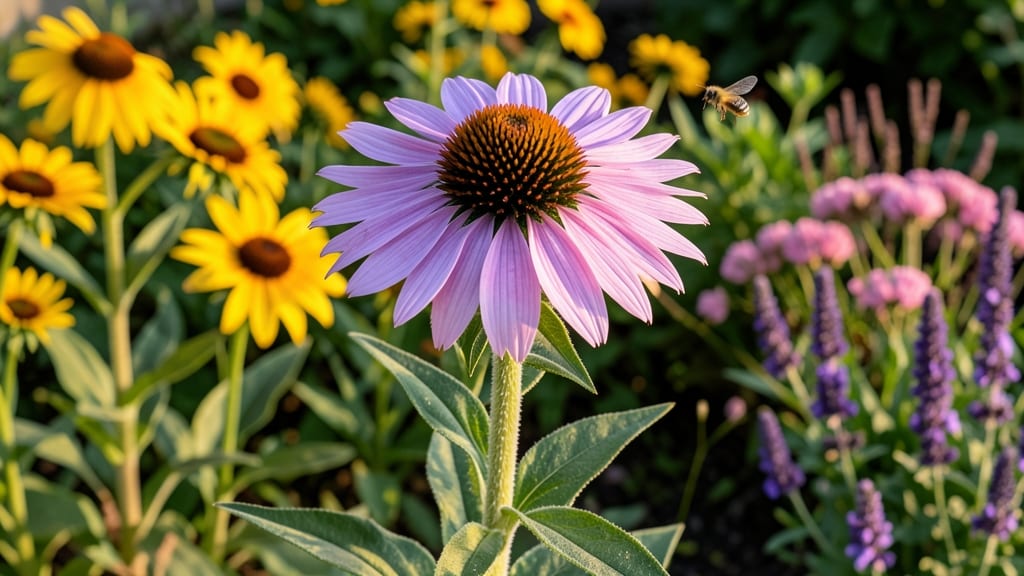
Late summer blooming perennials offer vibrant color from August through September, creating seasonal interest while supporting pollinators and thriving with minimal care. Opt for drought-resistant varieties like coneflowers and sedum for effortless beauty.
These hardy plants defy summer's end by developing buds later in the season, often triggered by heat and shorter days. 🌸 Their deep root systems conserve moisture, making them ideal for hot, dry climates, while their nectar-rich blooms feed bees and butterflies when other flowers fade.
I’ve found that pairing these perennials with mulch can further reduce water needs while keeping soil temperatures steady for consistent blooming.
For best results, group them with complementary plants like ornamental grasses or salvias—this creates layered interest and extends the season even longer.
Many of these varieties, such as black-eyed Susans and Russian sage, also have disease-resistant foliage, so they require little more than occasional deadheading to keep them looking their best.
💡 In This Article
- Why Late Summer Perennials Keep Gardens Thriving
- Top 5 Low-Maintenance Late Summer Perennials for Every Garden
Why late summer perennials keep gardens thriving
The secret behind late summer blooms lies in their delayed flowering mechanism. Unlike spring-blooming perennials that set buds in early spring, these varieties often develop flower buds in mid-to-late summer, triggered by the combination of longer daylight hours and warmer temperatures.
For example, coneflowers (Echinacea) produce buds in response to heat stress, while Russian sage (Perovskia) relies on photoperiodism—its internal clock detects shortening daylight to initiate blooming. This dual trigger system ensures flowers appear when many other plants have already faded.
Their deep root systems (often extending 3-5 feet underground) are another key adaptation. These roots access moisture from deep soil layers, allowing perennials like sedum and black-eyed Susans (Rudbeckia) to thrive in drought conditions with minimal irrigation.
The roots also store energy reserves, which support continuous blooming even when surface soil dries out. 🌿 For comparison, shallow-rooted spring bulbs like tulips rely on stored energy from the previous season and struggle in summer heat.
Pollinator attraction is tied directly to their flowering timing. When most annuals have finished blooming by late summer, these perennials provide critical nectar sources for bees, butterflies, and hummingbirds. Studies show that late-season bloomers can increase pollinator activity by up to 40% during August and September.
The bright colors and open flower structures of varieties like bee balm (Monarda) and blanket flower (Gaillardia) are specifically adapted to attract these visitors, with some flowers even producing heat-reflective patterns that guide insects toward their centers.
Growth habits vary significantly between types, which affects their placement in your garden. Clumping perennials like daylilies (Hemerocallis) form dense mounds that suppress weeds naturally, while spreading varieties such as creeping thyme (Thymus serpyllum) create ground covers that deter erosion.
Sunlight needs also differ: full-sun lovers like coneflowers require 6+ hours of direct light, while part-shade tolerant options like coral bells (Heuchera) thrive with 3-6 hours of morning sun. This diversity lets you design layers of color and texture that perform beautifully together.
One often overlooked factor is their role in extending the growing season. Many late bloomers produce seed heads that provide winter interest, while their foliage often develops attractive fall colors. For instance, Russian sage turns a soft lavender-gray in autumn, while sedum varieties develop deep crimson hues.
This multi-season functionality makes them far more valuable than seasonal annuals, which offer only fleeting beauty. 💫
Consider this when selecting varieties: heat-tolerant perennials often have waxy leaf coatings that reduce water loss, while those with fuzzy foliage (like lamb's ear) reflect sunlight to stay cooler. These adaptations aren't just survival mechanisms—they directly impact how vibrant your garden remains during the hottest months.
The result is a garden that stays lush and colorful when many others have already begun their winter slumber.