
Orchid Care
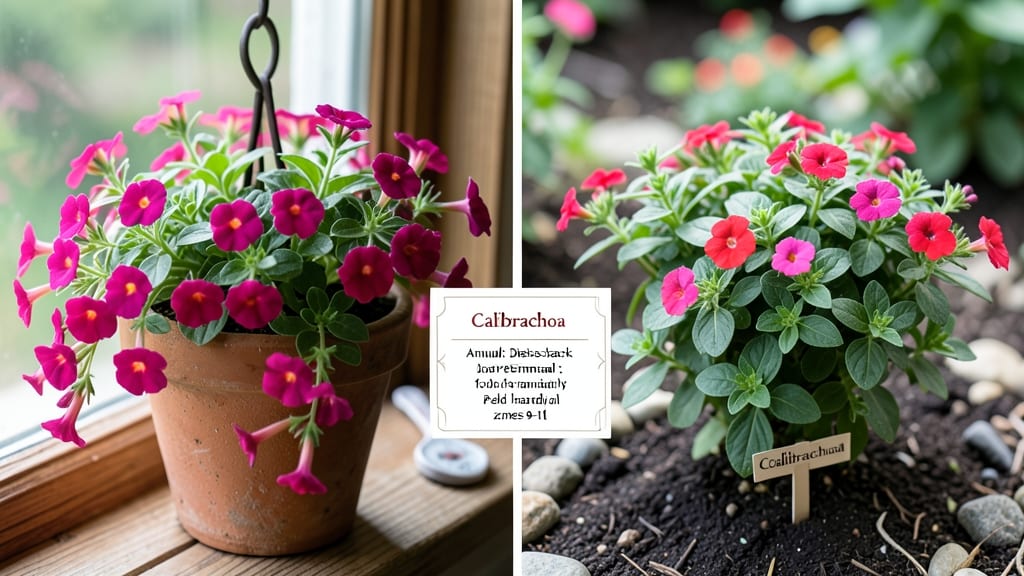
Whether calibrachoa is perennial or annual depends on your climate: it acts as an annual in colder zones but thrives as a perennial in frost-free areas (USDA 9-11) with proper winter care. The plant's dieback in cold weather indicates dormancy rather than death, and it often revives when temperatures rise.
This behavior stems from calibrachoa's tropical origins—it can't tolerate freezing temperatures, which is why most gardeners treat it as a summer annual. 🌱 However, in warmer climates, it naturally enters dormancy during winter months, conserving energy until spring.
Think of it like a geranium: both are tender perennials that die back in cold but bounce back with the right care.
For those in cooler zones, overwintering indoors or using thick mulch can extend its lifespan. The key is protecting the roots while allowing the foliage to die back naturally—this mimics its natural dormancy cycle in frost-free regions.
💡 In This Article
- Why Calibrachoa Dies Back in Cold Weather
- How to Overwinter Calibrachoa in Cold Climates
Why calibrachoa dies back in cold weather
Calibrachoa’s dramatic dieback in cold weather isn’t a sign of death but a survival strategy rooted in its tropical origins. This plant, native to South America, evolved in warm climates where temperatures rarely drop below 50°F.
When exposed to frost or even light freezes, its cells undergo cytoplasmic freezing—a process where water inside plant cells expands and ruptures delicate membranes. Unlike hardy perennials that develop protective antifreeze proteins, calibrachoa lacks these adaptations, making it highly frost-sensitive.
The plant’s response begins at 40°F or lower, triggering a cascade of physiological changes. First, chlorophyll production halts, causing leaves to yellow and drop. Then, the plant redirects energy toward root systems, entering a state of physiological dormancy similar to how bulbs like tulips survive winter.
This isn’t true hibernation like woody perennials, but a temporary shutdown to preserve energy until warmer conditions return. 🌡️ In frost-free zones (USDA 9-11), this cycle repeats annually, with dieback occurring in winter and regrowth in spring.
What sets calibrachoa apart from true perennials is its inability to regenerate from woody stems. Unlike geraniums or impatiens, which can produce new growth from their base, calibrachoa’s stems are herbaceous and non-woody.
This means if the entire plant dies back to the ground, it must regrow from seed or root crowns—hence why gardeners in colder climates often treat it as an annual.
The key difference lies in its root system: while the above-ground parts perish, the roots often remain viable if protected from freezing.
Comparing calibrachoa to other tender perennials like coleus or begonia reveals similar frost sensitivity but different recovery mechanisms. Coleus, for example, dies back completely but can regrow from a single leaf cutting, while calibrachoa requires warmer soil temperatures (65°F) to break dormancy.
This explains why calibrachoa often appears "dead" in winter—its roots may still be alive, waiting for the right conditions to resume growth. In frost-free climates, this cycle is seamless, but in colder zones, gardeners must intervene to mimic these natural conditions.
One fascinating detail is how calibrachoa’s flowering response is tied to this dormancy cycle. The plant’s photoperiodism (light sensitivity) triggers bud formation in response to longer daylight hours, but cold temperatures pause this process.
When spring arrives and soil warms to 60°F, the roots signal the plant to resume growth, often producing new shoots within 2-4 weeks. This rapid regrowth is one of the plant’s most rewarding traits for those who understand its cold-sensitive nature.
For gardeners in transitional climates (USDA 8-9), this dieback behavior offers a clue about the plant’s health. If the roots remain firm and white when checked in early spring, the plant is likely viable.
However, if the roots are mushy or blackened, frost damage has been severe. This distinction helps determine whether the plant can be coaxed back to life or if replanting is necessary. 🌱
The science behind this dormancy involves abscisic acid, a plant hormone that accumulates in response to cold stress. This hormone helps close stomata (pores) to prevent water loss and redirects nutrients to storage organs.
In calibrachoa, this process is more pronounced than in true perennials because its entire above-ground structure must be rebuilt each season. Understanding this hormonal response explains why calibrachoa thrives in warm climates but struggles in cold ones—it’s not built for winter survival but for rapid regrowth when conditions improve.