
Container Gardens
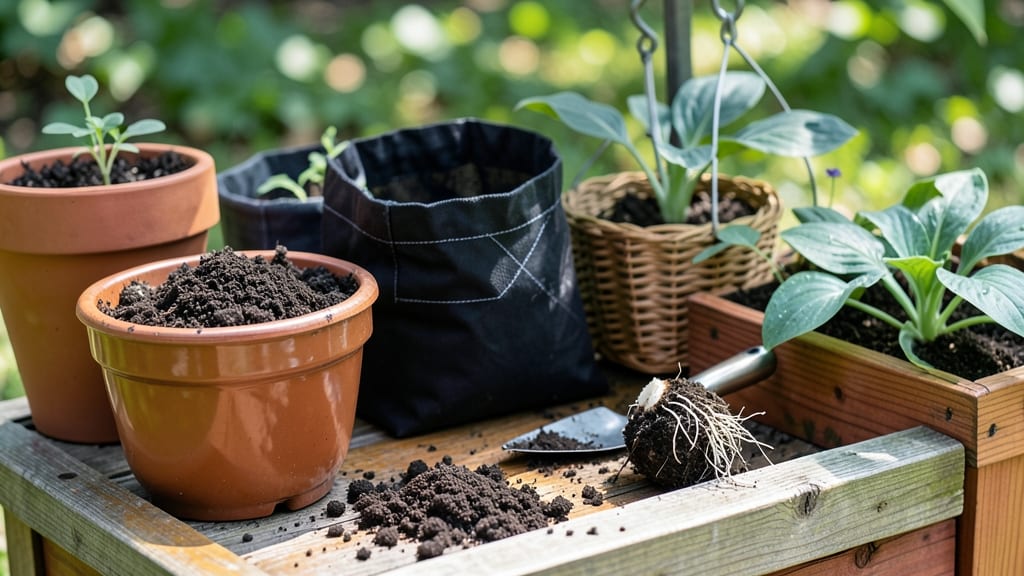
Yes, perennials can be planted in containers when you choose compact varieties, use well-draining soil, and provide consistent care that mimics their natural growing conditions.
Many gardeners assume perennials need expansive garden beds, but the right container-friendly species actually flourish in pots with proper attention. 🌿 The key lies in selecting plants with shallow root systems—like lavender, heuchera, or Russian sage—that won't outgrow their spaces quickly.
I've found that containers need at least 12-18 inches of depth for most perennials, with drainage holes to prevent root rot, while larger pots can accommodate bigger varieties like hostas or daylilies.
The soil mix matters just as much as the plant choice, requiring a blend of potting soil, perlite, and compost to ensure good drainage while retaining moisture.
What sets container perennials apart is their adaptability to seasonal changes. Unlike annuals, these plants return year after year, but they need winter protection in colder climates—think wrapping pots in burlap or moving them to sheltered areas.
Overcrowding is another common pitfall; I always leave 3-4 inches of space between plants to allow for growth without competing for nutrients. With the right setup, container perennials can bloom just as beautifully as their garden counterparts, offering year-round interest with minimal space.
💡 In This Article
- Best Perennial Varieties for Container Gardening
- Container Gardening Tips for Perennial Success
Best perennial varieties for container gardening
Container gardening opens doors to perennials that naturally thrive in confined spaces, thanks to their shallow root systems and compact growth habits. Plants like lavender (Lavandula) and sedum (Stonecrop) are perfect choices because their roots rarely exceed 12 inches deep, making them ideal for 10-12 inch pots.
The key here is their drought tolerance—sedum, for instance, stores water in its fleshy leaves, reducing the need for frequent watering, while lavender's aromatic foliage deters pests naturally. 🌿 These varieties also adapt well to well-draining soil mixes, preventing the root rot that often plagues container plants.
The right perennial selection depends on your climate and sunlight exposure. For sunny spots, consider Russian sage (Perovskia atriplicifolia), which grows 3-4 feet tall but stays narrow, perfect for 18-inch deep containers.
In partial shade, heuchera (Coral Bells) offers vibrant foliage in colors like burgundy or lime green, thriving in 8-inch pots with minimal care. Ornamental grasses like Miscanthus sinensis add texture and movement, their fibrous root systems spreading horizontally rather than deeply, making them ideal for wide, shallow containers.
The secret to their success lies in their ability to handle temperature fluctuations and seasonal changes without needing vast root zones.
Seasonal considerations play a crucial role in container perennial selection. For example, daylilies (Hemerocallis) bloom prolifically in containers but require 18-inch deep pots to accommodate their rhizomes. Their vibrant flowers appear in late spring to summer, offering continuous color.
Meanwhile, hostas prefer partial shade and thrive in 12-inch pots, providing lush foliage that contrasts beautifully with taller perennials. The trick is to choose varieties that align with your growing season—cool-season plants like heuchera may need winter protection, while heat-loving sedum can handle summer's intensity with ease.
Don’t overlook the sensory benefits of container perennials. The fragrance of lavender or the velvety texture of lamium (Dead Nettle) adds depth to your garden, even in small spaces. Lamium, with its trailing habit, cascades beautifully over container edges, creating a lush, layered look.
These plants also attract pollinators like bees and butterflies, turning your balcony or patio into a mini ecosystem. The key is to mix heights and textures—pairing upright Russian sage with trailing lamium and low-growing thyme creates visual interest while maximizing space efficiency.
For those in colder climates, winter-hardy perennials like catmint (Nepeta) or salvia are excellent choices. Catmint’s silvery foliage and lavender-blue flowers add color even in late fall, while salvia’s upright spikes provide structure.
Both handle 10°F temperatures with proper winter care, such as wrapping pots in burlap or moving them to a sheltered location. The right perennial selection ensures your container garden remains vibrant and low-maintenance throughout the year.