
Container Gardens
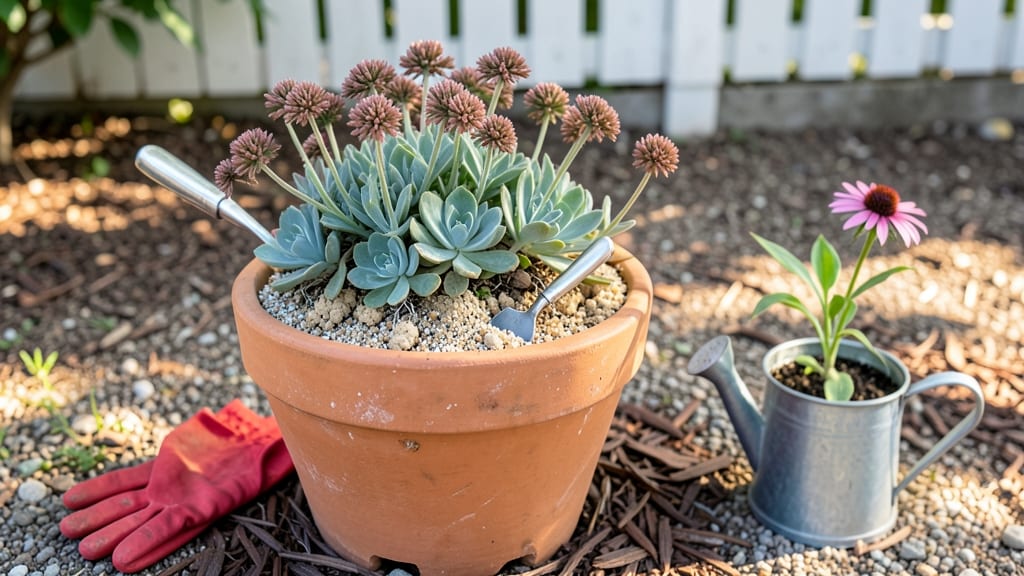
You can absolutely put perennials in pots, but select dwarf or bush varieties like lavender, sedum, or heuchera for best results. Use containers with drainage, quality potting mix, and adjust care for seasonal changes.
Container gardening with perennials is a fantastic way to add color and texture to small spaces, but success depends on choosing the right plants and providing proper care. 🌿 Unlike annuals, perennials return year after year, so their compact growth habits and adaptability to confined roots make them ideal candidates.
I’ve found that plants like dwarf coneflowers or creeping thyme thrive in pots because they naturally stay small while still offering seasonal blooms. The key is matching the plant’s mature size to your container—overcrowding leads to stress and poor performance.
Beyond plant selection, containers need proper drainage to prevent root rot, and a well-draining soil mix helps replicate natural growing conditions. Terracotta pots work well for heat-loving varieties, while insulated containers protect roots in colder months.
Remember that potted perennials dry out faster than in-ground plants, so checking soil moisture regularly—especially in hot weather—is crucial for their long-term health.
💡 In This Article
- Best Perennials for Container Gardening
- Container Care Tips for Potted Perennials
Best perennials for container gardening
Perennials that thrive in containers share key traits: shallow root systems, controlled growth habits, and adaptability to confined spaces.
Plants like lavender and sedum excel because their fibrous roots spread horizontally rather than deeply, making them ideal for pots. 🌱 These varieties also handle root competition better than deep-rooted perennials like peonies, which need ample soil volume.
The root zone in a 12-inch pot typically stays moist longer than in-ground soil, which is why drought-tolerant species like heuchera (coral bells) or sempervivum (hens and chicks) perform so well—they naturally conserve water.
Growth habits matter just as much as roots. Compact perennials like dwarf coneflower (Echinacea 'White Swan') mature to only 12-18 inches tall, perfect for 10-12 inch diameter pots, while sprawling types such as creeping thyme work beautifully in wide, shallow containers.
These plants also exhibit what botanists call "determinate growth"—they bloom once and then focus on root and foliage development, rather than shooting up uncontrollably. 🌿 For shade lovers, hostas with varieties like 'Blue Angel' (mature size 12-18 inches) are excellent choices, as they tolerate root-bound conditions better than sun-loving perennials.
The seasonal adaptability of container perennials comes down to their native climates. Mediterranean species like rosemary or santolina handle heat and drought beautifully in pots because they evolved in rocky, nutrient-poor soils.
In contrast, woodland perennials like astilbe or foamflower (Tiarella) prefer cooler, moister conditions—ideal for containers placed in dappled shade.
What most gardeners overlook is how containerized plants experience more temperature extremes: pots heat up faster in sun and cool quicker at night, which is why choosing native or adapted species gives you the best chance at success.
Here's a quick reference for top container perennials by growing conditions:
- Full Sun: Lavender (drought-tolerant, 18-24 inches tall), Sedum 'Autumn Joy' (succulent-like, 12-18 inches), Catmint (Nepeta) (aromatic, 24-36 inches)
- Partial Shade: Heuchera 'Palace Purple' (foliage plant, 12-18 inches), Coral Bells (Heuchera) (colorful leaves, 12-24 inches), Hosta 'Francee' (blue-green foliage, 24-30 inches)
- Drought-Tolerant: Russian Sage (Perovskia) (silver foliage, 36-48 inches), Ornamental Grasses (Fountain Grass) (airy texture, 24-36 inches), Ice Plant (Delosperma) (succulent, 6-12 inches)
One common misconception is that all perennials need deep pots—this isn't true. Shallow-rooted perennials like creeping phlox or ajuga actually perform better in wide, shallow containers (like 10-12 inches deep) because they spread rather than grow deep.
The key is matching the plant's natural rooting habit to your container's dimensions. 🌿 For example, a 12-inch diameter pot is ideal for a single heuchera plant, while a 16-inch pot can accommodate a small shrub like dwarf boxwood combined with ajuga as a ground cover.