
Orchid Care
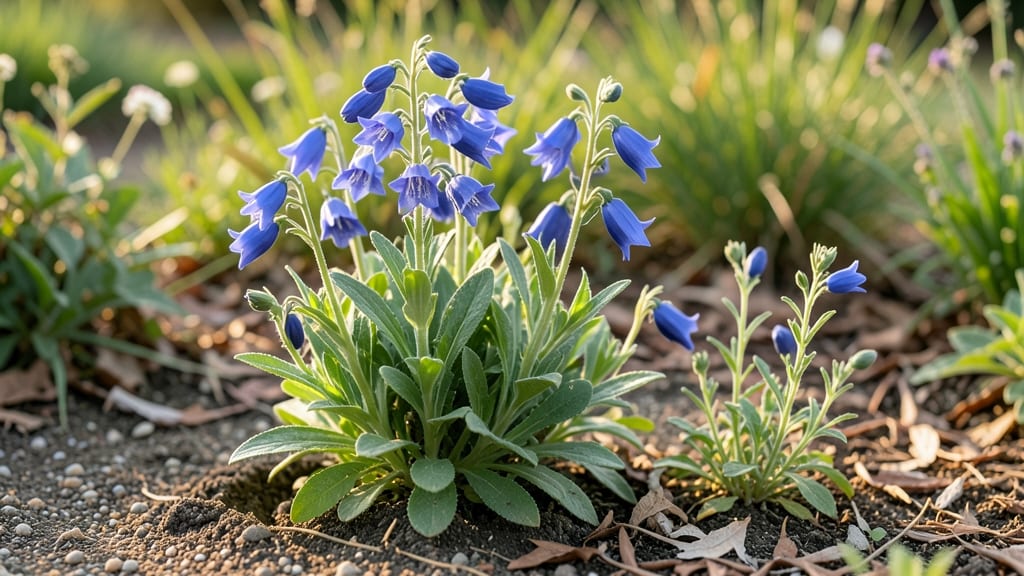
Canterbury bells are biennial plants, not true annuals or perennials, which means they complete their life cycle in two years—producing flowers only in their second year before dying naturally. Unlike annuals that bloom and die in one season or perennials that return year after year, their growth pattern is tied to seed planting timing and seasonal conditions.
This unique growth habit explains why they often disappoint gardeners who expect annual blooms. 🌸 The first year is all about building strong roots, while the second year focuses on flowering before the plant's natural decline.
In colder regions, some may survive into a third year with careful winter protection, but true biennial behavior dominates. Knowing this helps you plan for seasonal replanting to enjoy continuous color in your garden.
For example, if you plant seeds in early spring, you'll likely see flowers the following summer—but only if the plant survives winter. That's why many gardeners treat them like annuals in practice, even though their biology classifies them differently.
The key is understanding this cycle to set realistic expectations for your garden layout and maintenance schedule.
💡 In This Article
- Understanding Canterbury Bells' Biennial Growth Cycle
- How to Extend Canterbury Bells' Lifespan in Your Garden
Understanding Canterbury bells' biennial growth cycle
The biennial nature of Canterbury bells (Campanula medium) stems from their evolutionary strategy to maximize reproductive success in unpredictable environments. During their first year, these plants allocate nearly 90% of their energy toward developing a robust root system and storing nutrients in their taproot.
This is why seedlings planted in spring often appear as simple leafy rosettes by summer—what you're seeing is just the foundation for next year's floral display. The process mirrors that of other biennials like carrots or onions, where vegetative growth dominates before flowering.
Environmental triggers like day length (photoperiodism) and temperature shifts play critical roles in transitioning to flowering. Canterbury bells typically require 10-12 weeks of cold exposure (40-50°F) to break dormancy—a process called vernalization.
This explains why plants seeded in late summer often bloom the following spring, while spring-seeded plants may wait until the second summer. The flowers themselves contain anthocyanin pigments that protect developing buds from UV damage, giving them that signature bell-shaped appearance ranging from blue to pink hues.
What's fascinating is how their energy allocation shifts dramatically between years. First-year plants prioritize root biomass production, sometimes growing roots 3-4 times deeper than their above-ground foliage. Second-year plants then redirect this stored energy into flower production, with each stem capable of supporting 5-15 individual bells.
This two-phase growth pattern allows them to compete effectively in disturbed ecosystems where annuals might struggle to establish.
The temperature threshold for flowering varies by cultivar. Most commercial varieties need minimum 50°F night temperatures for 4-6 weeks to initiate blooming.
In warmer climates (USDA zones 6-8), some plants may attempt flowering in their first year if conditions are ideal, but this often results in weaker stems and fewer flowers. The plant's internal clock—controlled by the FT protein in its meristem—coordinates this transition between growth phases.
Here's what happens when you miss the cold requirement: Plants may remain vegetative for years, producing only basal leaves. This explains why gardeners in mild winter regions sometimes see Canterbury bells behave more like perennials, with occasional flowering over multiple years.
The key difference is that true biennial behavior dominates in colder climates where winter dormancy is pronounced.
Consider this comparison: Annuals like marigolds complete their life cycle in 60-90 days, while perennials like lavender regrow from the same root system yearly. Canterbury bells bridge this gap with their two-year cycle, making them unique among garden flowers.
Their biennial habit actually provides an ecological advantage—they can establish strong root systems before flowering, ensuring better survival rates in their short lifespan.