
Orchid Care
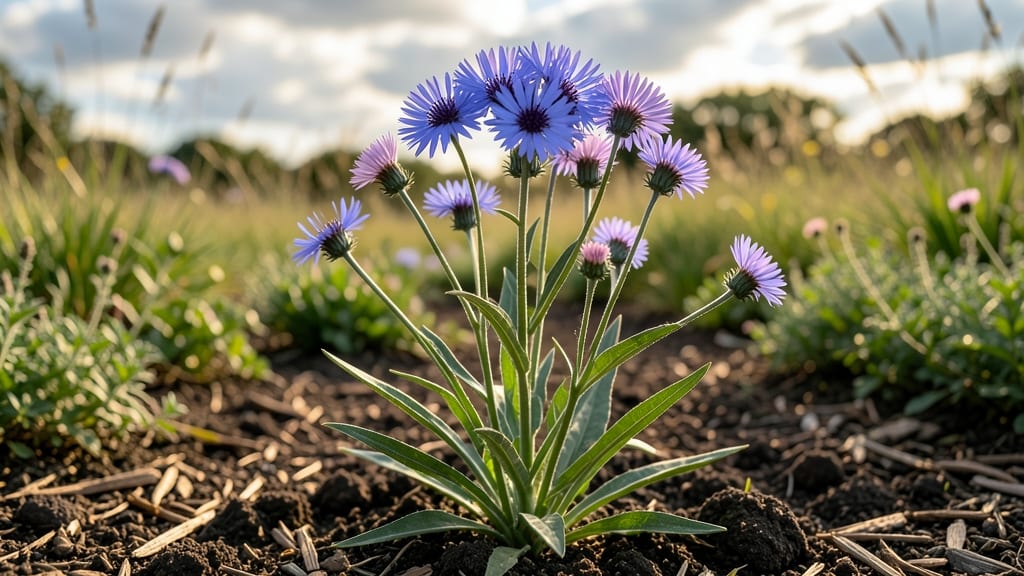
Determining whether cornflowers are annuals or perennials depends on your climate: they die back after flowering in most regions but may regrow from the base in mild winter zones, acting like short-lived perennials. Their life cycle shifts based on temperature and garden care.
Cornflowers' growth habits reveal a fascinating botanical adaptability. 🌱 In colder climates where frost kills the foliage, they complete their life cycle as true annuals, dropping seeds to restart the next season.
However, in frost-free zones or sheltered garden spots, some varieties surprise gardeners by sending up new growth from the root crown—this is their perennial behavior in disguise.
The key difference lies in their cold tolerance: while most cornflowers can't survive freezing temperatures, certain varieties develop hardier root systems that persist through mild winters.
This dual nature means gardeners can strategically extend cornflowers' presence. For instance, planting in well-drained soil with winter mulch creates a protective microclimate that mimics perennial conditions. The plants' ability to reseed naturally also helps maintain continuous blooms across seasons, making them more reliable than many true annuals.
Understanding these patterns lets you choose planting locations that maximize their lifespan in your specific climate zone.
💡 In This Article
- How Climate Determines Cornflower’s Annual vs Perennial Growth
- Gardening Tips to Extend Cornflower Blooms Year-After-Year
How climate determines cornflower’s annual vs perennial growth
Cornflowers (Centaurea cyanus) exhibit their annual or short-lived perennial behavior primarily through temperature sensitivity. Their native European habitats experience distinct seasonal shifts, where cold winters trigger dormancy or death in most varieties.
The key biological mechanism involves their cold-hardiness threshold: when temperatures drop below 20°F (-7°C), the above-ground growth dies back completely, classifying them as annuals in most climates. However, in microclimates with milder winters (above 25°F (-4°C)), the root crown often survives, allowing regrowth in spring.
The difference comes down to root resilience. While true annuals like marigolds produce no persistent structures, cornflowers develop a taproot system that can store energy for regrowth. In frost-free zones (USDA zones 7-10), this root system may persist for 2-3 years, creating the illusion of perennial behavior.
The regrowth typically emerges from the base after 4-6 weeks of warm soil temperatures, demonstrating their adaptability to local conditions rather than a true perennial lifecycle.
Gardeners often observe this phenomenon in sheltered locations where cold air pools less effectively. For example, planting near south-facing walls or under deciduous trees creates warmer microclimates that protect roots from extreme cold.
The plant's ability to reseed naturally also contributes to this confusion—even if the parent plant dies back, new seedlings emerge from dropped seeds, maintaining continuous blooms across seasons. This self-sustaining cycle is why cornflowers appear more persistent than many true annuals.
Botanically, this behavior represents an intermediate growth habit called a "short-lived perennial" or "biennial-like" cycle. Unlike true perennials that regrow annually from the same root system, cornflowers typically complete their lifecycle in 1-2 years before declining.
The transition between annual and perennial-like growth depends on three key factors: minimum winter temperature, soil moisture retention, and root protection from mulch or microclimates. In colder regions, gardeners must treat them as annuals, while in milder areas, they can behave like perennials with proper care.
Consider this comparison: In New England (zone 5), cornflowers die back completely each winter and must be resown annually. However, in coastal California (zone 9), the same variety may regrow from the base for 2-3 seasons before declining.
This climate-dependent behavior explains why gardeners in different regions report conflicting experiences with cornflower persistence. The plant's adaptability makes it a fascinating study in botanical plasticity.
What most gardeners don't realize is that even in colder climates, cornflowers' seeds remain viable in the soil for 2-3 years, creating a natural reseeding cycle.
This self-sustaining mechanism means that once established, cornflowers can maintain themselves in the garden with minimal intervention, blurring the line between annual and perennial behavior. The key to unlocking their perennial potential lies in creating the right growing conditions that protect their root systems during winter.