
Size
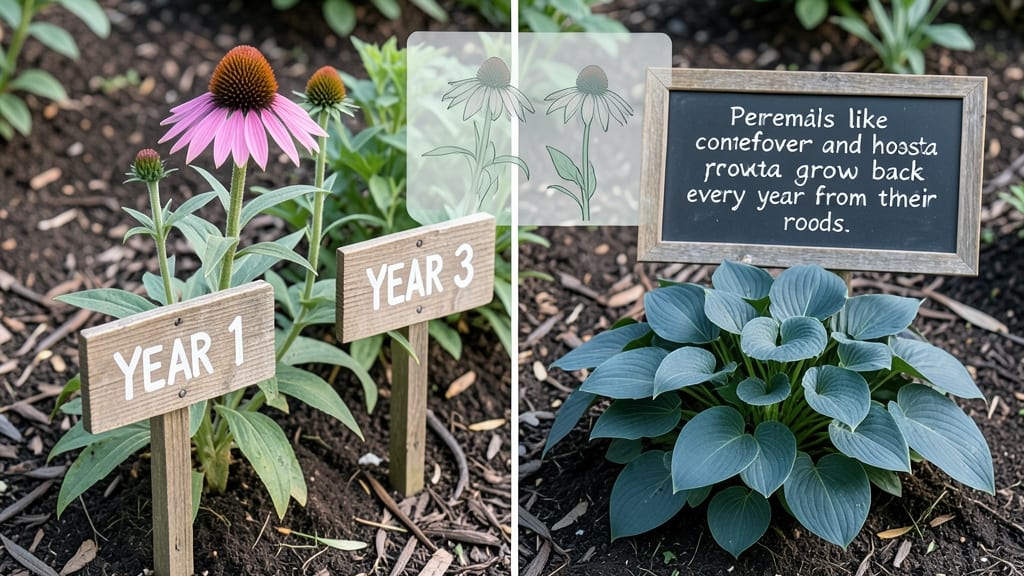
Perennials do grow every year, but they often enter a dormant phase where foliage dies back seasonally while roots and crowns remain alive underground, then regrow when conditions improve.
This annual growth pattern is actually a survival strategy—perennials store energy in their roots during active seasons, then use it to fuel new shoots when temperatures rise. 🌱 Unlike annuals that complete their entire life cycle in one season, perennials focus on preserving their root systems through harsh conditions, which is why you'll often see them appear "dead" in winter only to bounce back in spring.
The key difference lies in their hardiness: cold-hardy perennials like coneflowers or hostas can survive freezing temperatures, while tender perennials like cannas may need winter protection or die back completely in frost.
What's fascinating is how this cycle varies by climate. In warmer regions, some perennials might go dormant during dry seasons instead of cold ones, while northern varieties rely entirely on winter dormancy.
This biological adaptation explains why your garden might look bare in late fall but still come back stronger each year—those roots are working overtime underground to prepare for the next growing season.
💡 In This Article
- How Perennial Dieback Works in Cold and Warm Climates
- Signs Your Perennials Are Healthy Despite Winter Dieback
How perennial dieback works in cold and warm climates
Perennial dormancy is a sophisticated survival mechanism triggered by environmental cues like temperature and daylight. When nights grow shorter and temperatures drop below 50°F, plants like hostas and peonies begin converting stored sugars in their leaves into starches in their roots—a process called carbohydrate translocation.
This underground energy reserve fuels regrowth when conditions improve. Cold-hardy perennials (zones 3-7) can survive -20°F winters, while tender perennials (zones 8-11) may only tolerate brief cold snaps or require mulch protection.
The timing of dieback varies by species and climate. In northern regions, perennials like coneflowers often lose foliage by late fall, while in Mediterranean climates, some perennials enter summer dormancy to escape heat and drought.
For example, lavender thrives in hot, dry conditions but stops active growth when temperatures exceed 90°F, conserving moisture until fall rains return. This explains why your garden might look dormant at different times depending on location—it's not about the season, but the specific stressor the plant is avoiding.
Root systems play a critical role in this cycle. Perennials like asparagus develop extensive underground networks that can reach 3-5 feet deep, allowing them to access moisture and nutrients even when surface soil freezes.
The crown (where roots meet stems) contains dormant buds that remain viable for years, ready to sprout when temperatures rise above 55°F. This biological hardwiring is why perennials can survive decades with proper care, unlike annuals that complete their entire life cycle in a single season.
Cold-hardy perennials have evolved specialized adaptations like antifreeze proteins that prevent ice crystal formation in their cells, while tender perennials rely on rapid growth cycles to complete their life processes before frost.
For instance, cannas (tender perennials) grow aggressively during warm months but must be dug up and stored indoors when temperatures dip below 40°F. This explains why some perennials appear to \"die\" in winter—it's not death, but a strategic retreat to preserve energy for next year's growth.
What's often misunderstood is that dieback isn't always winter-related. In arid climates, perennials like agaves may go dormant during summer droughts, only to regrow when monsoon rains return. This dual-dormancy pattern shows how perennials have evolved to respond to their specific environmental challenges.
The key takeaway is that dormancy is a calculated survival strategy, not a sign of weakness—it's how these plants ensure they'll return stronger each year.
The science behind this involves complex hormonal signals. As days shorten, plants produce more abscisic acid, a hormone that triggers dormancy, while reducing growth-promoting hormones like gibberellins. This hormonal shift explains why even healthy perennials appear \"dead\" during winter—it's a carefully regulated biological process that ensures their survival. 🌱