
Planting
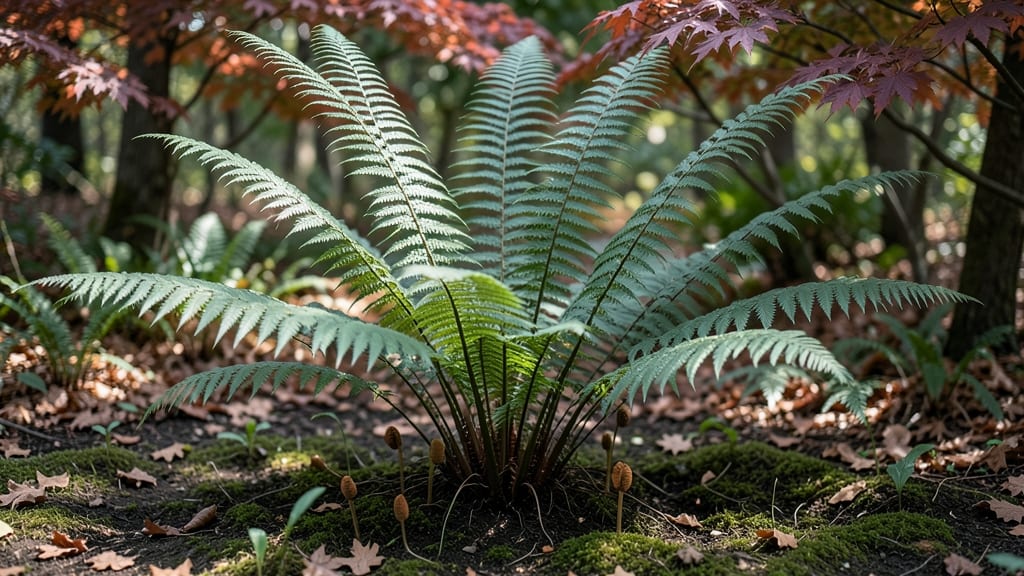
Fern is a perennial plant that regrows yearly from its underground rhizomes, thriving in shaded areas and returning with new fronds each spring. Unlike annuals, it survives winter dormancy and can live for decades with proper care.
Ferns thrive as perennials because their rhizomes act like natural storage units, preserving energy underground through harsh seasons. 🌿 Unlike annuals that complete their life cycle in one year, ferns lie dormant in winter but burst back to life when conditions improve.
This makes them ideal for gardeners seeking low-maintenance, long-term greenery that returns year after year with minimal effort.
What sets ferns apart is their ability to adapt to various climates while maintaining their hardy nature. Many varieties, like the maidenhair fern, can live for decades with consistent moisture and shade, while others like the holly fern tolerate drier conditions.
Their slow, steady growth pattern means you'll enjoy their lush foliage without the annual replanting required for most flowering plants.
💡 In This Article
- How Ferns Survive as Perennials
- Best Fern Varieties for Perennial Gardens
How ferns survive as perennials
The secret to ferns' perennial success lies in their specialized underground structures called rhizomes. These horizontal, creeping stems store carbohydrates and nutrients like a natural battery, allowing the plant to survive harsh conditions.
Unlike annuals that rely on seeds for reproduction, ferns use their rhizomes to regenerate each spring, producing new fronds from the same root system that's been quietly growing underground for years.
During winter dormancy, ferns enter a state of reduced metabolic activity where their rhizomes act as survival units. Studies show that some fern species can maintain up to 80% of their stored energy reserves through winter, which fuels their rapid regrowth in spring.
This storage mechanism is far more efficient than annuals that must start from scratch each year, requiring complete seed germination and early growth phases.
The rhizome system also gives ferns a competitive edge in nutrient absorption. Their fine root hairs spread horizontally, creating a dense network that efficiently captures moisture and minerals from the soil.
This contrasts with annuals that develop shallow root systems focused on quick nutrient uptake during their single growing season. 🌱 For example, the ostrich fern can spread its rhizomes up to 3 feet wide in ideal conditions, creating a self-sustaining ecosystem.
Seasonal adaptation is where ferns truly shine as perennials. When temperatures drop below 40°F, most fern varieties slow down their growth, reducing water loss and energy expenditure. Some species even develop protective scales on their rhizomes that act like insulation, preventing freeze damage.
This dormancy period can last 3-6 months depending on climate, with the plant emerging when soil temperatures reach 50°F.
What makes this perennial growth pattern so impressive is the fern's ability to maintain genetic consistency. While annuals must reproduce sexually each year, ferns can reproduce both sexually (via spores) and asexually (via rhizome division).
This dual reproduction strategy ensures the plant can adapt to changing conditions while maintaining its core characteristics over decades. 💫 The result is a plant that can live for 50+ years in optimal conditions, far outlasting most garden plants.
Consider the maidenhair fern as a perfect example. Its delicate fronds might make it seem fragile, but its rhizomes are incredibly resilient. When transplanted, even small rhizome fragments can regenerate into new plants, demonstrating the remarkable self-sufficiency of this perennial growth system.
This biological efficiency is why ferns have thrived for 360 million years, long before flowering plants even evolved.
The key takeaway is that ferns' perennial nature isn't just about longevity—it's about strategic survival. Their underground storage systems, seasonal dormancy, and dual reproduction methods create a self-sustaining cycle that annuals simply can't match. This biological advantage makes ferns one of nature's most reliable garden perennials. ✨