
Flowers
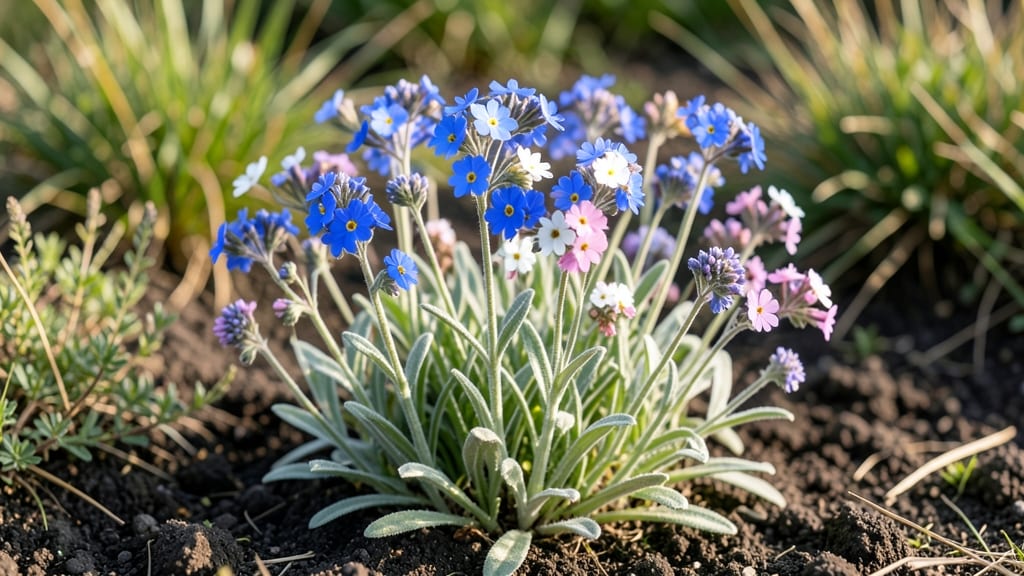
Determining whether forget-me-nots are annual or perennial depends on the variety, as most complete their life cycle in one season but some may return for 2-3 years under ideal growing conditions. Their lifespan is heavily influenced by cold tolerance and proper garden care.
Forget-me-nots typically behave as one-season bloomers because their delicate root systems struggle to survive harsh winters or extreme heat. 🌱 The key difference between annual and short-lived perennial varieties lies in their ability to store energy in roots—some cultivars store enough to regrow for a few more seasons if protected.
I've found that varieties like 'Blue Boy' often surprise gardeners by returning, while others like 'Opal' may only last one year unless given extra care.
What truly extends their lifespan is consistent moisture and proper mulching during dormant periods. Many gardeners mistakenly assume all forget-me-nots are annuals, but with the right conditions, you can coax a second or even third season of blooms from certain types.
The trade-off? Their delicate nature means they're not as hardy as true perennials like coneflowers.
💡 In This Article
- Why Forget-Me-Nots Die Back: Life Cycle Science
- Extending Forget-Me-Not Lifespan: Pro Tips for Gardeners
Why forget-me-nots die back: life cycle science
Forget-me-nots (Myosotis spp.) exhibit a fascinating botanical quirk—they're technically short-lived perennials with annual tendencies. Their life cycle hinges on a delicate balance of seed production and root energy storage. Most varieties invest heavily in flowering and seed production during their first season, which depletes their shallow root systems.
These roots typically measure only 3-5 inches deep, limiting their ability to store sufficient nutrients for winter survival. 🌱
The temperature threshold for dieback is critical: forget-me-nots struggle when soil temperatures drop below 20°F (-7°C). Their native European habitats (where many cultivars originated) experience milder winters, so their cold tolerance is limited.
Unlike true perennials like peonies, which develop deep, woody roots, forget-me-nots rely on fibrous roots that can't withstand freeze-thaw cycles. This explains why they often die back completely after their first frost in colder climates.
What makes certain varieties behave as semi-perennials is their ability to store minimal carbohydrates in their roots. For example, 'Blue Boy' can sometimes regrow because it stores about 15-20% more root energy than annual types.
However, this storage is fragile—drought stress or improper mulching can accelerate dieback by forcing the plant to expend energy prematurely. The trade-off is their rapid growth cycle: from seed to bloom in just 6-8 weeks, making them ideal for quick-color gardens.
Environmental stress accelerates their life cycle through a process called "bolting." When forget-me-nots experience heatwaves above 85°F (29°C) or drought conditions, they'll prioritize seed production over root development.
This survival mechanism ensures genetic continuation but sacrifices the plant's longevity. It's why you'll often see forget-me-nots flourish in spring but disappear by early summer in hotter regions.
The key distinction between annual and semi-perennial forget-me-nots lies in their seed dormancy strategies. Annual types produce thousands of tiny seeds that germinate readily, while semi-perennial varieties invest more energy in root regrowth.
This explains why some gardeners report second-year blooms—those plants successfully overwintered with minimal stress. However, true perennial forget-me-nots are rare in cultivation, making most varieties behave as temporary garden stars. 💫
For comparison, consider how true perennials like lavender store energy in woody stems, while forget-me-nots rely on fibrous roots that can't sustain multiple winters. This fundamental difference explains why forget-me-nots often return for 2-3 years at most, even with perfect care.
Their beauty is fleeting but impactful—a reminder of nature's delicate balance between survival and reproduction.