
Flowers
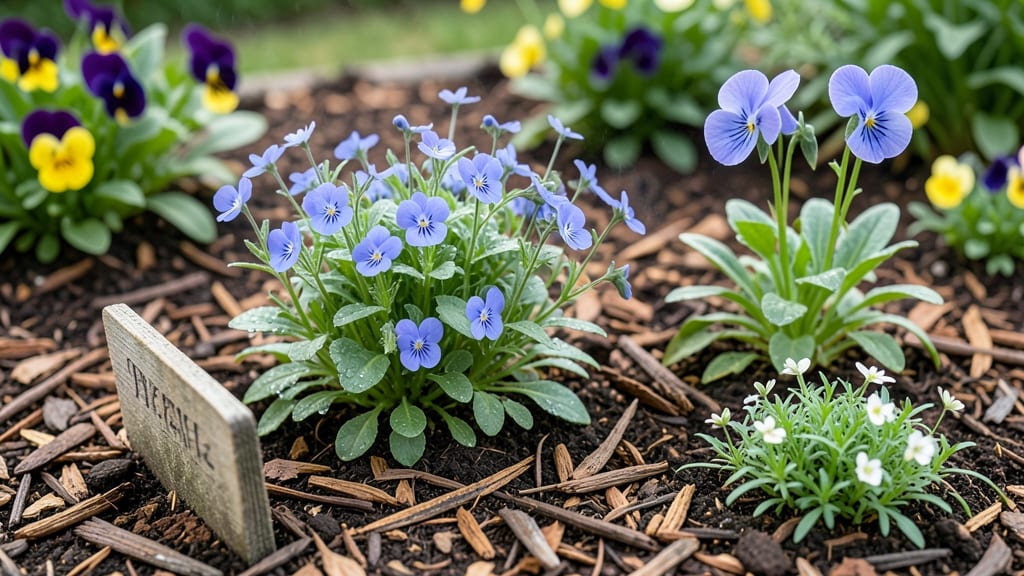
Forget-me-not flowers grow as perennials in most temperate climates, thriving year after year with consistent care, but they’re typically treated as annuals in colder regions where freezing temperatures kill their foliage back to the ground. Their natural lifespan extends 2–3 years before they need division to maintain vigor.
These delicate blue blooms actually have a surprisingly resilient root system that stores energy for regrowth when conditions improve. 🌱 In USDA zones 3–9, they’ll naturally return each spring from their dormant state, while gardeners in colder zones often replant them annually to avoid winter dieback.
The key difference lies in their ability to survive winter dormancy—perennials do this naturally, while annuals are replanted each season because their roots don’t survive freezing.
What many gardeners don’t realize is that even when treated as annuals, forget-me-nots can sometimes surprise you by returning in subsequent years if they’ve established strong roots before winter. This makes them excellent candidates for container gardening, where you can easily overwinter them indoors in colder climates.
The 2–3 year lifespan refers to their optimal growth window before they become overcrowded, which is when division becomes necessary to refresh the plants.
💡 In This Article
- How Forget-Me-Not’s Perennial Growth Works in Different Climates
- Best Practices for Reviving Forget-Me-Nots Year After Year
How forget-me-not’s perennial growth works in different climates
Forget-me-nots (Myosotis spp.) are true perennials in their native European habitats, where they naturally experience mild winters and moist conditions. Their growth cycle begins in early spring when soil temperatures reach 45-50°F, triggering root regrowth from the crown.
The plant stores carbohydrates in its fibrous roots during summer, which fuels new shoots when dormancy ends. This energy reserve is why established plants can return reliably for 2-3 years without replanting.
The key difference in colder climates (USDA zones 3-5) is winter survival. Forget-me-not roots contain 50-60% moisture at dormancy, which freezes and expands, potentially rupturing cells if temperatures drop below -10°F.
In these regions, the foliage dies back completely, but the crown often survives if protected by snow or mulch. Gardeners in zones 6-9, however, see full regrowth each spring because winter temperatures rarely dip low enough to damage the crown.
What makes forget-me-nots behave like annuals in frost-prone areas is their shallow root system—typically only 6-12 inches deep. Without proper winter protection (like 3-4 inches of mulch), the crown becomes exposed to freezing winds.
The plant’s natural strategy is to complete its life cycle quickly in warm zones, producing 100-300 seeds per plant to ensure genetic survival even if the parent plant doesn’t return.
Seasonal behavior also varies by latitude. In northern climates, forget-me-nots bloom from late May to July, while in southern zones, they may flower twice yearly.
The plant’s ability to regenerate depends on photosynthetic reserves stored in its roots—when these reserves drop below 20% of root weight, the plant struggles to regrow. This is why consistent moisture (but not soggy soil) is critical during establishment.
Here’s how temperature zones break down for survival:
- Zones 3-5: Often die back to ground level but may return if crown survives (-10°F tolerance)
- Zones 6-8: Reliable perennials with full regrowth (-5°F tolerance)
- Zones 9-10: May behave like annuals due to heat stress rather than cold
The 2-3 year lifespan refers to their optimal vigor before they become overcrowded. After this period, the center of the clump weakens as energy is diverted to maintaining older stems rather than producing new growth. This is when division becomes necessary to refresh the plant.