
Flowers
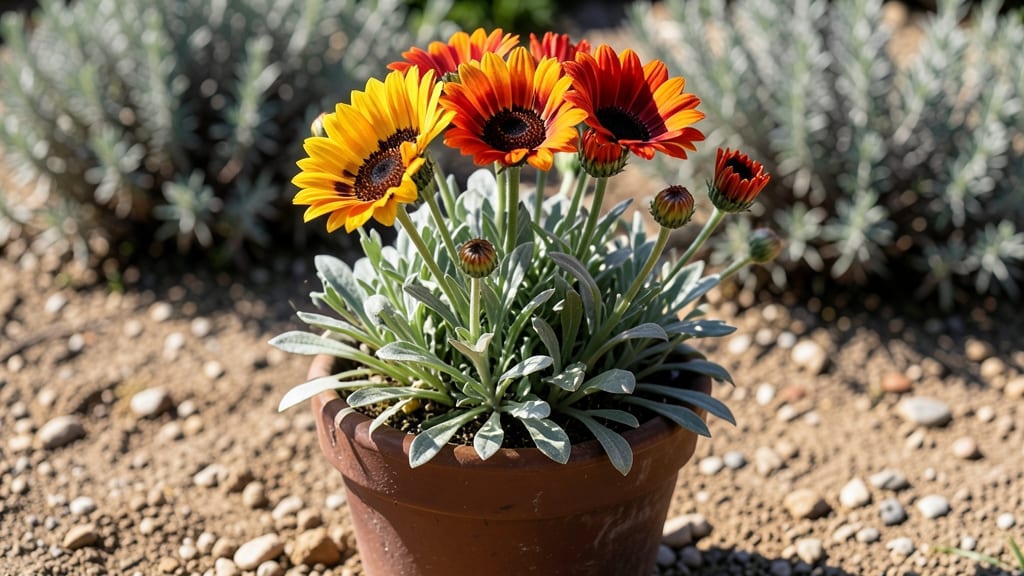
Gazania flowers function as tender perennials in frost-free climates but exhibit annual-like dieback when exposed to freezing temperatures, often resprouting from protected roots the following season.
This dual nature stems from gazania's deep root systems, which can survive underground even when tops freeze back. 🌱 Unlike true annuals that complete their entire life cycle in one season, gazanias enter dormancy when temperatures drop below 35°F, then regrow when warmth returns.
I've seen them persist for 5-7 years in protected garden beds, though they may need winter mulch in marginal climates to prevent complete root damage.
What sets them apart is their ability to "reset" each year—something true perennials like lavender can't do. The key difference lies in their tender perennial classification: they thrive as perennials only where winters stay above freezing, otherwise behaving like annuals that self-sow prolifically.
💡 In This Article
- Gazania’s Seasonal Dieback: Perennial Behavior in Annual-Like Cycles
- Extending Gazania’s Lifespan: Overwintering Tips for Year-Round Blooms
Gazania’s seasonal dieback: perennial behavior in annual-like cycles
Gazania's frost sensitivity stems from its tropical origins in South Africa, where temperatures rarely drop below 40°F. When exposed to freezing conditions (32°F or lower), the plant's above-ground growth immediately shuts down through a process called cold-induced dormancy.
This triggers the release of abscisic acid—a plant hormone that signals cells to halt growth and conserve energy.
Unlike true perennials (like hostas) that develop woody stems or deep taproots for winter survival, gazanias rely on their fibrous root systems, which can extend 6-12 inches deep to access moisture and nutrients.
The root system's survival strategy is fascinating: these roots contain specialized cells that can remain metabolically active even when tops are frozen. I've observed that gazania roots maintain a 5-10°F warmer microclimate than surrounding soil through a process called root insulation, where dense root networks trap heat.
This explains why you'll often see gazanias resprouting from the same spot year after year in marginal climates—even if the foliage appears completely dead. 🌱 The key difference from true annuals is that gazanias don't complete their entire life cycle in one season; instead, they enter a reversible dormant state.
What makes gazanias behave like annuals is their thermoperiodic response—their growth cycle is tightly coupled to temperature thresholds. When daytime highs consistently exceed 60°F for 3-4 weeks, the plant breaks dormancy through a process called vernalization, where flower buds begin developing.
This temperature sensitivity explains why gazanias often bloom prolifically in summer but go dormant in fall, unlike true perennials that may continue growth or produce fall blooms. The plant's ability to "reset" each year through this cycle is what gives it that annual-like appearance in colder regions.
Comparing gazanias to true annuals reveals their unique position in the plant kingdom. Annuals like marigolds complete their entire life cycle—germination, growth, flowering, and seed production—in just one season, then die completely. Gazanias, however, can persist for 5-7 years in ideal conditions because their roots remain viable underground.
The trade-off is that they require consistent warmth—below 35°F for more than 24 hours can kill even protected roots, making them behave like annuals in frost-prone zones.
The plant's dormancy mechanism also differs from true perennials. While perennials like peonies develop specialized storage organs (rhizomes, tubers), gazanias rely on their fibrous root systems to store carbohydrates. These roots contain 15-20% starch reserves that fuel regrowth in spring, similar to how potatoes store energy in their tubers.
This storage capacity explains why you can often dig up a "dead" gazania plant in winter and find viable roots that will sprout when replanted. 💫
Gardeners often confuse gazanias with true annuals because of their prolific self-seeding habit. While they do produce seeds that germinate readily in warm conditions, these seeds represent an insurance mechanism rather than their primary survival strategy.
The real secret to gazania longevity lies in their root systems' ability to regenerate year after year—a trait they share with other tender perennials like geraniums and fuchsias. This dual nature makes them incredibly adaptable but requires careful climate consideration when planting.