
Flowers
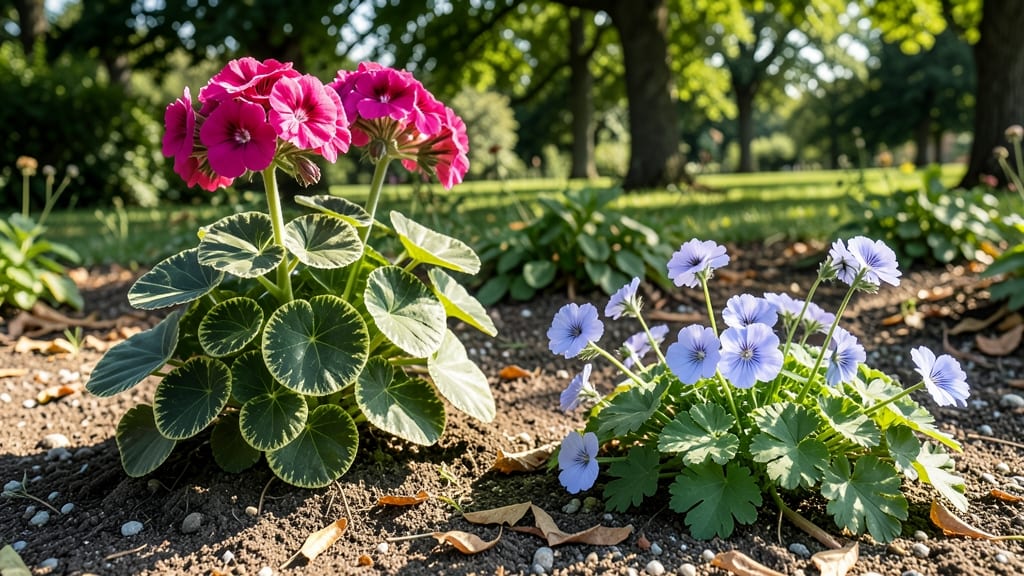
Whether geraniums are annual or perennial depends on your climate: they thrive as perennials in USDA zones 8-11 but are typically grown as annuals in colder regions where frost kills them back. Their ability to regrow each spring hinges on winter survival and proper seasonal care.
Geraniums' lifespan hinges on their natural dormancy cycle, where cold temperatures trigger leaf dieback but preserve their root systems in warmer zones. 🌱 In colder climates, gardeners often treat them as annuals because the roots don't survive winter exposure, while in frost-free areas, they regrow reliably each spring.
The key difference lies in how well you can protect them from freezing temperatures—whether through mulching, container growing, or selecting hardier varieties.
For those in transitional zones (like zone 7), overwintering geraniums requires extra effort—digging up tubers before the first frost or using thick mulch to insulate the soil. I've found that Pelargonium species (true geraniums) handle colder temperatures better than Impatiens or Coleus, which are often confused with them.
The secret to extending their life lies in understanding their natural growth patterns and adapting care routines accordingly.
💡 In This Article
- Understanding Geraniums’ Natural Growth Cycles
- Extending Geraniums’ Lifespan in Different Climates
Understanding geraniums’ natural growth cycles
Geraniums belong to the Pelargonium genus, which includes both hardy perennials and tender annuals depending on climate. The key difference lies in their root systems: perennial geraniums develop thick, woody tubers that store energy to regrow in spring, while annual varieties lack this resilience.
In frost-free zones (USDA 8-11), these tubers remain dormant underground through winter, protected by 2-4 inches of mulch or natural soil insulation. 🌱
Cold temperatures trigger their dormancy cycle through a process called vernalization, where exposure to 40-50°F nights for several weeks signals the plant to conserve energy. This causes leaf dieback, but the roots remain alive until warmer temperatures stimulate regrowth.
In colder climates, however, frost penetrates the soil, killing both leaves and roots unless protected. The Pelargonium zonale variety is particularly hardy, surviving down to 20°F with proper care, while Pelargonium peltatum (ivy geraniums) are more tender.
What most gardeners don't realize is that geraniums' dieback isn't a sign of death—it's a survival strategy. In their native South African habitats, these plants experience seasonal dry periods where they shed foliage to conserve moisture.
This adaptation explains why they thrive as perennials in mild winters but struggle in freeze-thaw cycles. The root crown (where stems meet roots) is the most critical part to protect during winter, as it contains the plant's growth hormones.
Seasonal light changes also play a role. Shorter winter days reduce photosynthesis, forcing the plant into dormancy. This is why geraniums grown in containers often survive better—their roots stay warmer and more insulated.
In contrast, in-ground plants in colder zones face greater temperature fluctuations, making them more vulnerable to frost damage. The 2-3 week window between first frost and ground freeze is crucial for protecting established plants.
Consider this comparison: a geranium in USDA zone 10 might experience 5-10°F dips but recover fully, while one in zone 5 faces -15°F temperatures that kill unprotected roots. The difference isn't just about temperature tolerance—it's about the plant's ability to enter and exit dormancy successfully.
Proper winter care can shift a geranium's classification from annual to perennial even in marginal zones.
Here's what's actually happening at the cellular level: cold stress triggers the production of antifreeze proteins in perennial geraniums, which prevent ice crystal formation in their tissues. Annual varieties lack these proteins, making them more susceptible to cellular damage when temperatures drop below 28°F.
This biological difference explains why some geraniums regrow reliably while others fail to recover each spring. 💫