
Flowers
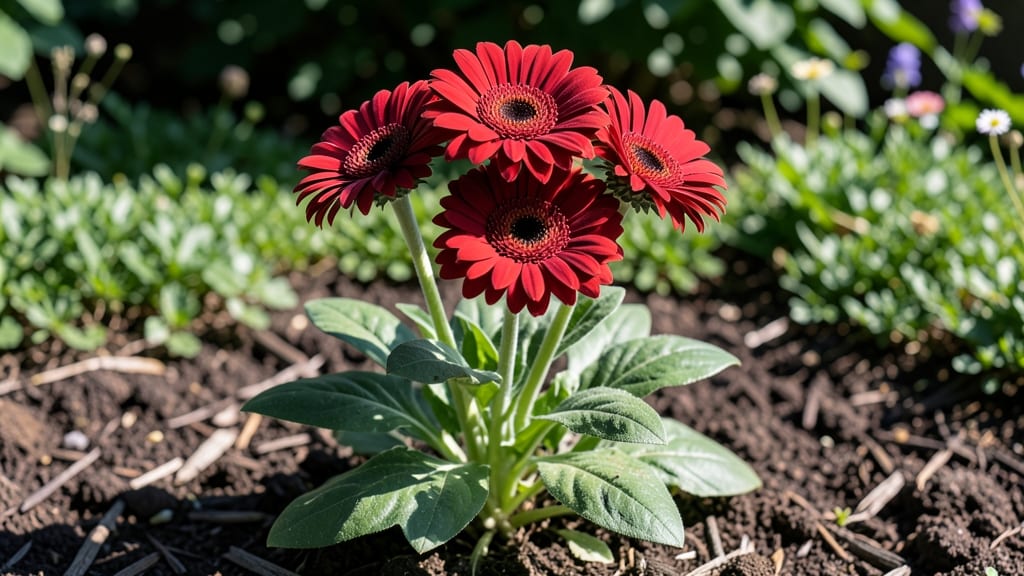
Whether gerbera daisies are annual or perennial depends on your climate: they thrive as perennials in warm zones (8-11) but act as annuals in colder regions (2-7) because frost kills their tender roots.
Gerbera daisies are frost-sensitive, and their growth cycle shifts dramatically when temperatures drop below 20°F (-7°C). In warmer zones, their roots survive winter dormancy, allowing them to regrow each spring. 🌸 However, in colder regions, gardeners often treat them as annuals because the plants rarely recover after frost damage.
The key difference lies in their root hardiness—perennial gerberas in mild climates develop deeper, more resilient root systems over time, while those in cold zones lack this natural protection.
This climate dependency explains why you'll see gerberas sold as annuals in northern nurseries—they're bred for quick blooms rather than winter survival. If you live in a colder zone but want perennial behavior, overwintering techniques like container transfers or heavy mulching can help preserve your plants for multiple seasons.
💡 In This Article
- How USDA Zones Determine Gerbera Daisy Lifespan
- Extending Gerbera Daisy Seasons in Cold Climates
How USDA zones determine gerbera daisy lifespan
Gerbera daisies classify as perennials only because their native South African climate rarely drops below 40°F (4°C)—their roots simply can't tolerate freezing. In USDA zones 8-11, where winter lows stay above 10°F (-12°C), gerberas develop robust root systems that survive dormancy.
These roots store carbohydrates during summer growth, fueling regrowth when temperatures warm again in spring. 🌱 The key threshold is 20°F (-7°C): below this, cellular damage occurs as ice crystals form in root tissues, disrupting water transport.
In colder zones (2-7), gerberas behave as annuals because winter temperatures consistently breach this threshold. For example, zone 5 winters average 15°F (-9°C), while zone 7 experiences 5°F (-15°C) lows—both lethal to gerbera roots.
The plant's tropical origins mean it lacks cold-acclimation mechanisms like woody stems or deep taproots found in hardy perennials. Even a light frost causes root rot within 24-48 hours by promoting fungal growth in damaged tissues.
Root hardiness varies by cultivar too. Hybrid varieties like 'Terry' or 'Mambo' show slightly better cold tolerance, surviving brief dips to 25°F (-4°C) if dry, but none endure prolonged freezing.
The perennial growth cycle in warm zones involves 4-6 months of active growth followed by 2-3 months of dormancy, while annuals in cold zones complete their entire life cycle in 8-10 months before frost terminates growth. 🌡️ This explains why gardeners in zone 6 might see gerberas bloom for 3-4 seasons with proper care, while zone 3 gardeners rarely get past one year.
Soil temperature matters just as much as air temperature. Gerbera roots need soil temps above 50°F (10°C) to resume growth in spring. In cold zones, this delay often coincides with the plant's natural dormancy period, creating a vicious cycle where weak roots fail to establish before summer heat arrives.
The solution lies in understanding your zone's last frost date—planting gerberas 2 weeks after this date gives roots 6-8 weeks of warm soil before potential fall frosts.
Consider this comparison: A gerbera in zone 9 might live 5+ years as a perennial, while its zone 4 counterpart lasts just 1 season unless overwintered. The difference stems from 1,000+ hours of accumulated chilling below 45°F (7°C) in colder zones versus minimal exposure in warm climates.
This chilling requirement triggers dormancy in perennials but becomes lethal to gerberas.