
Planting
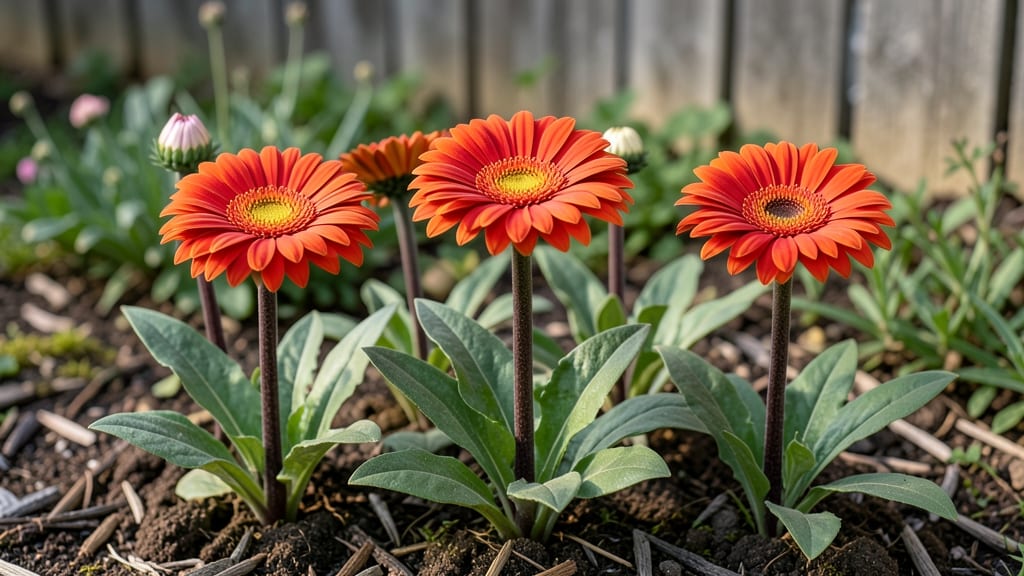
Whether the gerbera daisy plant is annual or perennial depends on your climate zone: they thrive as perennials in warm USDA Zones 10-11 but must be replanted yearly in colder zones (3-9) due to frost sensitivity. Their winter dieback is normal dormancy, not death, when properly managed.
The gerbera daisy plant is actually a perennial with underground tubers that store energy for regrowth—think of them as nature's built-in survival mechanism. 🌱 In warmer climates (Zones 10-11), these tubers naturally overwinter in the soil, bursting back to life each spring.
However, in colder regions, the tubers can't survive freezing temperatures, which is why gardeners treat them as annuals.
The key difference lies in how you handle them: in frost-prone areas, you'll need to dig up the tubers after the first frost and store them in a cool, dry place until replanting in spring.
What's fascinating is how these plants adapt: even in colder zones, if you protect the tubers during winter, you can extend their lifespan beyond one season. Many gardeners swear by overwintering tubers in containers filled with dry peat moss, which mimics their natural dormancy conditions.
This simple technique transforms what seems like a seasonal plant into a long-lived favorite—just give it the right winter care!
💡 In This Article
- Gerbera Daisy Lifespan Science: Why Zones Determine Perennial vs Annual Growth
- Reviving Gerbera Daisies Year-Round: Zone-Specific Care Tips
Gerbera daisy lifespan science: why zones determine perennial vs annual growth
The gerbera daisy's perennial nature in warm climates (Zones 10-11) comes from its specialized tuber system. These thickened underground stems store carbohydrates and nutrients during dormancy, similar to potatoes or dahlias.
The tubers contain specialized cells that can survive temperatures down to 25°F for short periods, but prolonged exposure to freezing conditions (32°F or below) causes irreversible cell damage through ice crystal formation in their tissues. 🌡️
In colder zones (3-9), the critical factor is frost penetration depth. Gerbera tubers typically sit 4-6 inches below soil surface, but winter frost can extend 12+ inches deep in Zone 5. When soil freezes, water expands in tuber cells, rupturing their membranes.
This is why even well-established plants die back completely—it's not poor care, but physics. The plant's natural response is to enter dormancy when day lengths shorten and temperatures drop below 50°F consistently.
What's remarkable is how these tubers prioritize survival: they redirect all energy to root systems when temperatures dip, creating a protective barrier around their storage cells. This explains why you often see gerbera foliage dying back while the roots remain viable in mild winters.
In Zone 10-11, this natural process allows regrowth without human intervention, while colder zones require manual tuber rescue to break the cycle of annual replanting.
The USDA zone system actually understates gerbera hardiness because it averages winter conditions. For example, a Zone 9 garden might experience 20°F dips while Zone 10 stays above 30°F. The real threshold is 28°F—below this, tuber viability drops by 40% within 24 hours.
This explains why some Zone 9 gardeners successfully overwinter gerberas while others don't: it's not just about the zone number, but specific microclimate conditions and soil insulation.
Consider this comparison: In Zone 11, tubers naturally overwinter with 90%+ survival rate because they experience 0-10°F dips for only 1-2 weeks annually. In Zone 7, those same conditions would last 4-6 weeks, reducing survival to 10-30% without protection.
The plant's biology hasn't evolved to handle prolonged cold exposure beyond its native South African habitat's mild winters.
Here's the science behind tuber dormancy: When temperatures drop below 55°F, gerbera tubers produce higher concentrations of abscisic acid (ABA), a plant hormone that triggers dormancy. This hormone inhibits cell division in the growing tips while preserving the tuber's storage cells.
The result is a 95% reduction in metabolic activity, allowing the tuber to survive on stored reserves for months. This dormancy mechanism is identical to that of other geophytes like crocuses and tulips.